Mongolia Travel Blog
How to Choose Mongolia Tours That Fit Your Style
Planning Mongolia tours? Learn how seasons, routes, comfort, festivals, and group size shape a meaningful journey across the nomadic heartland with care.
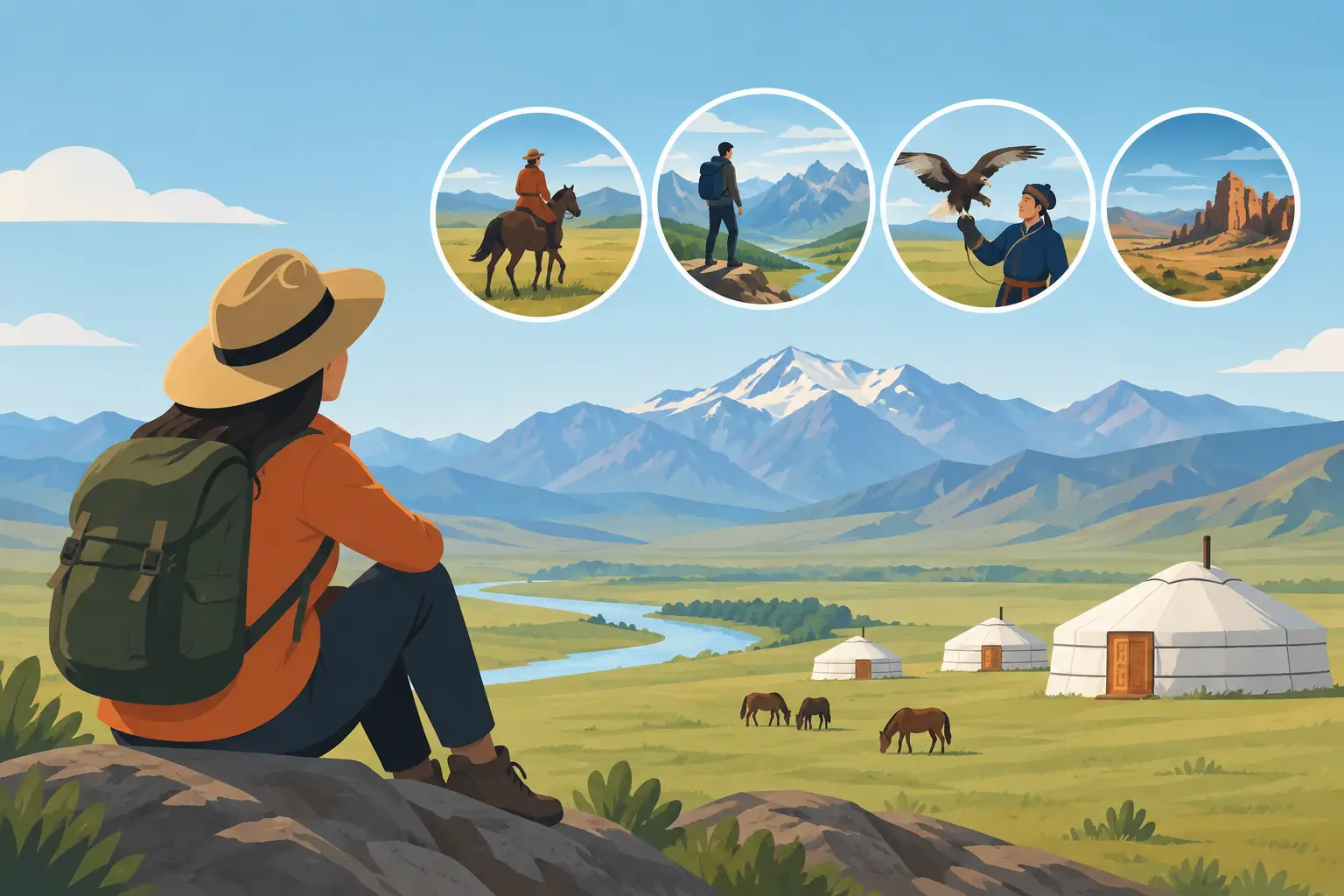
The right Mongolia tours do not begin with a hotel search. They begin with a map, a season, and an honest answer to how far beyond paved roads you want to travel. Mongolia’s open steppe, sacred mountains, desert horizons, and nomadic heartland can feel wonderfully boundless, but distances are real, weather changes quickly, and the best journey is one designed around the experience you value most.
For some travelers, that means sleeping in traditional ger camps beneath the Eternal Blue Sky and sharing tea with a herding family. For others, it means photographing eagle hunters in the Altai, seeing Naadam’s wrestling and horse racing, riding across wide valleys, or traveling privately with more time and comfort between remote places. Choosing well is less about finding one perfect itinerary and more about matching the journey to your pace, interests, and season.
Start With the Mongolia You Want to Experience
Mongolia is not a destination to rush. A journey focused on the Gobi Desert has a very different rhythm from one in the western Altai or around Khuvsgul Lake. The Gobi offers immense spaces, sandstone cliffs, dinosaur-country landscapes, camel herding traditions, and long drives between camps. Western Mongolia brings mountain roads, Kazakh culture, eagle-hunting heritage, and dramatic photography opportunities. Northern routes are greener and often more wooded, with lakes, taiga, and a noticeably cooler feel.
Before comparing Mongolia tours, choose one central theme. Travelers drawn to culture may prioritize a homestay or festival departure. Photographers may need a route built around early light, flexible stops, and time in fewer locations. Families and private groups may prefer a gentler pace with reliable accommodation and shorter driving days. An ambitious cross-country route can be extraordinary, but it asks more of your time and energy than a focused regional journey.
A clear priority also helps prevent a common planning mistake: trying to see the Gobi, Altai, Khuvsgul, and central Mongolia in one short visit. Mongolia rewards depth. A well-paced itinerary leaves room for an unplanned stop at a herder’s camp, a sudden herd crossing the road, or a long golden evening on the steppe.
Let the Season Shape Your Route
Mongolia changes character dramatically through the year. Summer is the broadest travel season, with greener grasslands, active nomadic camps, and access to many remote areas. It is also the time for Naadam, when communities gather around wrestling, archery, and horse racing. Festival travel can be deeply memorable, though accommodation and transport need to be organized carefully around the busiest dates.
Late spring and early fall suit travelers who prefer quieter landscapes, crisp light, and fewer visitors. Nights can be cold, especially at altitude, and conditions can shift quickly. These shoulder periods are particularly rewarding for photography, private journeys, and travelers comfortable with a little unpredictability in exchange for atmosphere.
Winter is not simply summer Mongolia with more layers. It is a distinct expedition-style experience. The air is dry and clear, travel can be challenging, and temperatures can be severe. Yet winter also offers extraordinary cultural encounters, including journeys toward the Darkhad Valley and Tsaatan reindeer herding communities, as well as a powerful sense of stillness rarely found elsewhere. It requires proper cold-weather equipment, experienced local support, and a flexible mindset.
Festival travel needs its own planning approach
Naadam Festival tours are ideal for travelers who want to witness Mongolia’s national sporting traditions alongside countryside travel. In western Mongolia, the Golden Eagle Festival and Sagsai Eagle Festival offer opportunities to see Kazakh eagle hunters gather with their birds, traditional clothing, horses, and equipment. These are cultural events, not staged performances, and their rhythm is shaped by local participants, weather, and logistics.
Festival trips work best when the event is part of a wider regional journey. Building in time before or after the festival allows travelers to see the landscapes and communities that give the occasion its meaning.
Understand the Reality of Getting Around
Mongolia is large, lightly populated, and built for travelers who can appreciate the journey between highlights. Outside Ulaanbaatar and major towns, paved roads may give way to dirt tracks, grassy routes, and multiple parallel paths across the open land. There is often no single road in the way travelers expect elsewhere.
A capable vehicle and an experienced driver are central to safe, enjoyable travel. Driving times vary with weather, road conditions, river crossings, livestock, and the condition of the track. On a map, two points may look close; on the ground, the journey can take much longer. Good itineraries acknowledge this rather than packing every day with fixed sightseeing targets.
Domestic flights can reduce long overland distances, particularly for western or northern regions, but they should be treated as helpful connections rather than guarantees. Weather and operational changes can affect schedules. Travelers with limited time often benefit from combining a flight with an overland route, while those who want to feel the changing landscape may choose a fully road-based expedition.
Choose Your Comfort Level Honestly
Accommodation on Mongolia tours ranges from city hotels and established ger camps to simple family stays in remote areas. A ger camp usually provides a traditional round felt dwelling, beds, a stove when needed, and shared or private bathroom facilities depending on the camp. In more isolated regions, standards are necessarily simpler, but the experience can be more intimate and connected to local life.
There is no single right comfort level. The question is what allows you to enjoy the journey. If a private bathroom, dependable Wi-Fi, or shorter drives matter greatly, a tailor-made private itinerary can concentrate on routes with stronger infrastructure. If you are prepared for basic facilities in exchange for remoteness, smaller group expeditions can take you farther into Mongolia’s wild regions.
Be clear about your expectations before booking. Ask how many nights are in ger camps, whether bathrooms are private or shared, how often laundry may be possible, and what meals are realistic in remote areas. Clear answers build trust and make the adventure more comfortable because there are fewer surprises.
Small Group or Private Journey?
Small-group departures suit travelers who enjoy shared discovery and want the structure of a carefully planned route. They can work especially well for festival departures, photography-focused journeys, and classic regional itineraries where the group’s interests naturally align. The best groups remain small enough that everyone can hear the guide, ask questions, and spend time with local hosts respectfully.
A tailor-made private journey offers more control over pace. Couples, families, friends, and photographers often choose this option because it allows room for specific interests: extra riding time, a slower day in the Gobi, more sunrise photography, or a route designed around cultural encounters rather than a fixed group schedule. Private travel does not have to mean excessive luxury. Often, its greatest value is flexibility.
From our experience operating tours in Mongolia, the strongest itineraries leave some breathing room. A plan should be organized, but it should also allow for the realities that make Mongolia memorable: changing weather, a local invitation, a wildlife sighting, or the simple desire to stop and watch a vast landscape in silence.
Travel Respectfully in the Nomadic Heartland
Visiting a nomadic family is a privilege, not an attraction on demand. Guides help travelers understand practical etiquette, including when to accept offered tea or food, where to sit inside a ger, and how to ask before taking portraits. A few thoughtful gestures matter: enter calmly, avoid stepping over household items, and follow your host’s lead.
Photography deserves special care. Mongolia offers remarkable images - horses moving through dust, camel herds in the Gobi, mountains reflected in clear lakes, and richly detailed festival scenes. But a powerful photograph begins with consent and patience. Ask before making close portraits, especially in family settings and around ceremonial moments. Give people time to become comfortable rather than treating the encounter as a quick stop.
Responsible travel also means respecting fragile land. Stay on established vehicle tracks where possible, reduce single-use waste, and understand that water, fuel, and supplies are limited in remote areas. Local guides and drivers are not only logistical support; they are the people who make respectful access possible.
A Better Way to Begin Planning
Start by deciding when you can travel and what experience matters most. Then be realistic about trip length, driving tolerance, and preferred level of comfort. A skilled Mongolia-based operator can turn those answers into a practical route, whether that means a small-group adventure or a private journey shaped around your own interests.
Nomadic of the Blue Sky designs journeys with local guides, realistic logistics, and meaningful time in the places that matter. The goal is not to collect the most pins on a map. It is to return home with a genuine feel for Mongolia: wind over the grasslands, the warmth of a ger stove, hoofbeats on open ground, and a horizon that keeps asking you to stay a little longer.
Plan Your Mongolia Journey
Explore locally operated tours or ask our Mongolia team to tailor a private journey.