Mongolia Travel Blog
Mongolia Winter Tours for the Well-Prepared
Plan Mongolia winter tours with practical advice on cold, transport, camps, nomadic visits, photography, packing, and choosing the right winter route.
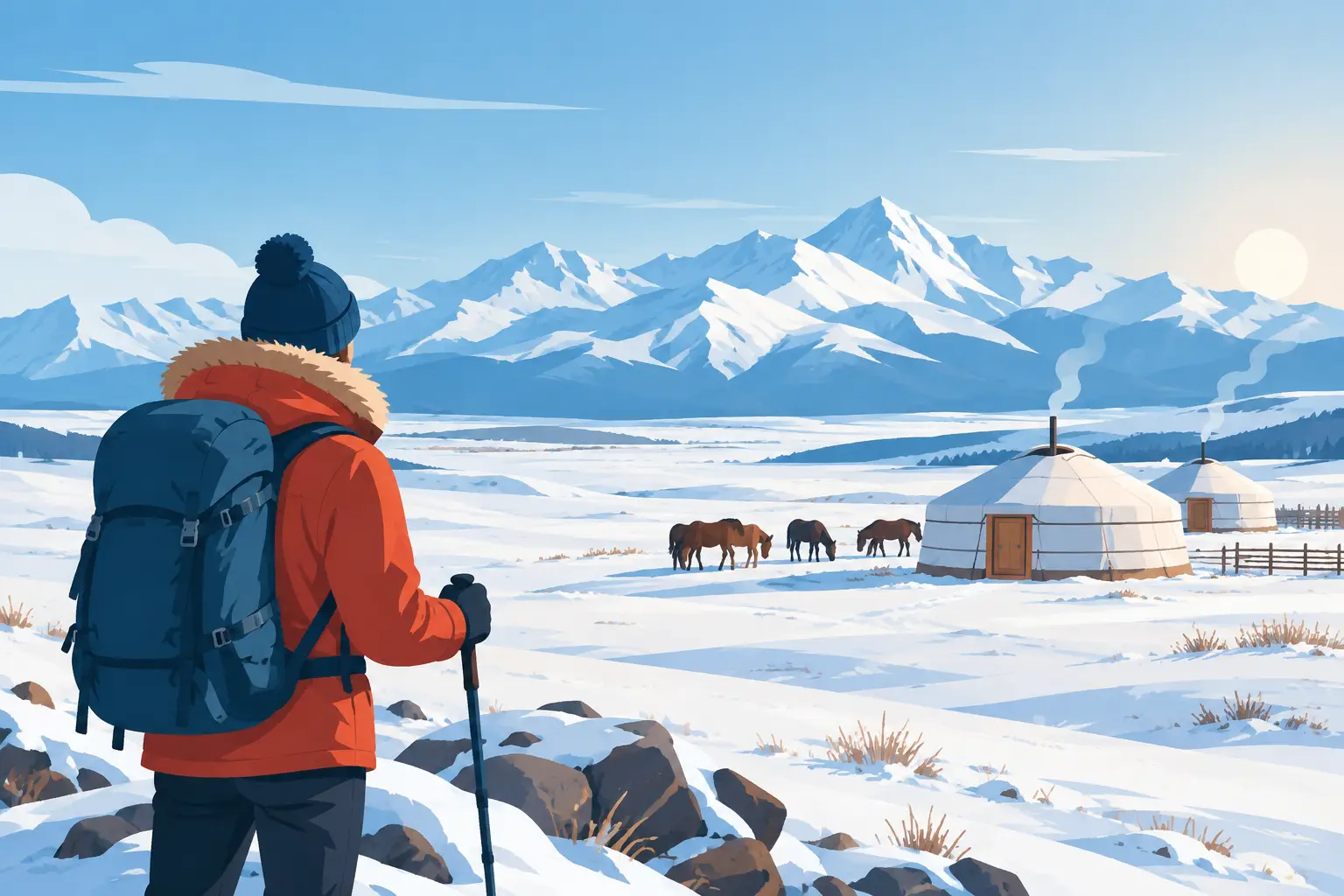
At minus 30 F, the air outside a ger can feel so dry and still that every footstep carries across the snow. Inside, a stove glows, tea is poured, and the pace of nomadic winter life becomes wonderfully clear. Mongolia winter tours are not simply summer itineraries with thicker coats. They are purposeful journeys into a season of powerful weather, sparse light, frozen rivers, warm hospitality, and striking cultural encounters.
For travelers drawn to the Eternal Blue Sky, winter can be one of Mongolia's most rewarding seasons. It also asks for sound preparation, flexible expectations, and a route designed around genuine conditions rather than ambitious map distances.
What makes winter in Mongolia different
Winter reveals a quieter nomadic heartland. Grasslands that are busy with livestock and travelers in summer become wide fields of snow. The sky often appears intensely blue, daylight is crisp and clear, and the low sun creates long shadows across the steppe. For photographers, the season brings clean landscapes, dramatic portraits, smoke rising from ger chimneys, and a rare sense of solitude.
The trade-off is cold. Ulaanbaatar and the open countryside can experience severe temperatures, particularly from December through February. Wind makes a significant difference, and regional conditions vary: the central steppe, northern forests, Khuvsgul region, and western Altai each have their own weather patterns. March can offer longer days and a little more sun, but it should still be treated as a true winter month.
A good winter journey is therefore less about covering every famous place and more about spending enough time in the right places. A carefully paced private itinerary can allow for weather adjustments, while a small group expedition works best when travelers share an understanding of the season's demands.
Choosing the right Mongolia winter tours route
There is no single best winter itinerary. The right route depends on how much cold you are comfortable with, whether cultural immersion or landscape photography is your priority, and how remote you want to travel.
Central Mongolia for a gentler introduction
Travelers who want a realistic first experience of winter often benefit from an itinerary that combines Ulaanbaatar with accessible countryside and ger stays. This approach reduces long driving days while still making room for open landscapes, winter herding life, monastery visits, and time with local families.
It is a sensible choice for couples, families with older children, and travelers who value comfort alongside adventure. Accommodation can range from heated tourist ger camps when they are operating to simple local guesthouses and family gers. Standards are practical rather than uniform, particularly outside the capital. A warm bed and good meals matter more than decorative details when temperatures fall.
Northern journeys for deeper winter immersion
Northern Mongolia offers forested valleys, frozen lakes, and communities whose daily routines are closely shaped by the cold. These itineraries are more demanding because road access, snow conditions, and distance can all affect timing. They suit travelers who are willing to accept simpler facilities in return for a deeper experience of rural winter life.
Remote community visits should never be treated as a performance. Families are hosting guests in their homes during a difficult working season. The best visits are arranged thoughtfully, with enough time for conversation through a guide, shared meals when appropriate, and respect for household routines.
Western Mongolia for mountains and winter culture
The Altai region has a different scale altogether: high mountains, broad valleys, Kazakh culture, and winter light that can be exceptional for photography. Reaching western Mongolia usually requires careful coordination around domestic transport and road conditions. It is best approached as a dedicated regional journey, not a brief addition to a broader national itinerary.
For travelers interested in eagle hunter traditions, it is particularly important to distinguish a winter cultural encounter from a festival-focused trip. Festivals are seasonal events with their own timing, while private visits and winter photography opportunities depend on local availability, weather, and respectful arrangements.
The realities of transport and accommodation
Mongolia's distances do not become shorter in winter. A route that looks modest on a map can take a full day once snow, ice, fuel stops, road surfaces, and daylight are considered. Winter driving should be done in suitable vehicles with experienced local drivers, sensible daily distances, and contingency time built into the itinerary.
Flights can be useful for reaching distant regions, but winter weather may affect schedules. Travelers should avoid planning tight connections to international departures after domestic travel. A final night in Ulaanbaatar before departure is often a wise buffer.
In the countryside, warmth is generally created by a stove rather than central heating. Ger camps and family gers can be welcoming and comfortable, yet temperatures drop quickly after a fire dies down. Bathrooms may be separate from sleeping areas, and facilities in remote areas can be basic. This is not a reason to avoid winter travel. It is a reason to choose an itinerary whose accommodation level matches your expectations and to pack for the moments between warm rooms.
Packing for comfort, not just survival
The most common packing mistake is relying on one very heavy outer layer without building a proper system underneath. Winter comfort comes from layers that can be adjusted when moving between a heated ger, a vehicle, and exposed landscapes.
Start with moisture-wicking base layers, insulating midlayers, and a windproof, insulated outer jacket. Warm pants, thick socks, insulated boots with room for circulation, gloves or mittens, a hat that covers the ears, and a face covering are essential. Mittens are usually warmer than gloves, though thin liner gloves make it easier to operate a camera or phone.
Bring spare batteries and keep them close to your body. Cold drains camera and phone batteries rapidly. A small thermos, lip balm, moisturizer, sunglasses, and a headlamp are also genuinely useful. Avoid cotton next to the skin, because it holds moisture and loses insulating value.
Your guide can advise on region-specific gear, but personal cold tolerance is equally important. Someone comfortable walking in a snowy city may still find prolonged exposure on a windy steppe challenging. Plan short outdoor periods between warm stops rather than expecting to remain outside for hours at a time.
Visiting nomadic families with respect
Winter hospitality is deeply memorable, partly because it is offered against the elements. Accepting a bowl of milk tea or a simple meal is often a meaningful part of the visit. Your guide can help with translation, introductions, and local customs.
A few considerations go a long way. Ask before photographing people, children, household interiors, or religious objects. Do not step on thresholds, and avoid touching belongings or food without invitation. Dress modestly, remove outer footwear if asked, and understand that a family may need to tend animals or attend to work. Their schedule comes first.
Responsible travel also means keeping group sizes manageable and ensuring that visits create value for hosts rather than pressure. Winter is not a backdrop. It is the working reality of the people welcoming you.
Planning a winter trip with confidence
A successful winter itinerary leaves room for weather, road changes, and the occasional slower day. That flexibility is not a compromise in Mongolia. It is what allows a journey to remain safe, comfortable, and authentic when the landscape sets the terms.
When speaking with a Mongolia-based operator, be clear about your preferred level of accommodation, appetite for remote travel, photography goals, and any concerns about cold or mobility. Ask how driving days are paced, what happens if weather affects a flight or road, and what type of heating and bathroom facilities are expected at each stop. These practical details shape the trip as much as the destination itself.
Nomadic of the Blue Sky designs winter journeys around local conditions, experienced Mongolian guides, and the time needed for meaningful encounters. Whether your route is private and tailored or part of a small group, the strongest winter travel plans are the ones that allow Mongolia's season to be felt rather than rushed.
Come prepared for the cold, but leave space for the quieter moments: a frozen horizon at sunrise, the scent of woodsmoke in a ger, and a welcome that makes a faraway winter landscape feel unexpectedly close.
Plan Your Mongolia Journey
Explore locally operated tours or ask our Mongolia team to tailor a private journey.