Mongolia Travel Blog
Altai Mountains Adventure Tour in Mongolia
Plan an Altai Mountains adventure tour with private guides, eagle hunters, refined ger stays, and full support across western Mongolia’s remote frontier.
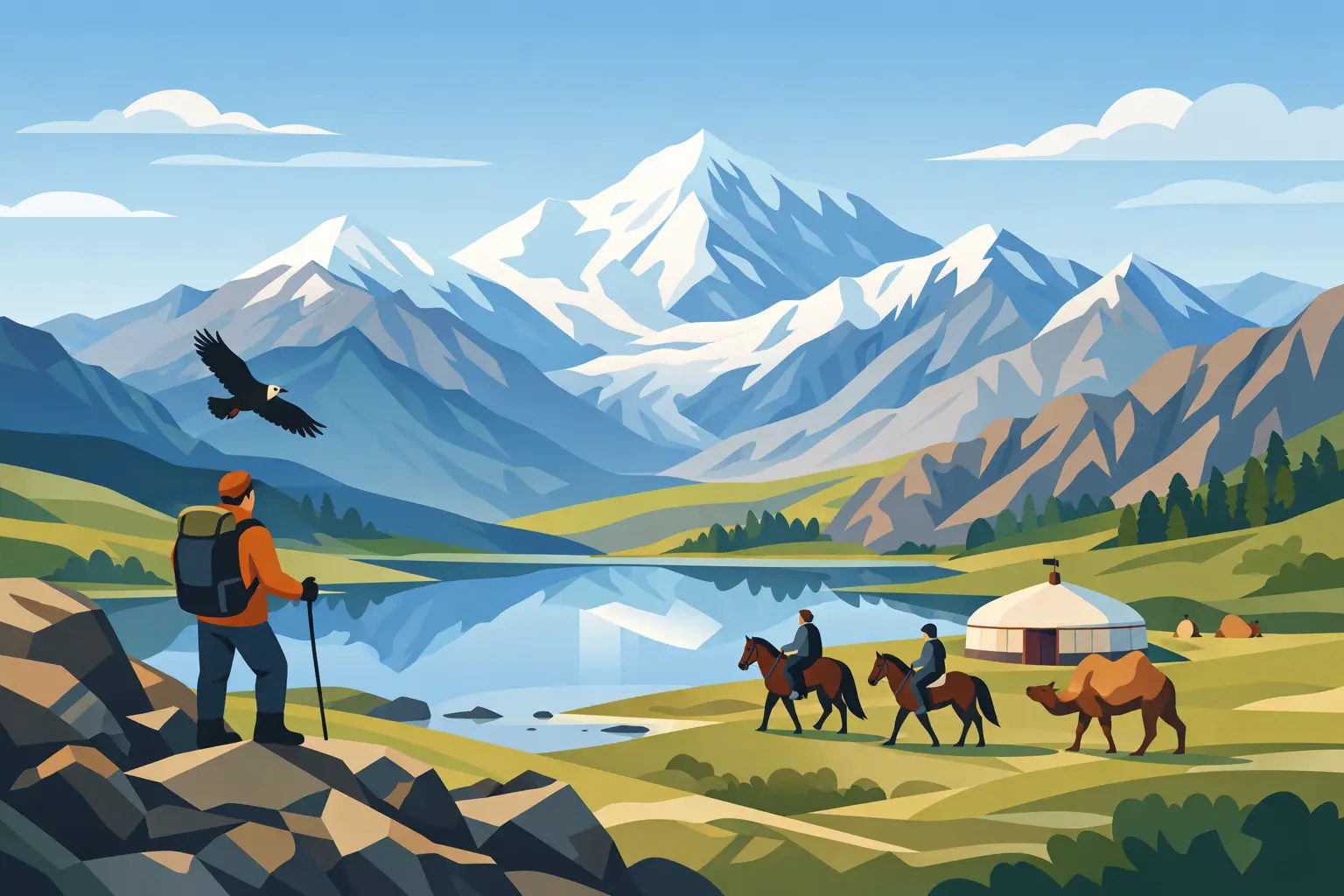
Western Mongolia begins where the road becomes a suggestion and the horizon seems to have no end. An Altai Mountains adventure tour brings travelers into this vast, high-country frontier - a landscape of glacial valleys, snow-streaked summits, turquoise lakes, and families who continue to move with their herds beneath Mongolia’s Eternal Blue Sky.
This is not a destination for hurried sightseeing. The Altai rewards travelers who want to spend time in a place, listen closely, and travel with the confidence that every remote transfer, mountain pass, camp stay, and cultural visit has been thoughtfully arranged. For private travelers, it is one of Mongolia’s most compelling combinations of wilderness, living tradition, and genuine comfort.
Why the Mongolian Altai Feels So Remote
The Altai Mountains stretch across western Mongolia near the borders of Kazakhstan, China, and Russia. Their scale is difficult to grasp until you are there. Broad valleys open into mountain walls; rivers wind past summer camps; herds of yaks, horses, goats, and sheep move across grassland that can look unchanged for centuries.
Bayan-Olgii Province is the region most closely associated with the Kazakh eagle hunter tradition. Here, many families speak Kazakh as their first language and live within a distinct cultural world shaped by pastoral life, Islamic heritage, and the practical demands of the mountains. A respectful visit to an eagle hunter’s home is not a staged performance when handled well. It is an opportunity to understand the work, training, family history, and responsibility behind hunting with a golden eagle.
The setting is equally remarkable. Altai Tavan Bogd National Park contains Mongolia’s highest mountains, including the sacred Khuiten Peak, along with the Potanin Glacier and a network of remote valleys. Elsewhere, the silent waters of Khoton and Khurgan lakes sit beneath ridgelines that shift color with the weather. The journey between these places is part of the experience: open-country driving, stops at herder camps, and long views that make the modern world feel very far away.
What an Altai Mountains Adventure Tour Can Include
A private journey in the Altai is best designed around interests, pace, and the level of activity each traveler enjoys. There is no single correct route. Some guests prioritize eagle hunter encounters and photography; others want multi-day riding, hiking, or time beside the lakes. Families may prefer shorter drives and a gentler rhythm, while experienced adventurers may choose remote trekking and camping beyond the main valleys.
A well-balanced itinerary often begins in Ulaanbaatar before flying west to Ölgii, the provincial capital. From there, the landscape quickly opens. Travelers may visit Kazakh households, meet eagle hunters and their birds, explore local crafts, and continue by private vehicle toward the national park. Depending on the route, nights can be spent in carefully prepared ger camps, comfortable tented camps, or welcoming family gers.
Horse riding is one of the most natural ways to experience the Altai. Even a short ride across a valley offers a different sense of scale from traveling by vehicle. That said, riding conditions are real mountain conditions: terrain can be uneven, weather can change quickly, and the experience should be matched to confidence and ability. Beginners can enjoy a guided introduction, while strong riders can plan longer days with appropriate support.
Hiking is similarly flexible. Gentle walks around lake shores and herder camps suit travelers looking for fresh air and beautiful photography. More demanding routes can reach high viewpoints, glacial landscapes, and isolated valleys where there may be no other travelers in sight. Your guide’s judgment matters here. In the Altai, a change in wind, rain, or visibility can alter the right plan for the day.
Eagle Hunters: A Cultural Encounter With Context
Golden eagle hunting has become an international symbol of western Mongolia, but it deserves more than a quick photograph. The best encounters allow time for conversation through a local guide, observation of the eagle’s care, and an understanding of how knowledge passes between generations.
Traditionally, hunters train golden eagles for fox hunting during the colder months, when fur is at its best and winter conditions shape the practice. Not every eagle hunter works in the same way, and not every family wishes to receive visitors. A locally connected operator can arrange introductions with hosts who welcome cultural exchange and ensure visits are conducted on mutually respectful terms.
Travelers often ask whether the famed eagle festivals should be the center of their trip. It depends. The festivals are exciting, colorful, and particularly rewarding for photographers, but they also draw larger crowds and require planning far in advance. A private visit outside festival dates can feel quieter and more personal, especially when paired with time in the mountains.
Comfort Has a Different Meaning in the Altai
Luxury in western Mongolia is not about importing a city hotel into a wild landscape. It is about having the right vehicle, a capable guide, reliable camp staff, warm meals, clean sleeping arrangements, and a route designed with care. It is the comfort of knowing that someone has considered the details before you arrive.
Ger camps offer a memorable balance of immersion and ease. A traditional ger is round, warm, and surprisingly welcoming after a day outdoors, often furnished with proper beds, a stove when temperatures fall, and space to rest away from the wind. Facilities vary considerably by location. In the most remote valleys, bathroom arrangements may be simpler and mobile service may disappear entirely. Travelers who embrace that trade-off are rewarded with extraordinary quiet and a rare closeness to the land.
Private transport is equally essential. Distances are substantial, road surfaces change constantly, and the most beautiful locations are rarely close to paved highways. A well-maintained 4WD vehicle, experienced driver, and realistic daily routing make the difference between an exhausting transit day and a journey that feels spacious and enjoyable.
When to Travel to the Altai Mountains
The primary travel season runs from June through September. June brings green valleys, spring energy, and cooler temperatures at elevation. July and August generally offer the most reliable access to mountain routes, lakes, and high camps, although afternoon rain and sharp temperature shifts remain possible. September brings crisp air, golden grasslands, and excellent photography, but nights become colder.
For eagle festivals, early September is the marquee period, with additional local events sometimes held later in the month. Dates and formats can vary, so travelers should build in flexibility rather than planning an entire journey around a single afternoon of competition.
Winter has a stark beauty and is the traditional hunting season, but it is a specialist proposition. Extreme cold, limited infrastructure, and changing road conditions require a much more focused operation. For most first-time visitors, summer or early fall offers the strongest balance of access, comfort, and cultural opportunity.
Planning a Private Altai Journey Well
The Altai is among Mongolia’s most logistically demanding regions, which is precisely why thoughtful planning elevates the experience. Internal flights, vehicles, camp availability, local hosts, dietary needs, photography priorities, and preferred activity levels should all be considered before the route is fixed.
At Nomadic of the Blue Sky, journeys are shaped by Mongolian-born guides and long-standing local relationships rather than a one-size-fits-all circuit. That distinction matters in a region where the best day may be an unplanned invitation for tea at a herder camp, a weather-cleared view of the mountains, or a change of route that leads to an empty valley at sunset.
Allow enough time. Five or six nights in western Mongolia can introduce the region, but seven to nine nights gives a private itinerary room to breathe. It allows for weather flexibility, unhurried cultural visits, and a mix of active days with slower moments beside a lake or around a campfire. Travelers with a particular interest in horseback riding, trekking, or photography should consider extending their time further.
Bring layers even in midsummer, including a warm insulated jacket, rain protection, sun protection, and broken-in walking shoes. More than any item of gear, bring curiosity and patience. Schedules in the nomadic heartland follow weather, animals, and hospitality as much as clocks.
The Altai is a place to travel with purpose rather than to simply pass through. Give it time, travel with people who know its valleys and families, and the mountains will offer something rarer than a dramatic view: a feeling of being genuinely welcomed at the far edge of the map.
Plan Your Mongolia Journey
Explore locally operated tours or ask our Mongolia team to tailor a private journey.