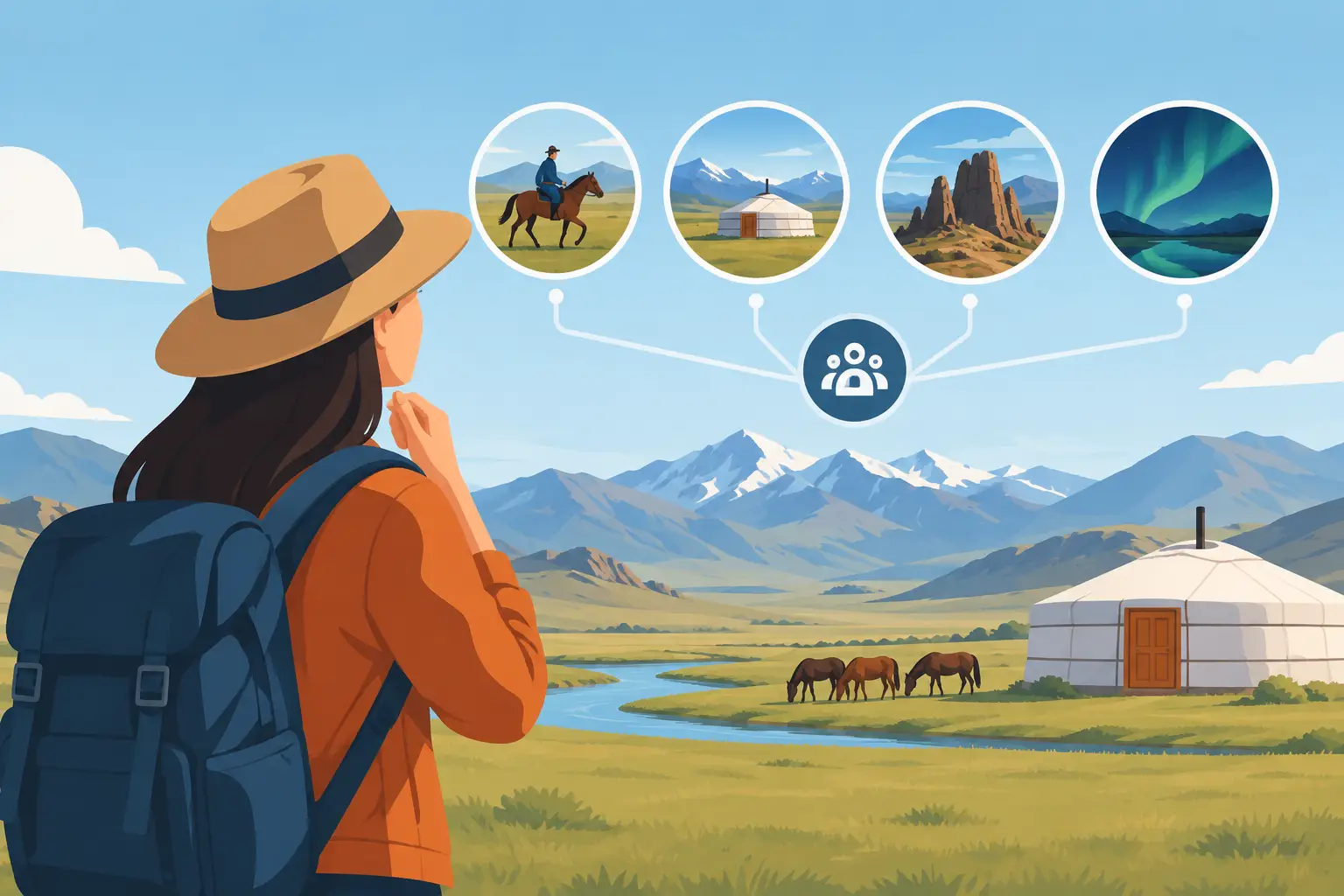
A road across the Gobi can look close on a map and still take a full day of driving. A ger camp that appears remote may have hot showers and reliable meals, while a night with a nomadic family follows the rhythms of livestock, weather, and household life. That contrast is why choosing among the best Mongolia tour companies is less about finding the most polished itinerary and more about finding a local team that understands what the journey actually requires.
Mongolia rewards travelers who are curious, flexible, and well prepared. Its open steppe, sacred mountains, desert horizons, festival arenas, and nomadic heartland are extraordinary precisely because they are not arranged like conventional sightseeing routes. The right operator turns long distances and changing conditions into part of the experience, without pretending they do not exist.
What the best Mongolia tour companies do differently
A strong Mongolia-based operator begins with realistic route design. Mongolia is vast, road conditions vary widely, and even the most experienced drivers must adapt to rain, wind, river levels, traffic around festivals, or a track that has become difficult after weather. An itinerary should allow room for this reality rather than promise an exhausting sequence of distant highlights.
Ask how many hours of driving are expected on travel days, not only how many kilometers are shown on a map. Ask whether the route uses paved roads, open-country tracks, domestic flights, or a combination. A well-paced Gobi Desert journey, for example, balances the pleasure of reaching dunes, cliffs, and wide valleys with enough time to walk, photograph, rest, and absorb the silence.
The best operators also explain the level of comfort honestly. Mongolia offers everything from well-run tourist ger camps to simple family stays and more private, high-comfort arrangements. None is automatically better. The important question is whether the accommodation fits your expectations and the region you are visiting. Remote western Mongolia, northern taiga country, and the Gobi each have different practical limits.
Local guides make an equally important difference. A guide should do more than translate menus and point out landmarks. They should interpret customs with sensitivity, help guests understand what is appropriate in a family ger, manage changing road logistics, and create meaningful conversation without turning nomadic people into a performance for visitors.
Start with the kind of Mongolia you want to experience
Before comparing companies, decide what you want your days to feel like. Travelers often say they want to “see Mongolia,” but Mongolia is not one experience.
A first journey may focus on central Mongolia and the Gobi: broad steppe, ancient capital sites, ger camps, desert landscapes, and time with herding families. This is often a fitting introduction for travelers who want variety with manageable logistics.
Festival travel requires a different approach. Naadam brings wrestling, horse racing, archery, and an unmistakable sense of national celebration, but it can also mean busy roads and limited availability. The Golden Eagle Festival and Sagsai Eagle Festival in western Mongolia offer rare opportunities to witness Kazakh eagle hunting traditions against the Altai landscape. These journeys need careful timing, experienced local coordination, and a willingness to accept that weather can shape the day.
Photography travelers should look for itineraries designed around light and patience, not simply a standard route with a camera-friendly label. Dawn at the dunes, dust moving across the steppe, portraits made with consent, eagle hunters on horseback, wildlife viewing, and dark night skies all require time in the right place. A company should be able to discuss vehicle space for equipment, baggage limits on internal flights where relevant, and how it approaches photography in private homes and communities.
Winter is its own category. The clear air, frozen rivers, and immense quiet can be unforgettable, yet conditions are serious. Proper clothing, reliable heated accommodation, experienced drivers, and contingency planning matter far more than a dramatic itinerary description. Travelers considering the Darkhad Valley or visits connected with Tsaatan reindeer herders should choose a specialist with a clear, respectful plan for remote travel and community visits.
Questions worth asking before you book
The best questions reveal how a company operates when a plan meets real Mongolia. You do not need a long checklist, but you should expect direct answers.
Ask who will lead your trip and whether your guide is Mongolian or has deep local operational experience. Ask about the vehicle type, passenger capacity, luggage arrangements, and whether there is a support vehicle on more remote expeditions. A comfortable seat and a dependable driver matter greatly after several hours on open tracks.
Clarify what is included at each accommodation level. In a ger camp, this may involve shared or private facilities, electricity hours, charging access, and meal arrangements. In a family ger, standards are necessarily simpler and should be presented with respect rather than apology. The experience can be deeply rewarding, but travelers should understand that privacy, bathing facilities, and schedules differ from a hotel stay.
It is also sensible to ask how the company handles delays, illness, severe weather, or route changes. A credible operator will not claim that disruptions never happen. Instead, they will explain how guides communicate, how alternatives are decided, and what support is available during the journey.
Finally, ask about group size. Small groups can create a more relaxed atmosphere in gers, vehicles, and photography locations, while a private journey provides more control over pace and interests. Neither format suits everyone. Couples, families, friends, and travelers with specific interests such as horse riding or wildlife photography may find a tailor-made private route especially valuable.
Responsible travel is practical, not a slogan
In Mongolia, responsible travel begins with how visitors behave in places that are also people’s homes and working landscapes. A good company prepares guests for basic ger etiquette: accept food or drink graciously when possible, use your right hand or both hands when receiving items, avoid stepping in front of elders, and ask before photographing people, interiors, or religious objects. Your guide can explain regional and family-specific customs as they arise.
It also means choosing routes and camps that reduce unnecessary pressure on fragile places. Off-road travel should be handled carefully. Water can be limited in the Gobi. Wildlife should be viewed at a respectful distance. Visits with nomadic families should bring fair benefit and should not disrupt household work, especially during demanding seasonal periods.
Responsible operators build these considerations into the journey itself. The result is usually a better trip, not a more restrictive one. Guests gain a clearer understanding of why a family moves camp, why a herder’s morning cannot be organized around a visitor’s preferred timetable, or why a sacred site calls for quiet attention.
Match the season to your priorities
Summer brings green steppe, active herding life, accessible roads in many regions, and Naadam celebrations. It is also the busiest period for popular ger camps and festival dates. Spring and fall can offer striking light, fewer visitors, and a cooler atmosphere, though temperatures can change quickly and some services are more limited.
Winter offers fierce beauty and exceptional clarity, but only travelers comfortable with cold-weather conditions should make it their first choice. Western Mongolia has its own seasonal rhythm, particularly for eagle festivals and Altai expeditions. The right season depends on whether you prioritize wildflowers, festivals, riding, photography, solitude, snow, or a particular cultural event.
Be cautious of itineraries that claim every region is equally easy at every time of year. Mongolia’s weather and geography are part of its character. Honest seasonal advice is a sign of an operator that is planning for your experience rather than selling a fixed departure.
Look for partnership, not pressure
A thoughtful tour company should ask questions before recommending a route: how you feel about long drives, whether you prefer private facilities when available, what cultural experiences matter to you, and how much physical activity you enjoy. It should also be comfortable suggesting that a shorter route may serve you better than trying to cross half the country in one visit.
Since 2010, Nomadic of the Blue Sky has designed Mongolia journeys around this principle: local guidance, realistic logistics, and time for authentic encounters rather than a rushed collection of stops. That approach matters whether you are joining a small-group adventure, planning a private Gobi route, traveling for Naadam, or preparing for a winter expedition.
The Eternal Blue Sky is generous to travelers who leave room for the unexpected. Choose a company that respects your comfort, your time, and the communities welcoming you, then let Mongolia’s long roads and open horizons do what they do best: make the journey feel larger than the plan.