Mongolia Travel Blog
Eagle Hunter Tour Mongolia: What to Expect
Plan an eagle hunter tour Mongolia with respectful local access, Altai landscapes, refined ger camps, and expert support from arrival to your departure.
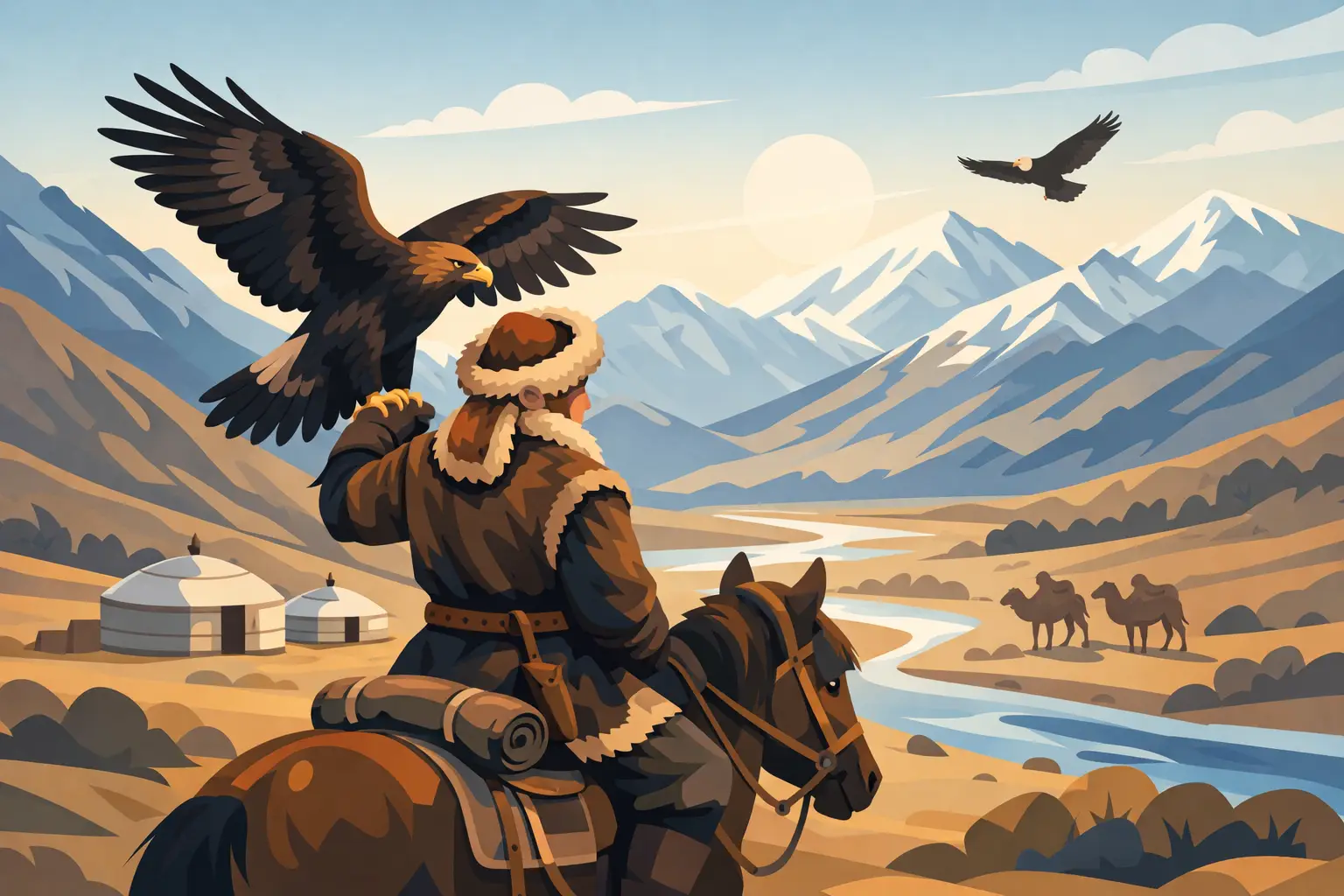
A golden eagle does not arrive on cue. On the high slopes of western Mongolia, weather shifts quickly, horses pick their own careful paths across the grass, and a hunter may spend part of the morning tending to family work before riding out. That is precisely what makes an eagle hunter tour Mongolia so memorable when it is planned well: it offers an encounter with a living Kazakh tradition, not a staged spectacle detached from its homeland.
For travelers drawn to Mongolia’s most remote frontier, the reward is far greater than a photograph. You may sit in a family ger beneath the vast Eternal Blue Sky, learn how an eagle’s equipment is made and maintained, ride through a broad Altai valley, and understand why this partnership between hunter, horse, and bird remains deeply respected. The experience calls for thoughtful timing, comfortable logistics, and local relationships that allow every visit to unfold with care.
Why Western Mongolia Is the Heart of Eagle Hunting
The traditional eagle hunters of Mongolia are concentrated in Bayan-Olgii Province, in the country’s far west. This dramatic region lies beyond the familiar routes of the Gobi and central steppe, close to the borders of Kazakhstan, China, and Russia. Its landscape is defined by glaciated peaks, open valleys, clear rivers, and the layered blue distance of the Altai Mountains.
Many eagle hunters are ethnic Kazakhs, and their culture gives the journey its distinct character. Kazakh is widely spoken in the province, homes are often decorated with richly patterned textiles, and hospitality centers on shared tea, food, and conversation. Golden eagle hunting, known locally as berkutchi tradition, is passed through generations, though each hunter’s path is personal. The eagle is a working animal and a powerful companion, cared for with knowledge developed over years rather than a prop for visitors.
A respectful visit takes place on the family’s terms. Some travelers meet a hunter at home, while others accompany them into the landscape for a riding demonstration or a quiet conversation about training and seasonal life. No two days look alike, and that is part of the privilege of traveling so far from fixed schedules and crowded attractions.
What an Eagle Hunter Tour Mongolia Can Include
An expertly designed journey usually begins with a flight from Ulaanbaatar to Olgii, the provincial capital, followed by private overland travel into the surrounding valleys. The distances are substantial, and roads can range from paved stretches to rough tracks. A capable local driver, well-maintained vehicle, and guide who understands the terrain make a meaningful difference to both comfort and safety.
Your time with an eagle hunter family may include an introduction to the eagle and its hood, gloves, perch, and traditional hunting attire. You may watch the hunter prepare to ride or see the bird called from a distance during a controlled demonstration. The most affecting moments are often quieter: tea inside a warm ger, a child helping with chores, the sound of wind moving across the felt walls, or an evening spent looking toward snow-tipped ridges.
Accommodations can be tailored to your preferred balance of immersion and comfort. In Olgii, a well-chosen local hotel offers a practical beginning or end to the journey. In the countryside, a private ger camp or carefully arranged family stay brings you closer to the nomadic heartland. Refined camp arrangements can provide proper bedding, attentive meals, and private facilities where conditions allow, while still preserving the feeling of being genuinely out in the Altai.
For many private travelers, an eagle hunter visit is best woven into a broader western Mongolia itinerary. Days can be added for horseback riding, gentle hiking, landscape photography, visits to Kazakh communities, or time in the dramatic national parks of the Altai. The region rewards an unhurried pace. A rushed overnight visit may yield a fine image; three or four nights in the area allow room for weather, conversation, and the surprising moments that become a journey’s lasting memories.
A Festival or a Private Family Visit?
The Golden Eagle Festival is the best-known event in Bayan-Olgii, generally held in early autumn. It gathers hunters and their eagles for competitions in riding, traditional dress, and bird handling. For travelers who enjoy cultural events, the festival is vivid, energetic, and visually extraordinary. It is also the busiest period, with more visitors, higher demand for flights and accommodation, and less space for quiet reflection.
A private visit with an eagle hunter family offers a different kind of access. It can be more intimate and more flexible, especially outside the festival season, but it should never be expected to follow a show timetable. Hunters have family responsibilities, weather conditions matter, and the welfare of the eagle comes first. For many discerning travelers, this is the better trade-off: less choreography, more real connection.
A well-planned itinerary can also combine both. Attend the festival for its pageantry, then travel beyond Olgii for time with a family in a quieter valley. This creates a fuller perspective on a tradition that is often reduced to a single striking image.
The Best Time to Go
Late August through early October is a favored window for an eagle hunter journey, particularly for guests hoping to attend festival events and enjoy generally accessible mountain roads. Days can still be pleasantly mild, although evenings in the Altai are cool and the weather can change without warning.
Winter carries a different appeal. Eagle hunting is historically associated with colder months, and snow-covered valleys create remarkable photographic conditions. Yet winter travel requires a higher tolerance for cold, more conservative routing, and careful operational planning. It suits travelers who value atmosphere and authenticity over ease, and who are comfortable with a more expedition-like experience.
Summer offers greener valleys and long daylight hours, making it ideal for broader hiking, horse riding, and family-focused exploration. Eagles may still be seen, but the visual drama and seasonal rhythm differ from autumn and winter. The right season depends on whether your priority is a festival, a private cultural encounter, landscape activities, or snow-covered Altai scenery.
How to Travel Respectfully With Eagle Hunters
The strongest eagle hunter experiences are built around mutual respect. Ask before taking close portraits, especially inside a family home. Listen when your guide explains local etiquette, and avoid treating the eagle as an object to be handled casually. The bird’s welfare should remain central to every encounter.
It also helps to arrive with curiosity rather than assumptions. Eagle hunting is sometimes presented as though it belongs entirely to the distant past. In reality, Kazakh families in Bayan-Olgii live modern, varied lives while sustaining traditions that remain meaningful to them. A thoughtful guide can translate more than language, providing context around family life, faith, seasonal movement, and the responsibilities behind the hunter’s public image.
Choosing arrangements that directly involve local families matters as well. It supports hosts, encourages visits shaped by community consent, and creates a more honest exchange. Nomadic of the Blue Sky designs these journeys with Mongolian-born guides, trusted local partners, and the practical support needed to travel confidently in a region where conditions can be wonderfully wild.
Planning the Journey With Confidence
Western Mongolia is remote even by Mongolian standards. Domestic flight schedules may shift, road travel can take longer than maps suggest, and the best family visits often require flexibility. Luxury here is not about insulating yourself from the place. It is about having the right people, transport, accommodations, and contingency planning so you can be fully present when the moment arrives.
A private itinerary should allow buffer time around internal flights, avoid overly ambitious daily drives, and match activities to your comfort level. Travelers who prefer light walks and warm camp evenings can have an exceptional experience without riding. Those eager for horseback travel or highland hiking can build a more active route with appropriate preparation. Families benefit from a gentler pace and guides skilled at making cultural encounters engaging for different ages.
Bring layers for sun, wind, and cold, even in summer. More importantly, bring patience. An eagle hunter journey is not measured by how many demonstrations fit into a day. It is measured by the rare feeling of being welcomed into a landscape and tradition that remain proudly their own.
When the eagle lifts from the hunter’s arm and crosses an Altai valley, the scene is unforgettable. Give it enough time, context, and care, and what stays with you may be the quieter memory afterward: tea shared in a ger, mountains turning violet at dusk, and the sense that Mongolia’s wild beauty has been encountered on its own terms.
Plan Your Mongolia Journey
Explore locally operated tours or ask our Mongolia team to tailor a private journey.