Mongolia Travel Blog
Flaming Cliffs Mongolia Tour, Planned Well
Plan a Flaming Cliffs Mongolia tour with expert local guides, private desert transport, refined ger-camp comfort, and time for the Gobi’s deeper stories.
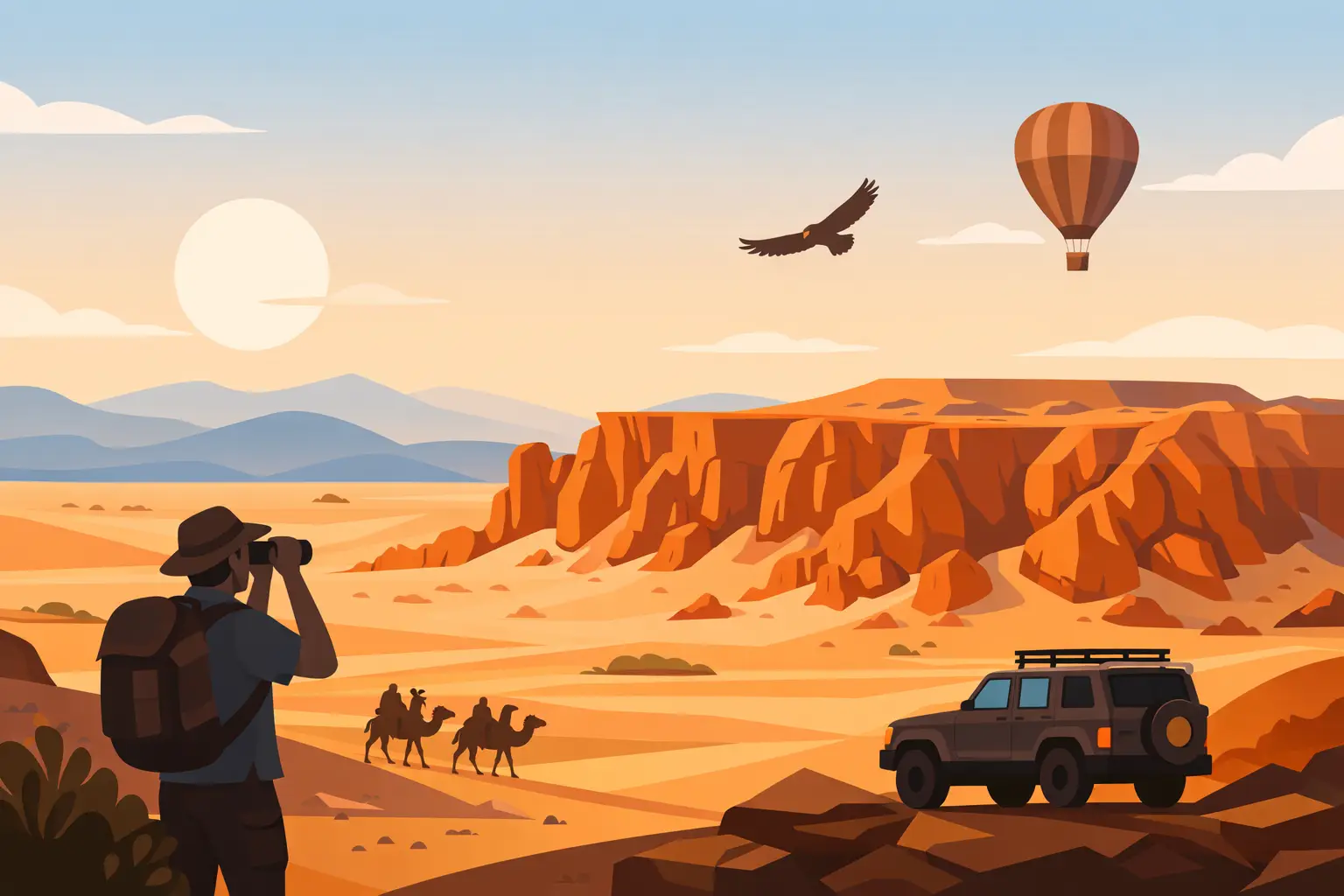
The first glimpse of Bayanzag often arrives in silence: a line of red sandstone rising from the pale Gobi steppe, its ridges glowing copper and flame-colored beneath Mongolia’s vast blue sky. A Flaming Cliffs Mongolia tour is not simply a stop for dinosaur enthusiasts. It is an opportunity to experience the Gobi at its most elemental, where paleontological history, nomadic life, and desert horizons meet in one remarkable place.
Bayanzag is remote enough to feel genuinely removed from the usual routes of travel, yet it can be explored with ease when the journey is carefully designed. The difference lies in the pacing: private transport that allows time for the landscape, a guide who can explain what happened here nearly a century ago, and comfortable camp stays that make a desert night feel like a privilege rather than an expedition to endure.
Why a Flaming Cliffs Mongolia Tour Matters
Known locally as Bayanzag, the Flaming Cliffs earned their international name from American explorer Roy Chapman Andrews, who saw the sandstone blaze in the late-afternoon sun. His expeditions in the 1920s made the area famous for one of paleontology’s most significant discoveries: the first scientifically documented dinosaur eggs, along with fossil remains of Protoceratops and Velociraptor.
That history gives the site a powerful sense of scale, but the experience is richer than a museum lesson in the open air. The cliffs are part of the Gobi Desert’s living geography. Saxaul shrubs hold their ground in the sand. Herds of camels and goats may appear on distant ridges. Wind shifts across the ravines, carrying the dry, mineral scent of the desert.
For travelers who have seen many of the world’s landmark destinations, Bayanzag offers something rarer: the feeling of standing in a place that has not been overinterpreted or overbuilt. There are no elaborate viewing platforms separating you from the landscape. With an experienced Mongolian guide, the story is told where it happened.
The Best Time to Visit Bayanzag
Most Flaming Cliffs journeys take place from late May through September, when the Gobi’s roads are most accessible and ger camps are operating. June and early July bring long daylight hours, green steppe in parts of the region, and generally comfortable conditions for overland travel. August is often a fine choice for travelers seeking warm days with a little more softness in the landscape after summer rains.
September has particular appeal for those who prefer crisp air, quieter camps, and exceptional light for photography. The desert colors become especially clear in the lower autumn sun. Even in summer, however, the Gobi rewards preparation. Midday can be hot, while evenings can turn cool quickly. A well-planned itinerary leaves room for an early walk or sunset visit rather than placing all of Bayanzag’s magic in the hottest hours of the day.
Spring and fall departures require greater flexibility around weather. Winter is magnificent but severe, best suited to travelers prepared for a highly specialized private journey rather than a conventional desert itinerary.
How to Shape a Flaming Cliffs Mongolia Tour
Bayanzag is usually most rewarding as part of a thoughtfully paced Gobi itinerary rather than a brief out-and-back excursion. The desert distances are considerable, and each stop gains meaning from the one before it. From Ulaanbaatar, travelers typically fly south to Dalanzadgad, then continue by private vehicle through the Gobi’s changing landscapes.
A classic route may combine Bayanzag with the dramatic dunes of Khongoryn Els and the broad, layered valley of Yolyn Am in Gobi Gurvansaikhan National Park. These places are distinctly different. Yolyn Am is a narrow mountain gorge where ice can linger into summer. Khongoryn Els offers sweeping sand dunes and camel-herding communities. Bayanzag brings the deep-time story of the desert into focus.
The order matters. Beginning in Dalanzadgad gives travelers a gentle transition from the city to the open country. Continuing onward through the dunes and cliffs creates a sense of progression, from rocky mountain terrain to sand and then to the red fossil beds. For some private journeys, an additional night near Bayanzag is worthwhile, especially for guests who value unhurried photography, archaeology, or meaningful time with local families.
A private vehicle changes the rhythm
Roads in the Gobi are often tracks across open terrain rather than paved highways. This is part of the adventure, but it is also why reliable vehicles, skilled drivers, and realistic travel times matter. A private journey can pause for a herd of Bactrian camels, a sudden change in weather, or an impromptu invitation for milk tea at a family ger.
There is a trade-off: reaching several major Gobi sites in a short time means longer driving days. Travelers who prefer a more restorative pace should choose fewer stops and spend two nights in at least one or two locations. The Gobi is not a destination to rush past from a window.
Choose camp comfort with intention
Ger camps near Bayanzag and across the Gobi range from simple, welcoming properties to more refined stays with private facilities and elevated service. Availability varies by location, and the most remote areas do not always offer the same standard as Ulaanbaatar’s leading hotels. Yet this is precisely where thoughtful planning matters most.
The right camp offers a warm bed, attentive meals, a private or well-appointed bathroom arrangement, and a peaceful setting beneath an enormous night sky. Luxury in the Gobi is not about importing an urban hotel into the sand. It is about comfort, privacy, and care that allow the landscape to remain the main event.
Beyond Fossils: The Human Gobi
The Flaming Cliffs sit within a region shaped not only by ancient life, but by contemporary nomadic traditions. Families continue to move seasonally with their livestock, adapting to a climate that can be generous one month and unforgiving the next. A respectful visit to a local ger can reveal the daily intelligence behind this way of life: the arrangement of the home, the work of tending animals, and the hospitality offered before conversation has even found a common language.
These encounters should never feel staged. The best are naturally timed, guided by local relationships and a genuine willingness to listen. Your guide can provide context around customs, including how to enter a ger, receive food or tea graciously, and photograph people only with permission.
The desert also asks travelers to consider its fragility. Fossil areas should be explored with care, and nothing should be removed from the site. Staying on sensible routes, minimizing waste, and supporting locally rooted camps and guides help protect a landscape that has endured for millions of years, but remains vulnerable to careless visitation.
What to Bring for the Cliffs
Packing for Bayanzag is less about technical gear than intelligent layers. Bring a light, breathable layer for the day, a warm jacket or fleece for evenings, sunglasses, sunscreen, and a scarf or buff for wind and dust. Closed-toe walking shoes are preferable to sandals on uneven sandstone and desert ground.
A camera is welcome, but do not underestimate the value of binoculars. They add detail to distant camel herds, raptors, and the shifting forms of the cliffs. A reusable water bottle is equally useful. Your vehicle can carry water and essentials, while your guide manages the practical details of each day.
Cell service can be intermittent outside settlements. For many guests, that becomes one of the journey’s quiet pleasures. Still, it is reassuring to travel with an operator that maintains round-the-clock in-country support and can adapt quickly if weather, flight schedules, or road conditions change.
A Journey Worth Giving Time To
A first visit to the Flaming Cliffs can fit within a five- to seven-night Gobi journey, though travelers with more time may combine the desert with Ulaanbaatar, the Orkhon Valley, or Terelj National Park. Families may prefer shorter drives and camp stays with more space to settle in. Couples often choose a slower private route built around sunset walks, quiet dinners, and the freedom to linger. For paleontology enthusiasts, additional guide interpretation and time at the site can be arranged.
Nomadic of the Blue Sky designs these decisions around the traveler rather than forcing the traveler into a fixed route. The goal is not to fill every hour. It is to create the conditions for Bayanzag to make its own impression: red cliffs at dusk, a cup of tea in a ger, and a night sky so clear that the desert feels almost timeless.
Give the Flaming Cliffs enough room in your itinerary, and they will offer more than a photograph. They may become the moment when Mongolia’s nomadic heartland feels closest, most ancient, and entirely your own.
Plan Your Mongolia Journey
Explore locally operated tours or ask our Mongolia team to tailor a private journey.