Mongolia Travel Blog
How to Choose a Gobi Sand Dunes Ger Camp
Plan a refined stay at a Gobi sand dunes ger camp, with guidance on comfort, location, culture, and the desert moments that make Mongolia unforgettable.
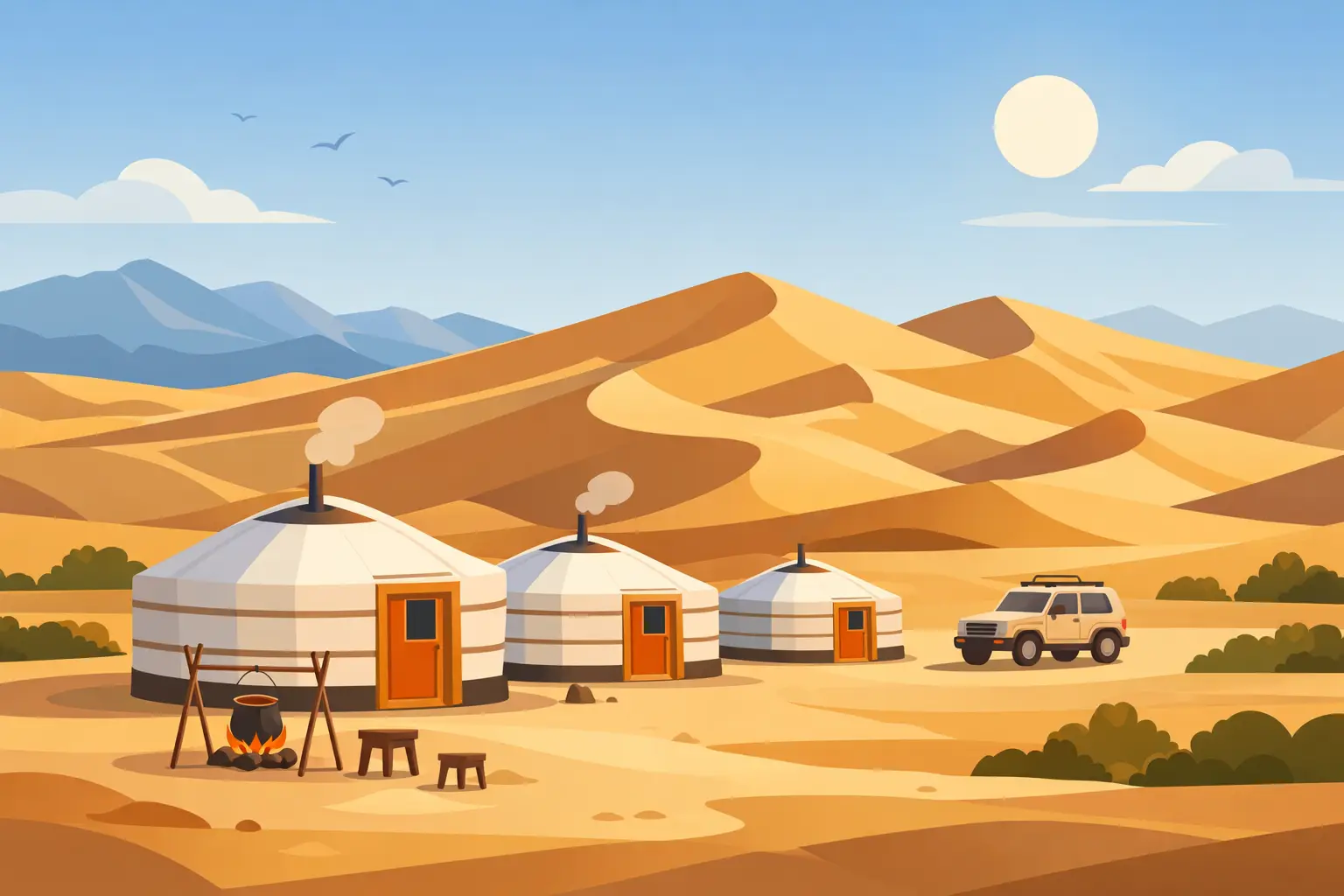
The first sight of Khongoryn Els changes the scale of a Mongolia journey. Golden ridges rise from the open Gobi, some reaching nearly 1,000 feet, while the low hum of wind moves across their slopes. A well-chosen Gobi sand dunes ger camp places you close enough to feel that immense silence at dawn, yet comfortable enough to return to a warm meal, a proper bed, and thoughtful service after a day in the desert.
For travelers who value both wild landscapes and well-managed comfort, a ger camp is not simply a place to sleep. It is the setting that determines whether the dunes feel rushed or deeply experienced. Location, camp character, facilities, and the expertise behind the itinerary all shape the stay.
Why Stay Near the Gobi Sand Dunes?
Khongoryn Els, often called the Singing Dunes, is among the Gobi Desert's defining landscapes. Its long band of sand runs beside the green ribbon of the Khongoryn Gol River, creating a striking meeting point between dune, grassland, mountain, and open sky. The contrast is especially memorable in late afternoon, when the sand turns amber and the distant Altai Mountains deepen into blue shadow.
An overnight stay is essential because the desert reveals itself beyond the daytime visit. Before breakfast, the dunes are still cool and nearly empty. At sunset, their contours become sharper with every changing angle of light. After dark, far from city glare, the Eternal Blue Sky gives way to an exceptionally clear field of stars.
A camp close to the dunes also allows for a gentler rhythm. Rather than driving long distances after an excursion, you can walk out for sunrise, ride with a local camel herder in the cooler hours, or simply sit outside your ger with tea and watch the landscape settle into evening.
What a Refined Ger Camp Stay Feels Like
A traditional ger is perfectly suited to Mongolia's shifting climate. Its round, felt-lined structure retains warmth when desert temperatures drop, while its roof crown brings daylight into the interior. In a quality camp, this traditional form is paired with careful hospitality: comfortable beds, crisp linens, bedside lighting, heating as needed, and space to unpack rather than live from a suitcase.
The experience should feel grounded in place, not overly styled. The best camps preserve the simple beauty of the ger while delivering the standards discerning travelers expect in a remote setting. Dining is typically in a central restaurant ger or lodge, where meals draw on Mongolian ingredients alongside familiar international dishes. A thoughtful kitchen makes a meaningful difference after a full day outside, particularly for guests with dietary preferences.
Private ensuite bathroom facilities are available at some camps, while others offer well-maintained shared washhouses with hot showers and modern toilets. This is one of the most important distinctions to discuss during planning. In the Gobi, luxury is not about pretending the desert is a city hotel. It is about knowing what is available, choosing the right level of privacy and comfort, and having every detail handled in advance.
The value of a private ger
For couples, families, and small groups, a private ger provides calm at the end of the day. It gives you room to rest, adjust to the broad desert quiet, and enjoy the ritual of waking to the first light on the sand. Families may prefer adjacent gers or a flexible camp arrangement, while travelers seeking a more secluded atmosphere should ask about camp size, spacing between gers, and proximity to communal areas.
Choosing the Right Gobi Sand Dunes Ger Camp
Not every camp near Khongoryn Els offers the same experience. Some are designed for larger group departures and can feel busy during peak summer weeks. Others are better suited to private journeys, with attentive hosting, a quieter setting, and more flexibility around meals and activities.
Start with location. A camp set near the dune base offers easy access for walks and sunset excursions, but the most immediate locations can be exposed to wind and attract more visitors. A camp slightly removed may feel more peaceful and offer broader views, though it requires a short drive to reach the tallest dunes. There is no universal best choice - the right balance depends on whether your priority is direct dune access, privacy, or a sense of wider desert immersion.
Then consider the camp's practical standards. Reliable electricity, charging availability, heating, hot water, and bathroom configuration matter more than decorative details in such a remote region. Wi-Fi may be limited or unavailable, which many guests consider part of the appeal. Your guide and driver should remain equipped to communicate and coordinate logistics, even when guests choose to step away from their screens.
Finally, consider how the camp connects you to the surrounding community. The dunes are not an empty backdrop. Families continue to herd camels and livestock across this region, following seasonal patterns shaped by weather, water, and pasture. A locally informed visit can introduce this way of life with respect, rather than turning it into a staged encounter.
Experiences That Belong in Your Dune Stay
The strongest desert itineraries leave room for unplanned moments, but a few experiences deserve careful timing. Climbing the dunes is best early in the morning or late in the afternoon, when the sand is cooler and the light is more forgiving. The ascent can be demanding, especially on steep faces where each step slides back, but the view across the Gobi rewards patience.
A camel ride can be a graceful way to understand the pace of the landscape. Bactrian camels, with their two humps and remarkable tolerance for harsh conditions, have long been part of Gobi life. The experience should be led at a comfortable pace and arranged with local herders who know both their animals and the terrain.
Nearby, the Khongoryn Gol River valley offers a softer counterpoint to the sand. Depending on the season, its pastures may be dotted with grazing animals and family gers. Your guide can explain the customs of visiting, from accepting a bowl of tea to photographing people and homes with courtesy.
For many travelers, the evening is the highlight. A simple outdoor aperitif, a private dinner, or time around a small campfire can make the desert feel personal rather than programmed. Wind conditions and local fire rules always take priority, but the atmosphere needs little embellishment.
When to Go and What to Expect
The usual travel season for the Gobi runs from late May through September. June and September often bring more moderate temperatures and fewer visitors, while July and August offer warmer days and fuller activity at camps. Summer weather can still be unpredictable. A warm afternoon may be followed by a cool, windy evening, and temperatures can drop sharply overnight.
Pack with layers rather than relying on one heavy item. A light insulated jacket, sun hat, sunglasses, scarf or buff, walking shoes with good grip, and sunscreen are useful throughout the season. Sandals are pleasant around camp, but they are less practical for a dune climb. Cameras and phones benefit from a small protective pouch, particularly on windy days.
Traveling overland to the dunes is part of the adventure. The route typically involves substantial distances across open terrain, often by comfortable 4x4 vehicle with an experienced Mongolian driver. Private aviation or tailored routing can reduce drive time for travelers seeking a more exclusive pace, though overland travel offers the evolving views that make the Gobi so compelling: fossil-strewn plains, red cliffs, grazing herds, and seemingly endless horizons.
The Difference Expert Planning Makes
A Gobi journey involves more than reserving a ger. Camp availability, road conditions, flight schedules, seasonal weather, and the preferred pace of each traveler need to work together. An experienced local team can decide whether the dunes should be a one-night stop or a more leisurely two-night stay, arrange the right camp category, and build in time for the moments that cannot be scheduled - a sudden herd of camels crossing the plain, a rainstorm moving across the horizon, or a perfectly silent sunrise.
Nomadic of the Blue Sky designs private Mongolia journeys with Mongolian-born guides, carefully selected camps, comfortable transport, and round-the-clock in-country support. That local knowledge matters most when the landscape is vast and the logistics are not visible from a map.
Give the dunes more than a quick photograph. Stay long enough to hear the sand shift beneath the wind, share a quiet cup of tea in your ger, and let the Gobi set the pace.
Plan Your Mongolia Journey
Explore locally operated tours or ask our Mongolia team to tailor a private journey.