Mongolia Travel Blog
How to Choose the Best Mongolia Tours for You
Find the best Mongolia tours for your style, from the Gobi and Naadam to eagle festivals, with practical advice on seasons, routes, comfort, and culture.
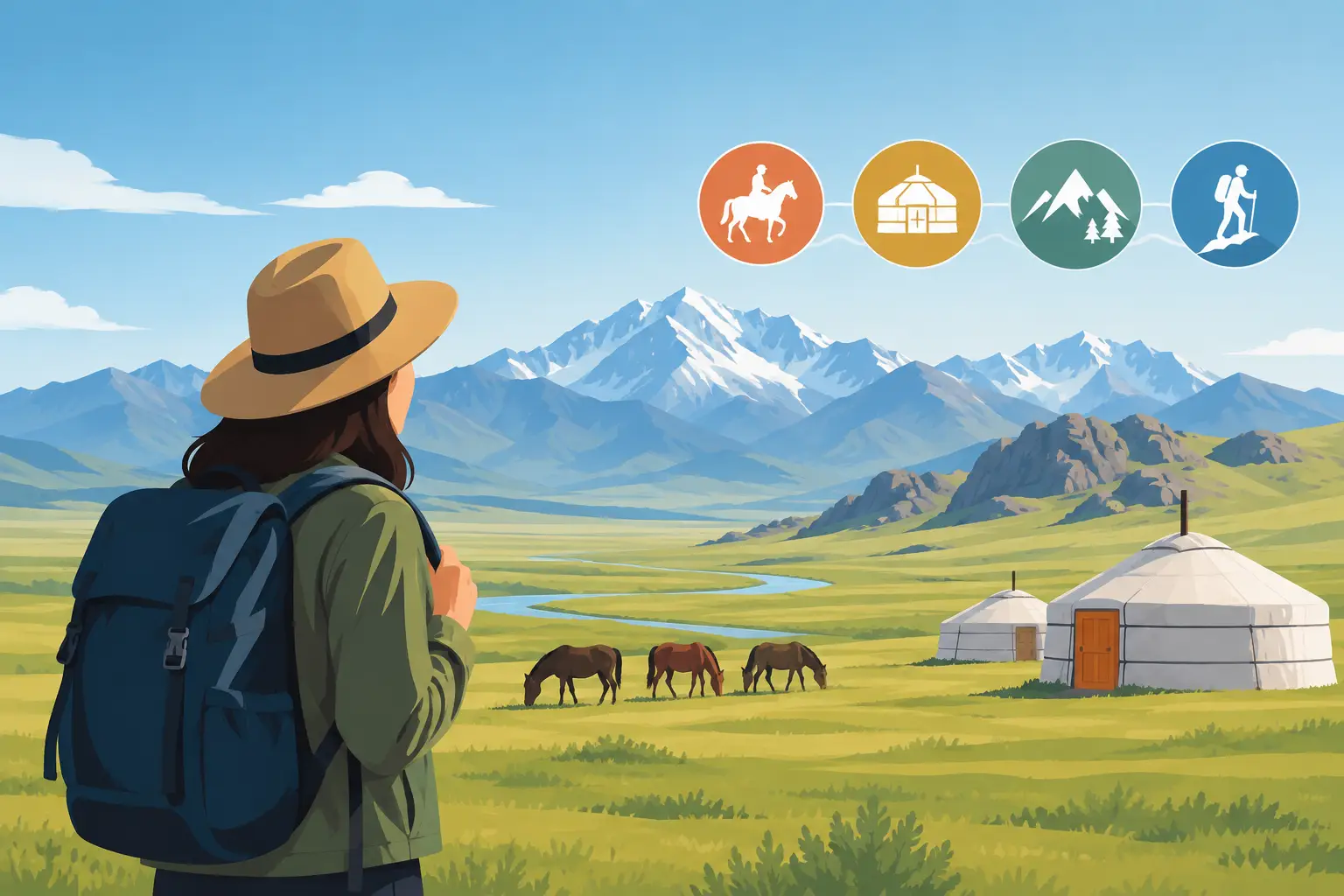
A ger camp appears on the horizon after hours of open steppe, smoke rising from its stove beneath Mongolia’s Eternal Blue Sky. That sense of space is why people come. But the best Mongolia tours are not defined by a single famous sight or the longest route on a map. They are the journeys that match your available time, appetite for rough roads, preferred level of comfort, and reason for traveling in the first place.
Mongolia rewards travelers who plan with intention. A route that includes the Gobi Desert, central steppe, and Khuvsgul Lake may look straightforward on a map, but the country’s distances are real, paved roads do not reach every highlight, and weather can reshape a day. Choosing well means understanding what each region and season can genuinely offer.
What Makes the Best Mongolia Tours Different
The strongest itineraries leave room for Mongolia itself. A family may invite you into their ger for salty milk tea. Your guide may adjust a driving day because a summer storm has changed the condition of a track. Horses, goats, cranes, and herds of camels do not follow a fixed schedule. These are not inconveniences when a journey is designed realistically - they are part of traveling through a living nomadic landscape.
A good tour balances those unscripted moments with dependable logistics. It should use vehicles suited to the route, drivers familiar with the terrain, guides who can interpret local customs, and overnight stops placed sensibly between long travel days. In remote areas, a well-run trip is less about filling every hour and more about arriving with enough energy to walk, photograph, meet people, and absorb where you are.
Small-group departures work especially well for travelers who enjoy shared adventure and a set route. They can bring together people with similar interests while keeping the group small enough for a personal atmosphere. A tailor-made private journey is often the better choice for couples, families, photographers, or travelers with particular interests such as horse riding, birdwatching, or a slower pace. Neither is automatically better. The right format depends on how much flexibility matters to you.
Choose a Tour Around Your Mongolia Travel Priority
Trying to see every region in one visit is a common mistake. Mongolia is larger and more varied than many first-time visitors expect. The most rewarding journeys usually have a clear center of gravity.
For desert landscapes and wide-open adventure
The Gobi is a natural choice for a first Mongolia journey. Its character changes dramatically from the flaming cliffs of Bayanzag to the immense dunes of Khongoryn Els and the rocky valleys of Gurvan Saikhan National Park. This is not one uniform desert. You may see camels crossing pale sand, green strips near a river, and mountain formations in the same week.
A Gobi route suits travelers comfortable with long overland days and changing road conditions. Domestic flights can reduce driving on certain itineraries, although schedules and weather can affect plans. The best approach is to allow enough time to experience the region rather than treating it as a quick stop between airports.
For culture at its most vivid
Naadam Festival tours offer a remarkable window into Mongolia’s sporting traditions: wrestling, horse racing, and archery. The excitement is real, but Naadam is also a busy travel period. Accommodation and internal transportation require early planning, particularly if you want to combine the main festival celebrations with quieter countryside events.
In western Mongolia, the Golden Eagle Festival and Sagsai Eagle Festival bring travelers close to Kazakh eagle-hunting traditions. These are compelling photography and cultural journeys, but they demand practical thinking. Western Mongolia is remote, autumn temperatures can fall quickly, and the experience is stronger when the itinerary includes time beyond the festival grounds - in the Altai landscapes, with local families, and on the broad valleys that shape daily life there.
For mountains, lakes, and a slower rhythm
Khuvsgul Lake offers forested shores, clear water, and a cooler climate than the Gobi. It appeals to travelers seeking walks, horseback experiences, and time near one of Mongolia’s most beautiful bodies of water. Summer is popular, though conditions can be changeable, with bright sun, wind, and rain all possible in a day.
Central Mongolia combines well with many first journeys. The Orkhon Valley, Karakorum area, and open grasslands offer a deeper sense of the country’s history and nomadic heartland. It is often a better fit for travelers who prefer cultural depth and manageable driving days over a fast-moving expedition across several regions.
For winter and true remoteness
Winter Mongolia is not simply a summer itinerary with more layers. It is a distinct travel experience: clear light, frozen rivers, smoke curling from gers, and temperatures that require serious preparation. Journeys to the Darkhad Valley and Tsaatan reindeer herder communities are meaningful but logistically demanding. They should be approached with experienced local support, suitable cold-weather equipment, flexible expectations, and respect for communities whose winter routines cannot be staged for visitors.
Match the Season to the Experience
Summer, generally from June through August, is the broadest season for classic overland travel. Grasslands are green, ger camps are active, and Naadam takes place in July. It is also Mongolia’s warmest period, though nights can still be cool and rainfall can make unpaved tracks slower.
Late spring and early fall bring fewer travelers, sharper light, and a more spacious feeling on the steppe. September is particularly appealing for photography, the Altai eagle festivals, and travelers who enjoy cooler temperatures. In high mountain and northern areas, conditions become colder earlier than many visitors anticipate.
Winter runs roughly from November into March, depending on region and conditions. It can be intensely beautiful, but it is best for travelers who actively want the cold-weather experience. Daylight is shorter, many services operate differently, and comfort depends on careful preparation rather than a thick coat alone.
Look Closely at Transport and Accommodation
A Mongolia itinerary should be clear about how you will travel. On paved stretches, driving can be smooth and efficient. On remote routes, travel often means unpaved tracks, river crossings in season, dust, and hours without passing another vehicle. Four-wheel-drive vehicles are essential for many journeys, but even the best vehicle cannot turn a rough road into a short one.
Ask whether an itinerary builds in recovery time after major driving days. A route with a domestic flight may be more comfortable, while a fully overland journey can reveal gradual changes in landscape and village life. The trade-off is simple: flights save time, but overland travel often provides more context.
Accommodation ranges from hotels in Ulaanbaatar to tourist ger camps and family gers in the countryside. A ger camp can be comfortable and memorable, yet facilities vary by location. Shared bathroom arrangements are common in more remote camps, hot water may be limited, and electricity can depend on generators or solar power. Private tours can sometimes offer upgraded accommodation or more private facilities, but remote Mongolia should never be sold as a city hotel experience.
Cultural Encounters Should Be Respectful, Not Rushed
Meeting nomadic families is one of the most valued parts of a Mongolia journey. The encounter is better when it is not treated as a performance. Listen to your guide, accept food or drink graciously when you can, ask before photographing people or the interior of a ger, and avoid stepping over household items or touching belongings without invitation.
Small gestures matter. A visit may include conversation through interpretation, watching daily work, or simply sitting quietly with tea while animals move outside. Responsible travel means recognizing that families are welcoming you into their home, not providing a backdrop for a photograph.
Questions Worth Asking Before You Book
Before choosing between Mongolia tours, ask how many hours of driving are expected on the longest days, what accommodation is used in each region, and how the operator handles weather-related changes. Ask who leads the trip, whether the guide speaks your language fluently, and whether the route allows time for walks, photography, or spontaneous local encounters.
For festival, riding, and winter trips, ask more specifically about the physical demands and equipment needed. A horse riding journey requires more than an interest in horses; it requires comfort with time in the saddle and an understanding that riding conditions vary. Photography trips should account for golden-hour light, time at key locations, and the reality that wildlife sightings can never be guaranteed.
The best Mongolia tours make you feel prepared without making the country feel overmanaged. Choose a journey with a clear purpose, experienced local guidance, and enough breathing room for the steppe to surprise you. Mongolia’s most enduring memories often arrive between the planned highlights: a distant line of horses, a shared bowl of tea, or silence beneath a sky that seems to have no end.
Plan Your Mongolia Journey
Explore locally operated tours or ask our Mongolia team to tailor a private journey.