Mongolia Travel Blog
What to Expect on Mongolia Winter Tours 2026
Plan Mongolia winter tours 2026 with clear advice on cold-weather travel, festivals, nomadic stays, transport, photography, and choosing the right itinerary.
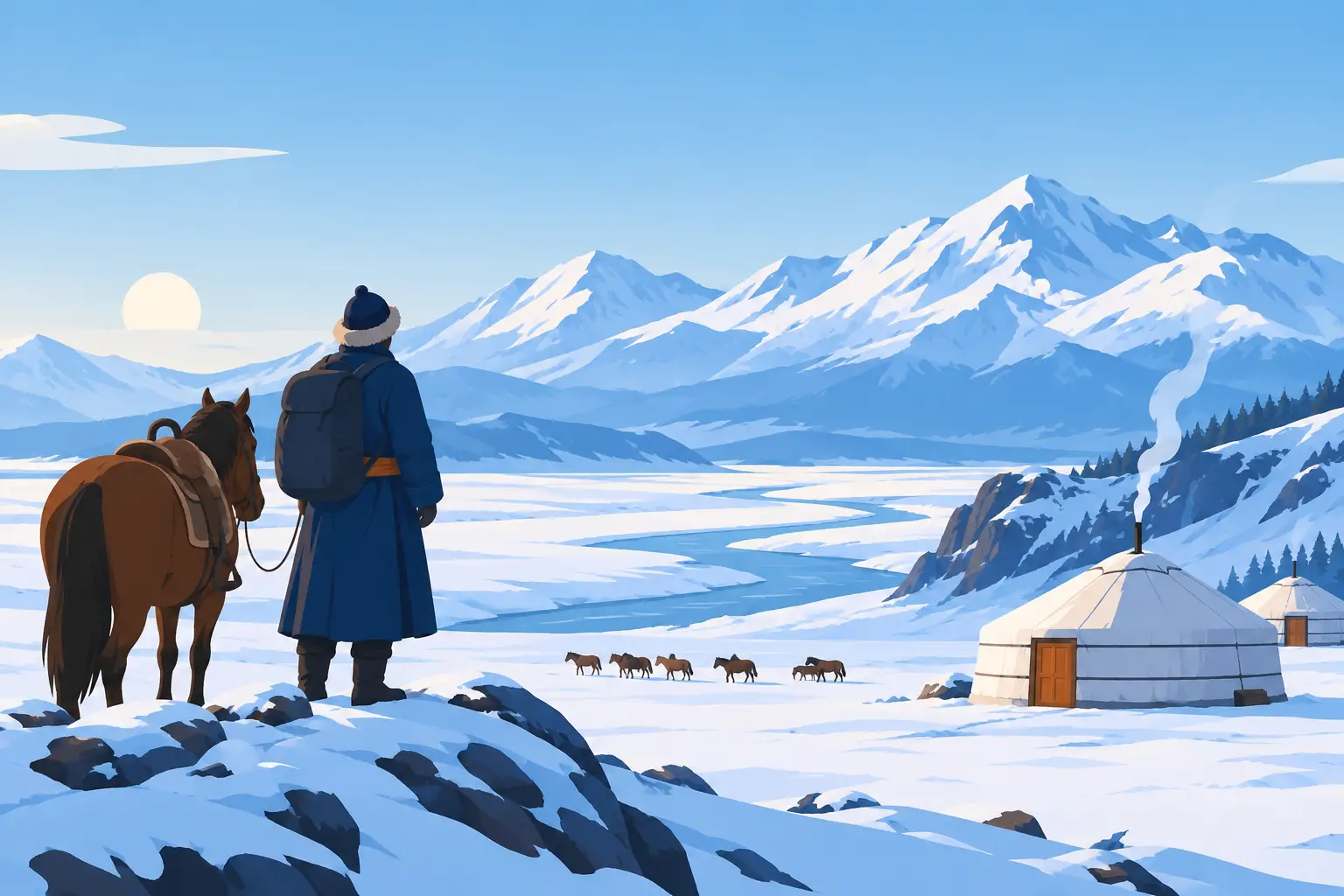
At minus 20°F, the sound of boots on snow is sharp, smoke rises straight from ger chimneys, and the open steppe feels larger than it does in any other season. Mongolia winter tours 2026 are for travelers who want to see the nomadic heartland at its most elemental - quieter roads, clear light, frozen lakes, and daily life shaped by real winter conditions.
Winter is not simply Mongolia with more layers. It changes the pace of travel, the places that are practical to reach, and the kind of cultural encounters that feel most meaningful. With the right itinerary, vehicle, guides, and expectations, it can be one of the most memorable times to travel beneath the Eternal Blue Sky.
Why Choose Mongolia Winter Tours 2026?
Mongolia’s winter season generally runs from November through March, with the deepest cold often arriving between December and February. The weather is dry rather than damp, and cloudless days can bring striking sunshine even when temperatures remain well below freezing. Ulaanbaatar is famously cold in winter, while rural temperatures vary considerably according to altitude, wind, and location.
The reward for accepting those conditions is access to a different Mongolia. Summer’s busy festival grounds and green grasslands give way to wide white valleys, livestock gathered near winter shelters, and long evenings around the stove in a family ger. In many regions, daily routines become more visible: herders tend animals, prepare fuel, share milk tea, and organize life around the weather.
Winter also favors travelers who value space and photography. The low sun creates soft, angled light for much of the day. Snow defines the shapes of mountains and dunes, while frost, horse breath, and the texture of felt-lined gers add detail that is absent in warmer months. Photographers should still be prepared to work quickly. Camera batteries lose charge rapidly in severe cold, and condensation can damage equipment when moving between outdoor air and a heated ger.
Choose the Right Winter Journey
A good winter trip begins with an honest answer to a simple question: how much cold and remoteness do you want to embrace?
A shorter journey around central Mongolia can combine Ulaanbaatar with winter landscapes, monasteries, and a comfortable ger stay within manageable driving distances. This is often the right choice for first-time visitors, families with older children, or travelers adding Mongolia to a longer Asia itinerary. It offers a genuine taste of the season without asking guests to spend many consecutive days on rural roads.
For a more immersive expedition, northern Mongolia offers frozen taiga landscapes, Khuvsgul Lake surroundings, and the possibility of traveling toward remote herding communities. These routes require more time, stronger cold-weather preparation, and flexibility. Conditions can alter plans, especially after heavy snow or strong winds. A well-run itinerary builds in realistic driving days rather than treating winter distances as if they were summer distances.
Western Mongolia is another compelling option for travelers drawn to Altai Mountain scenery and Kazakh culture. Winter access depends on the route and current weather, so this region is particularly well suited to a tailor-made private journey or a small group with a clearly defined expedition style. Golden eagle hunters are most widely associated with western Mongolia, but travelers should not assume that every winter journey includes a festival or a staged hunting experience. Meaningful cultural visits should follow local availability and respect the hosts’ working lives.
Some winter departures are built around seasonal celebrations. Tsagaan Sar, the Lunar New Year, is an important family holiday, while winter camel events may take place in the Gobi region. Exact dates and local arrangements can change each year. If a festival is central to your plans, confirm the current schedule before booking flights and allow your itinerary to remain flexible around local conditions.
Cold Weather Is the Main Logistics Question
The biggest mistake is packing for a normal city winter. Mongolia’s cold is often dry, but exposure on an open steppe, in a vehicle, or beside a frozen lake can quickly become serious. Warmth comes from layering and from protecting hands, feet, face, and neck.
Start with thermal base layers, an insulating mid-layer, and a windproof, insulated outer shell. A long down parka is particularly useful for outdoor stops and evenings. Bring warm gloves plus a spare pair, thick wool socks, insulated waterproof boots with room for circulation, a hat that covers the ears, and a face covering or balaclava. Tight boots and thin fashion gloves are poor choices when temperatures fall sharply.
Your guide and driver should monitor conditions, but personal habits matter too. Keep water accessible, eat regularly, and speak up early if you feel cold, tired, or unwell. Alcohol is not a reliable way to stay warm. It can make you feel warmer while increasing heat loss and reducing good judgment outdoors.
In rural Mongolia, accommodation may be a guest ger, a family ger, or a simple local lodge depending on the route. A ger heated by a stove can be very comfortable, but the temperature can drop overnight as the fire burns down. Sleeping in warm base layers and keeping batteries, toiletries, and water bottles inside your bedding or bag helps prevent freezing. Bathroom facilities are often basic outside urban centers, and that is part of the practical reality of a remote winter journey.
Roads, Flights, and Realistic Timing
Mongolia is large, and winter makes it feel larger. Long drives are common outside Ulaanbaatar, where paved highways may give way to snowy tracks or hard-packed ground. A capable vehicle, experienced winter driver, and route knowledge matter far more than an ambitious list of destinations.
Domestic flights can reduce road time on selected routes, although winter weather may cause delays or changes. Travelers should avoid booking tightly timed international connections after a domestic flight or a long overland return. A buffer night in Ulaanbaatar at the end of the trip is a sensible precaution, not wasted time.
From our experience operating tours in Mongolia, the best winter itineraries leave room for the country itself. A clear day may allow an unplanned photography stop in a snow-covered valley. A storm may require an earlier departure, a different overnight location, or a shorter excursion. Flexibility is not a compromise in winter travel. It is how a journey remains safe and rewarding.
Meeting Nomadic Families Respectfully
A winter ger visit can be one of the most personal moments of the trip, but it should never feel like an attraction arranged for the visitor’s convenience. Families are at work, often managing livestock and household tasks in demanding conditions. Your guide can help explain the appropriate timing, introduce you properly, and translate without rushing the exchange.
Accepting a bowl of milk tea or food offered by a host is courteous, even if you take only a small amount. Avoid stepping on the threshold, do not point your feet toward the family altar, and ask before photographing people, children, or the interior of a ger. Gifts should be modest and thoughtful rather than unnecessary items. In most cases, a respectful visit, attentive conversation, and fair local arrangements are more valuable than trying to bring many things from home.
Winter visits are often quieter than summer encounters. That quietness is their strength. There may be time to watch a herder prepare tack, listen to stories through your guide, or simply sit beside the stove while the wind moves across the valley outside.
Photography in Mongolia’s Winter Light
Winter photography rewards preparation. Carry spare batteries in an inner pocket close to your body and change lenses only when necessary. Place cameras in a sealed bag before bringing them into a warm ger, then let them warm slowly to reduce condensation. Gloves that allow you to operate controls are useful, but bring serious insulated gloves for any time spent waiting outdoors.
For portraits, ask permission and show people the image afterward when appropriate. For landscapes, do not chase every frame from the roadside. The best images often come from slowing down: a line of horses crossing snow, a distant ger against a blue evening sky, or the smoke of a winter camp rising below sacred mountains.
Plan a Winter Trip With the Right Support
For Mongolia winter tours 2026, choose an itinerary based on your comfort level, available time, and interest in culture, landscapes, or photography. Small-group departures offer shared camaraderie and a defined route, while a tailor-made private journey can adjust driving lengths, accommodation preferences, and winter activities to your pace.
Before confirming, ask practical questions about vehicle heating, group size, accommodation standards, luggage limits for internal flights, dietary needs, and the contingency plan for weather delays. A Mongolia-based operator such as Nomadic of the Blue Sky can help match those details to the realities of the season rather than relying on a generic winter itinerary.
Come prepared for the cold, but leave space in your plans for surprise. In winter, Mongolia does not perform on demand. It offers something better: a clear, intimate view of life across a vast and living landscape.
Plan Your Mongolia Journey
Explore locally operated tours or ask our Mongolia team to tailor a private journey.