Mongolia Travel Blog
What a Mongolian Nomad Experience Tour Feels Like
Plan a Mongolian nomad experience tour with private guides, thoughtful comfort, and real time in the grasslands, desert, and family gers with expert care.
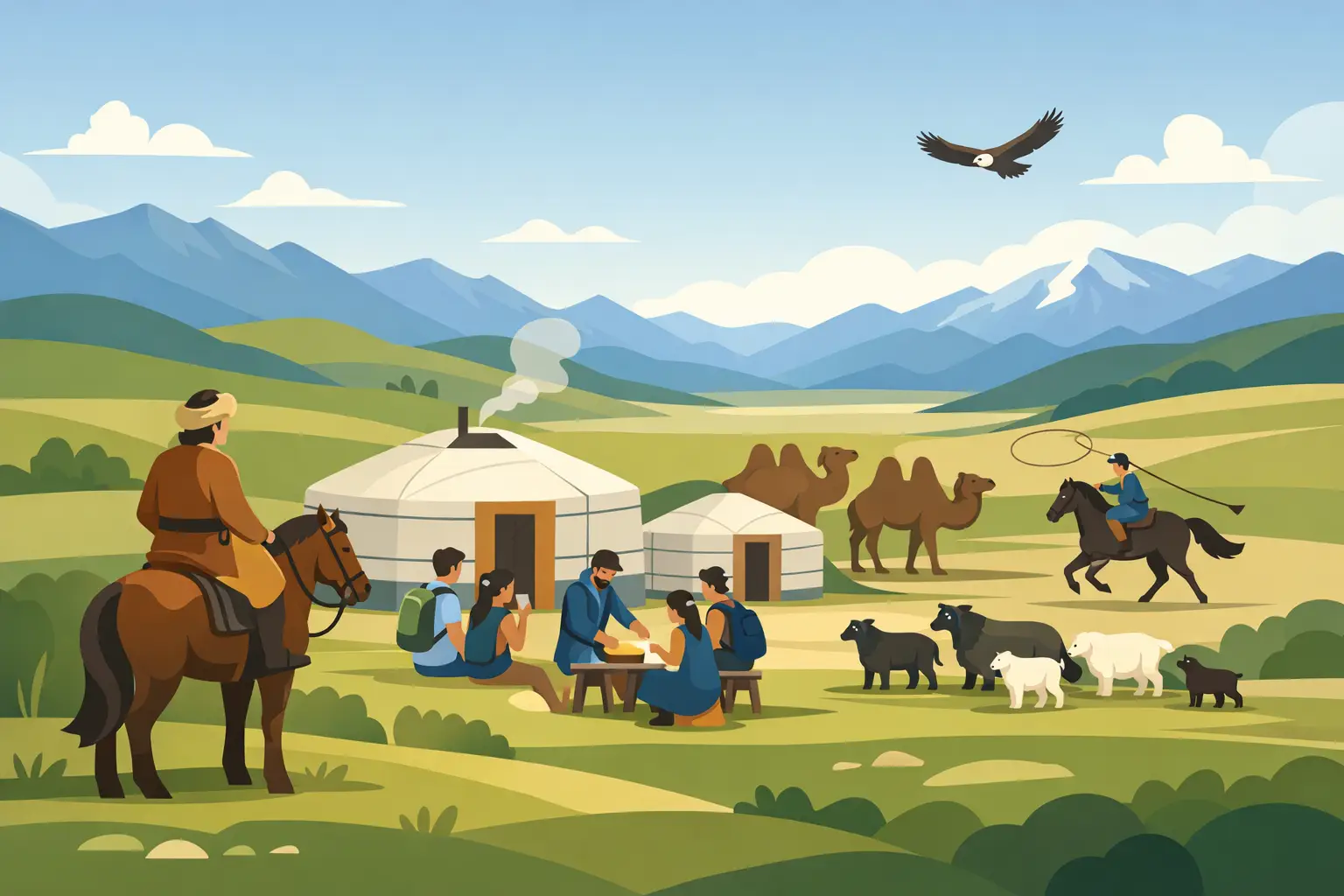
The first sign that a Mongolian nomad experience tour is different arrives long before you reach a family ger. It is the widening space beyond Ulaanbaatar: paved roads giving way to open steppe, horse herds moving across the horizon, and a sky so immense it changes the scale of every conversation. Mongolia is not a place to be hurried through. Its most meaningful encounters happen when an itinerary leaves room for distance, weather, hospitality, and the unplanned rhythm of life on the land.
For travelers accustomed to refined journeys, the appeal is not a staged version of nomadic culture. It is the rare privilege of meeting people whose homes, animals, and seasonal movements remain deeply connected to the grasslands, mountains, and desert. With thoughtful planning, that privilege can be experienced with comfort, discretion, and a genuine sense of place.
What Makes a Mongolian Nomad Experience Tour Meaningful
A nomadic visit is not a museum stop. A ger is a working home, and the family’s day may revolve around milking animals, mending tack, collecting water, preparing meals, or moving livestock before a change in weather. Guests may be welcomed with milk tea, dried curds, or homemade cheese, then invited to sit, observe, and talk through a local guide. The details vary by region, season, and family.
That variability is precisely what makes the experience memorable. In the Gobi, a family’s life may be shaped by camels, wells, and long distances between settlements. In the Orkhon Valley, horses and yaks graze near a landscape layered with imperial history. Around Khuvsgul Lake, families follow the rhythms of northern pastures, while western Mongolia introduces the distinct heritage of Kazakh communities and eagle hunters.
The most rewarding visits are approached as an exchange rather than a performance. A skilled Mongolian-born guide helps bridge language and custom, explaining what is appropriate in the moment and allowing conversation to unfold naturally. You might learn why the hearth is treated with care, how livestock define a household’s daily calendar, or what a particular saddle, rope, or family photograph represents. These are small moments, but they offer a more lasting connection than a hurried photo opportunity.
Comfort Has a Place in the Nomadic Heartland
Mongolia’s remoteness does not require travelers to sacrifice every comfort. The right journey pairs meaningful field experiences with carefully selected ger camps, private drivers, knowledgeable guides, and well-paced overland routes. After a day crossing the steppe, there is real pleasure in returning to a warm ger, a prepared dinner, and a comfortable bed beneath the Eternal Blue Sky.
It does, however, help to define comfort honestly. In remote regions, luxury is often expressed through privacy, excellent logistics, attentive service, fresh meals, and the confidence that someone capable is managing every detail. A deluxe ger camp may offer ensuite facilities and polished hospitality. A more isolated camp or family visit may have simpler arrangements. Both can be exceptional, but they offer different kinds of experience.
For this reason, a private itinerary is often the best choice. It allows time to balance remote immersion with restorative stays, reduce long driving days where possible, and adapt the route to personal interests. Couples may prefer an unhurried Gobi journey with intimate camp stays. Families may want hands-on opportunities such as helping with felt-making, horseback riding, or learning about dairy traditions. Small groups can build in photography time, cultural conversations, and evenings around a fire without following the timetable of a larger tour.
The Value of Time and Timing
Nomadic life is seasonal, and a thoughtful itinerary reflects that fact. Summer brings green pastures, active herding life, and long days for travel. Late spring and early fall can offer quieter landscapes, crisp light, and fewer visitors, though temperatures are less predictable. Winter reveals a more demanding side of Mongolia, best suited to travelers drawn to festivals, deep snow, and a highly specialized expedition-style experience.
A family may be away tending animals when you arrive. Rain can change a track. A local celebration may create an unexpected invitation or alter the day’s plan. These are not failures of organization. They are the realities of traveling through a living landscape. Expert planning provides structure while preserving enough flexibility to respond with grace.
Regions Where Nomadic Life Comes Into Focus
The Gobi Desert is often the natural starting point for a first visit. Its scale is cinematic: flaming cliffs, rolling dunes, ancient fossil sites, and camel herds crossing broad valleys. Yet the Gobi is not empty. It is home to families whose knowledge of water, pasture, and weather has been refined across generations. A visit here can be paired with the singing dunes of Khongor, the pale cliffs of Bayanzag, and nights in well-appointed desert camps.
The Orkhon Valley offers a softer, greener expression of the nomadic heartland. River valleys, volcanic landscapes, and grazing horses create a setting where cultural history and pastoral life meet. This is a strong choice for travelers interested in Mongolia’s heritage, with opportunities to connect visits to ancient capitals, monasteries, and traditional households.
In the Altai Mountains, the journey becomes more remote and visually dramatic. The region’s high valleys, glaciers, and wide-open steppe are home to Kazakh communities known for their horsemanship and eagle hunting traditions. Access requires more time and careful routing, but for those willing to travel farther, the Altai can feel profoundly removed from ordinary life.
Khuvsgul Lake brings forested shores, clear water, and a northern atmosphere unlike the desert or central steppe. It is particularly appealing for travelers who want gentle hiking, boating, and time in a cooler mountain environment alongside cultural encounters. Terelj National Park, closer to Ulaanbaatar, can offer a shorter introduction to ger life, though it cannot replicate the solitude of the Gobi, Altai, or Orkhon Valley.
How to Be a Considerate Guest
Respect is not complicated, but it should never be assumed. Your guide will advise on local etiquette, including where to sit, when photography is welcome, and how to receive food or drink. A few Mongolian greetings, genuine curiosity, and a willingness to follow your host’s lead go a long way.
Photography deserves particular care. Ask before taking portraits, especially of children or inside the ger. Some families are happy to share their routines; others may prefer a quieter encounter. The same principle applies to gifts. Rather than arriving with random items, consult your travel specialist about what is useful, culturally appropriate, and welcome in the specific community you will visit.
Responsible travel also means recognizing that access to nomadic households is built on relationships. The strongest local operators do not treat families as an attraction on a fixed circuit. They work with communities over time, compensate hosts fairly, and plan visits in ways that respect the demands of herding life. This approach may mean an itinerary changes, but it also means your presence supports a more considerate form of travel.
Planning a Journey That Feels Personal
A well-designed Mongolia journey begins with the question beneath the destination: what do you most want to feel? Some travelers seek silence and vastness after years of crowded cities. Others hope to share a remarkable journey with children, photograph eagles against mountain light, ride across open grassland, or understand a way of life shaped by mobility and mutual reliance.
From there, the practical decisions become clear. Allow at least seven to ten days if you want to combine a nomadic encounter with major landscapes without rushing. Add time for the Altai or Khuvsgul, where distances are greater. Choose private transport suited to the terrain, stay in camps selected for their standards and location, and travel with a guide who can make the country legible without standing between you and the experience.
At Nomadic of the Blue Sky, tailor-made planning brings these elements together with local insight, carefully considered pacing, and round-the-clock support while you are in Mongolia. The result is not a generic route with a ger visit added on. It is a journey shaped around the regions, people, and moments that matter most to you.
When you finally sit outside a ger as evening settles over the steppe, the day may seem almost quiet: animals returning to pasture, smoke lifting from the stove, mountains turning blue in the distance. Give that moment time. It is often there, between the planned highlights, that Mongolia becomes unforgettable.
Plan Your Mongolia Journey
Explore locally operated tours or ask our Mongolia team to tailor a private journey.