Mongolia Travel Blog
Planning Your Darkhad Valley Mongolia Tour
Plan a Darkhad Valley Mongolia tour with clear advice on seasons, roads, Tsaatan visits, horse travel, homestays, weather, and respectful preparation.
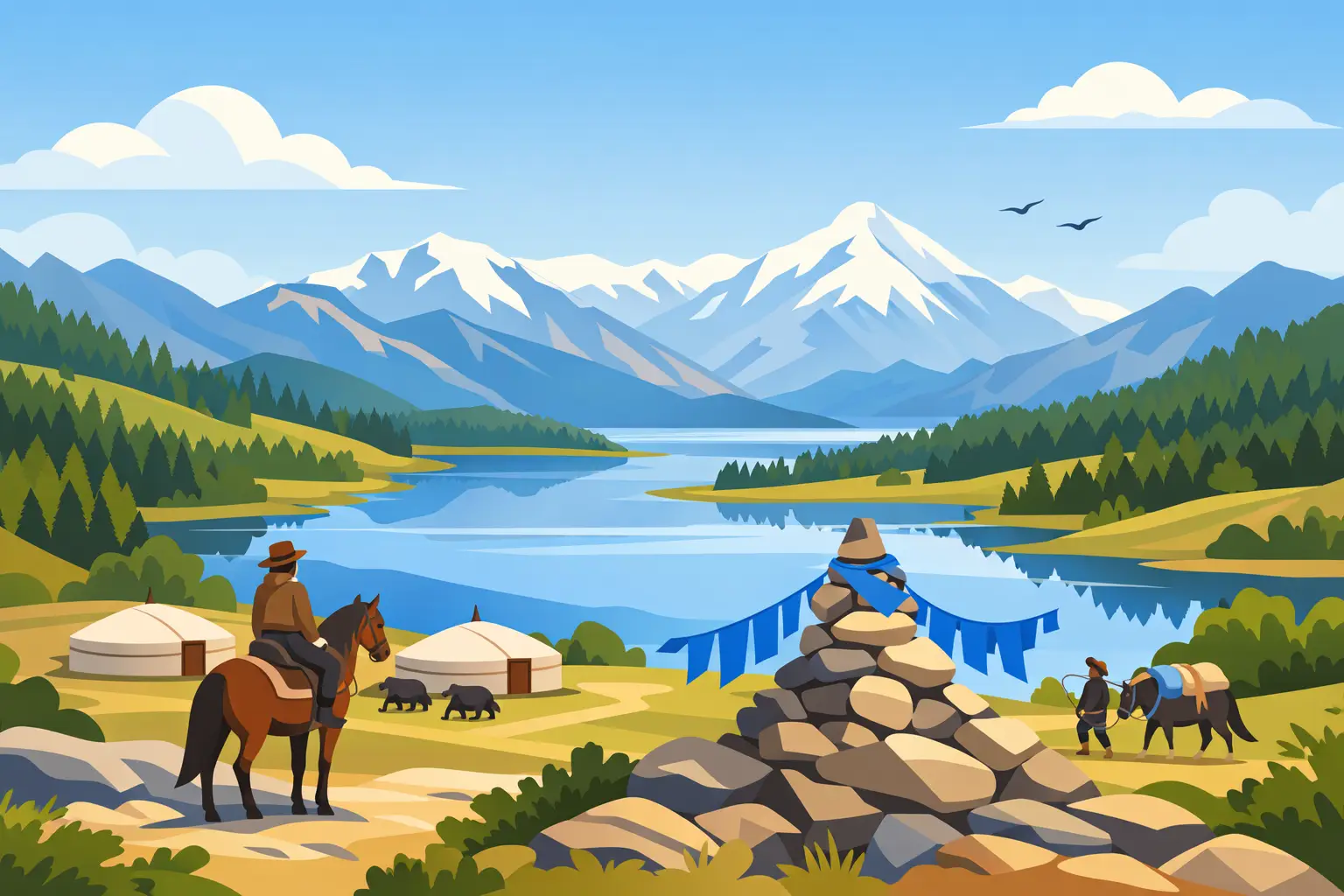
The Darkhad Depression feels different from much of Mongolia. Broad grasslands give way to larch forest, wetlands, river valleys, and the distant ridges of the northern taiga. A Darkhad Valley Mongolia tour is not a quick add-on to a Khuvsgul Lake itinerary. It is a journey for travelers willing to trade easy access for stillness, powerful landscapes, and a closer view of life in one of the country’s most remote nomadic regions.
Located in northwestern Khuvsgul Province, the valley is often a gateway to the taiga homeland of the Tsaatan, or Dukha, reindeer herders. Yet the valley deserves attention in its own right. Its long horizons, scattered herding families, sacred mountains, and changing light create an experience that is as much about the journey through northern Mongolia as the destination itself.
What Makes the Darkhad Valley So Special
Darkhad Valley is a place of scale and quiet. The landscape is shaped by water: rivers crossing open pasture, marshy ground after rain, and lakes and streams that attract birdlife in the warmer months. Around it rise forested mountains that signal the transition from the central Mongolian steppe to the Siberian taiga.
For travelers, that variety matters. One day may involve a long drive across grassy plains beneath the Eternal Blue Sky; the next can bring a walk through dense larch forest or a visit with a family moving livestock between seasonal grazing areas. It is less polished than Mongolia’s best-known destinations, but that is precisely its appeal.
The region also has a strong spiritual presence. Many local families maintain traditions connected to the land, mountains, and ancestral customs. Visitors should approach these encounters with care rather than expecting a performance. A good local guide can explain when photography is appropriate, how to enter a ger respectfully, and why certain places should be treated with particular sensitivity.
The Best Time for a Darkhad Valley Mongolia Tour
The right season depends on the kind of journey you want, your comfort with remote travel, and whether a visit to the Tsaatan taiga is part of your plan.
Summer: Green landscapes and the easiest access
From June through August, the valley is at its greenest and road conditions are generally more manageable than in winter. This is the most practical season for travelers who want to combine the Darkhad Valley with Khuvsgul Lake, hiking, horseback riding, photography, and nomadic family visits.
Summer does bring trade-offs. Rain can turn unpaved tracks muddy, river crossings may be more complicated, and insects can be persistent near wetlands and water. Daytime temperatures can be pleasant, but nights are still cool, especially near the forest and in the taiga. Pack layers rather than relying on a single warm jacket.
Autumn: Clear light and a quieter atmosphere
September can be a beautiful time to travel in northern Mongolia. The air often feels crisper, the light is excellent for photography, and the larch forest begins to shift toward gold. Herding families are busy with seasonal work, so a visit may offer a vivid view of daily preparation for colder weather.
However, autumn is short. Snow can arrive early, temperatures can fall sharply after sunset, and conditions become less predictable as the season progresses. Travelers with fixed schedules should allow flexibility in their route.
Winter: A true expedition
Winter in the Darkhad Valley is extraordinary, but it is not simply summer travel with more clothing. Temperatures can be severely cold, daylight is limited, and transportation requires experienced drivers, reliable vehicles, and conservative planning. In return, the valley can be profoundly beautiful: snow-covered pasture, smoke rising from gers, frozen rivers, and the silence of the taiga.
A winter journey is especially suited to travelers seeking a focused expedition, winter photography, or a carefully planned visit toward Tsaatan territory. It requires high-quality cold-weather gear and a willingness to accept that weather may alter the itinerary. Comfort is possible with the right preparation, but remote northern Mongolia remains remote in every season.
Reaching the Valley and Understanding the Distances
Most journeys begin with travel to Mörön, the provincial center of Khuvsgul. From there, the Darkhad Valley is reached overland. Distances on a map can look modest, but driving times are shaped by unpaved tracks, weather, river conditions, stops with local families, and the need to travel at a safe pace.
This is why an itinerary should not be built around ambitious daily mileage. A route that appears possible in theory can become tiring or unreliable if heavy rain, snow, mud, or mechanical issues intervene. From our experience designing Mongolia journeys, realistic pacing gives travelers far more than extra comfort. It creates time for unplanned tea invitations, a quiet landscape stop, or the simple pleasure of arriving before darkness.
For private journeys, a dedicated vehicle and guide offer the greatest flexibility. Small-group departures can be equally rewarding when the group understands that shared expedition travel requires patience and cooperation. In either case, sturdy four-wheel-drive transport is essential on remote routes.
Visiting Tsaatan Reindeer Herders Responsibly
Many travelers come to the Darkhad Valley hoping to meet Tsaatan reindeer herders. This can be a meaningful cultural experience, but it should be planned with realistic expectations. Tsaatan camps are usually deeper in the taiga, not beside the main road, and reaching them may require several additional days by vehicle and horse, depending on the season and the location of the families.
A visit is not guaranteed to follow a fixed script. Families move according to reindeer needs, weather, grazing conditions, and family responsibilities. The most respectful approach is to treat the visit as an invitation into someone’s home and working life, rather than an attraction arranged for outsiders.
Ask before taking portraits or photographing reindeer. Accept tea or food if offered, even if only a small amount. Dress modestly, avoid entering a home without invitation, and listen when your guide explains local preferences. Purchasing handicrafts directly from families can be welcome when it is voluntary and fairly handled, but visitors should never pressure people to sell or pose.
Accommodation and Daily Comfort
Accommodation in the Darkhad Valley ranges from simple ger stays with local families to more organized camps in accessible areas. Facilities vary widely. A family ger may offer the warmth of a stove, shared meals, and genuine hospitality, while toilets and washing arrangements are often basic. Electricity may be limited or unavailable, and mobile signal cannot be assumed.
That does not mean travelers must abandon comfort. A well-organized journey can provide good sleeping arrangements, nutritious meals, experienced support staff, clean drinking water, and clear communication about what each night will involve. Tailor-made journeys are particularly useful for travelers who want to balance remote experiences with selected nights in more comfortable camps or lodges.
Bring a headlamp, power bank, refillable water bottle, personal medications, and a small supply of snacks you know you will enjoy. In summer, insect repellent is worthwhile. In winter, insulated boots, mittens, warm socks, and a face covering are as necessary as a camera.
Why This Region Rewards Photographers and Patient Travelers
The Darkhad Valley is not a destination for checking off sights. Its strongest moments are often quiet: horses moving through morning mist, a herd crossing open pasture, hands preparing milk tea, or sunlight breaking across a stormy valley.
Photographers should bring protection for dust, rain, and cold, plus spare batteries kept warm in winter. Long lenses can be useful for wildlife and distant herds, while a moderate wide-angle lens suits the sweep of the valley and the intimacy of a ger interior. More than equipment, patience is essential. Always let people decide whether they wish to be photographed.
Travelers who enjoy horseback riding can consider adding it where local conditions and experience levels allow. Riding offers a natural pace for the terrain, but it should be arranged realistically. Previous riding experience is valuable for longer days, and weather can affect what is safe.
Plan for Flexibility, Then Let the Valley Set the Pace
A thoughtful Darkhad Valley itinerary normally allows buffer time, especially when continuing to the taiga. Build the route around a few meaningful experiences rather than trying to cover every corner of northern Mongolia. Allow for weather, road conditions, and the fact that nomadic life follows the seasons rather than a tourist timetable.
Nomadic of the Blue Sky plans these journeys with Mongolian guides, dependable overland logistics, and room for the unexpected moments that make remote travel memorable. Whether you choose a small-group expedition or a private route shaped around photography, riding, and cultural encounters, the essential preparation is the same: arrive curious, well equipped, and ready to travel at the valley’s pace.
The Darkhad Valley does not rush to reveal itself. Give it time, listen to the people who know its roads and seasons, and its open country can become one of the most lasting parts of a Mongolia journey.
Plan Your Mongolia Journey
Explore locally operated tours or ask our Mongolia team to tailor a private journey.