Mongolia Travel Blog
A Practical Eagle Hunter Itinerary for Mongolia
Plan an eagle hunter itinerary in western Mongolia with realistic travel times, Kazakh cultural etiquette, festival options, and Altai photography advice.
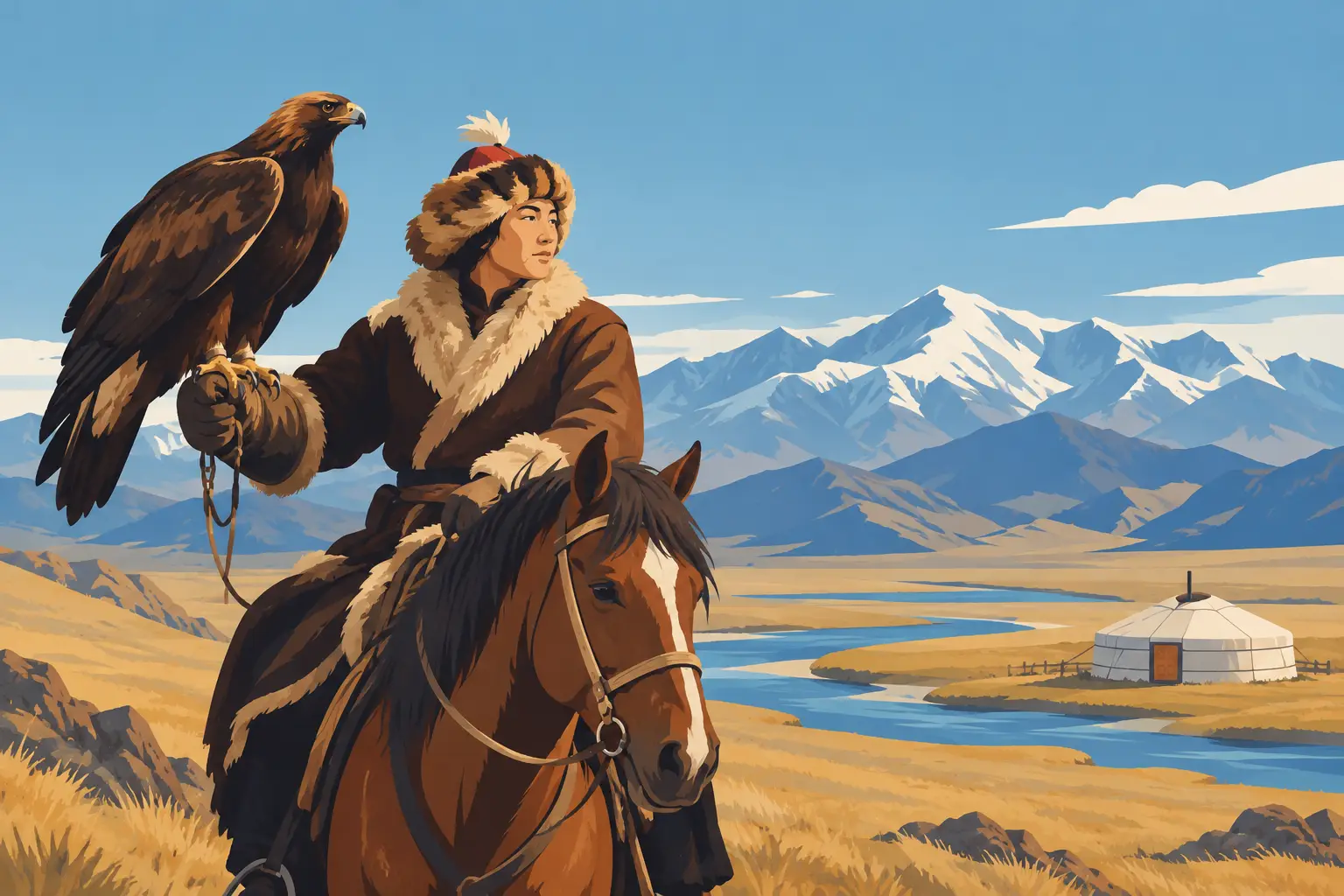
The right eagle hunter itinerary is not built around a quick photograph with a bird of prey. It is a journey into western Mongolia's Kazakh heartland, where families maintain a demanding tradition shaped by horses, livestock, mountains, and the long Altai winter. Allow enough time, travel with cultural sensitivity, and the experience becomes far richer than a festival stop.
For most international travelers, seven to nine days is the practical minimum for an eagle hunter journey. That allows for travel between Ulaanbaatar and Bayan-Olgii, meaningful time with local families, changing mountain weather, and a few unhurried days in the landscapes that make this corner of Mongolia so memorable.
Start with the season you want to experience
An eagle hunter journey can mean very different things depending on the time of year. The first decision is whether your priority is a festival, family visits and riding, winter hunting culture, or photography in the Altai Mountains.
Autumn is the most popular period because the Golden Eagle Festival and the Sagsai Eagle Festival bring hunters, horses, traditional dress, and competition together in one place. These gatherings are powerful for travelers who want to see many eagle hunters in a short time. They are also busy, with shifting light, dust, spectators, and a full schedule. A festival itinerary benefits from arriving early and staying beyond the event itself, rather than treating it as a fly-in, fly-out occasion.
Summer offers greener valleys, more accessible mountain roads, and longer daylight for riding, walking, and visiting Kazakh households. It is often the better choice for travelers who want a quieter cultural journey, especially families and private groups. You may meet eagle hunters at home, but eagle hunting itself is a cold-season practice and should not be expected as a summer performance.
Winter brings the stark setting most associated with the tradition: snow-covered valleys, fierce cold, and golden eagles used in the hunting season. It can be extraordinary for experienced winter travelers and photographers, but it requires serious preparation. Road access, flight timing, accommodation, and outdoor comfort all become more weather-dependent. A shorter itinerary is not necessarily easier in winter because each transfer needs more margin.
A realistic 8-day eagle hunter itinerary
This outline balances cultural depth with the distances and flight logistics of western Mongolia. It works especially well as a tailor-made private journey or a carefully paced small-group departure.
Day 1: Arrive in Ulaanbaatar
Begin in the capital, where international flights arrive and domestic connections are arranged. Use the afternoon to rest, meet your guide, and check clothing and camera equipment. Even travelers who are accustomed to adventure travel should not underestimate the contrast between urban Ulaanbaatar and the remote western provinces.
Day 2: Fly to Olgii and settle into western Mongolia
A domestic flight brings you to Olgii, the provincial center of Bayan-Olgii. Flight schedules can change with operational and weather conditions, so a good itinerary avoids tightly fixed onward plans on the same day.
Olgii is distinctly Kazakh in character. You will hear Kazakh spoken widely, see different styles of dress and food, and begin to understand that western Mongolia has its own identity within the wider nomadic heartland. Depending on arrival time, visit the local market or museum, then overnight in town or continue to a nearby ger camp.
Days 3-4: Stay near an eagle hunter family
These are the core days of the journey. Travel into the broad valleys and foothills around Olgii and Sagsai, where many eagle hunter families live. The route and accommodation should be chosen according to the season, road conditions, family availability, and the level of comfort you prefer.
A respectful visit may include sharing tea and meals, learning about horse tack and eagle equipment, watching daily livestock work, and hearing how an eagle is trained and cared for. Female golden eagles are generally favored because of their size and strength. The relationship between hunter, horse, and eagle is built over years, and it deserves more attention than a staged image alone.
Staying in a family ger offers the closest encounter with daily life, though facilities are simple and privacy is limited. A ger camp or a comfortable private setup can provide more predictable amenities while still allowing substantial time with local hosts. Neither approach is universally better. It depends on whether your priority is immersion, comfort, photography access, or travel with children.
Day 5: Ride or drive through the Altai landscape
A full day in the surrounding landscape gives the itinerary room to breathe. Horse riding can be arranged for confident riders, while a four-wheel-drive excursion is better for travelers who prefer to cover more ground or have limited riding experience.
The scenery is not an optional backdrop. Open steppe, river valleys, rocky passes, and distant snow peaks explain why this region feels so remote and why travel here is slower than the map suggests. Stops can be made for a picnic, short walk, or portrait session with your hosts where appropriate. Your guide should always ask permission before photographing people, homes, eagles, or private family moments.
Day 6: Festival day or deeper cultural time
If traveling for the Golden Eagle Festival or Sagsai Eagle Festival, devote this day to the competitions and celebrations. Events may include mounted displays, eagle calling, traditional dress, and other tests of riding and hunting skill. Bring layers, sun protection, a dust scarf, and a long lens if photography is a priority. The most compelling images often happen around the edges of the main arena: preparations, riders waiting with their horses, and quiet exchanges between families.
Outside festival dates, use this day for a second family visit, a mountain excursion, or time with local Kazakh crafts and music. This is often where a private itinerary becomes especially valuable. With no fixed event timetable, you can slow down when a genuine encounter develops or adjust plans for weather.
Day 7: Return to Olgii and fly to Ulaanbaatar
Return to Olgii for the domestic flight back to the capital. Keep the evening flexible. Delays are uncommon enough not to define a trip, but common enough in remote travel that a responsible itinerary does not place an international departure immediately afterward.
Day 8: Departure or a final day in Ulaanbaatar
Schedule your international flight for the following day when possible. If time allows, enjoy a final meal in the city or visit a cultural site before departure. The transition from the Altai to the capital can feel abrupt, which is exactly why an extra night is useful.
Build in time for real Mongolia travel conditions
Bayan-Olgii is remote even by Mongolian standards. Most journeys combine a domestic flight with overland travel in four-wheel-drive vehicles, often on unpaved tracks rather than conventional roads. Distances that look manageable on a map may take many hours due to terrain, river crossings, livestock on the route, or weather.
Travelers sometimes ask whether they can add the Gobi Desert, Khuvsgul Lake, or the Naadam Festival to the same trip. It is possible with additional days and carefully planned domestic flights, but combining too much can reduce the eagle hunter experience to a rushed stop. If this tradition is the reason for your journey, give western Mongolia the time it requires.
Accommodation ranges from simple family gers to seasonal ger camps and hotels in Olgii. Bathrooms may be shared, hot water can be limited, and electricity in rural areas is not always available around the clock. These are manageable conditions when expectations are clear. Bring a power bank, personal medications, a warm sleeping layer, and clothing that works for dust, wind, and rapid temperature changes.
Visit with respect, not as a spectator
Kazakh eagle hunting is a living family tradition, not a theme created for visitors. Hosts should be fairly compensated for their time and for any arranged riding or photography activity. Ask before entering a ger, accept tea or food graciously when offered, and avoid treating sacred or personal objects as props.
Photography requires particular care. A guide can help arrange portraits and explain when a request may be inappropriate. Wide landscape photographs are easy to take; the more meaningful images come when trust has been established. If you are traveling with professional-level equipment, discuss your goals in advance so the itinerary allows for dawn light, weather changes, and time with families rather than just midday stops.
The strongest journeys are designed around the pace of the people and places you have come to meet. With thoughtful planning, an eagle hunter itinerary offers more than a dramatic festival image: it offers time beneath the Eternal Blue Sky to understand a tradition that still belongs to the Altai.
Plan Your Mongolia Journey
Explore locally operated tours or ask our Mongolia team to tailor a private journey.