Mongolia Travel Blog
What a Gobi Desert Luxury Tour Feels Like
A Gobi Desert luxury tour pairs private guidance, refined ger camps, and real nomadic encounters across Mongolia's vast southern steppe with expert care.
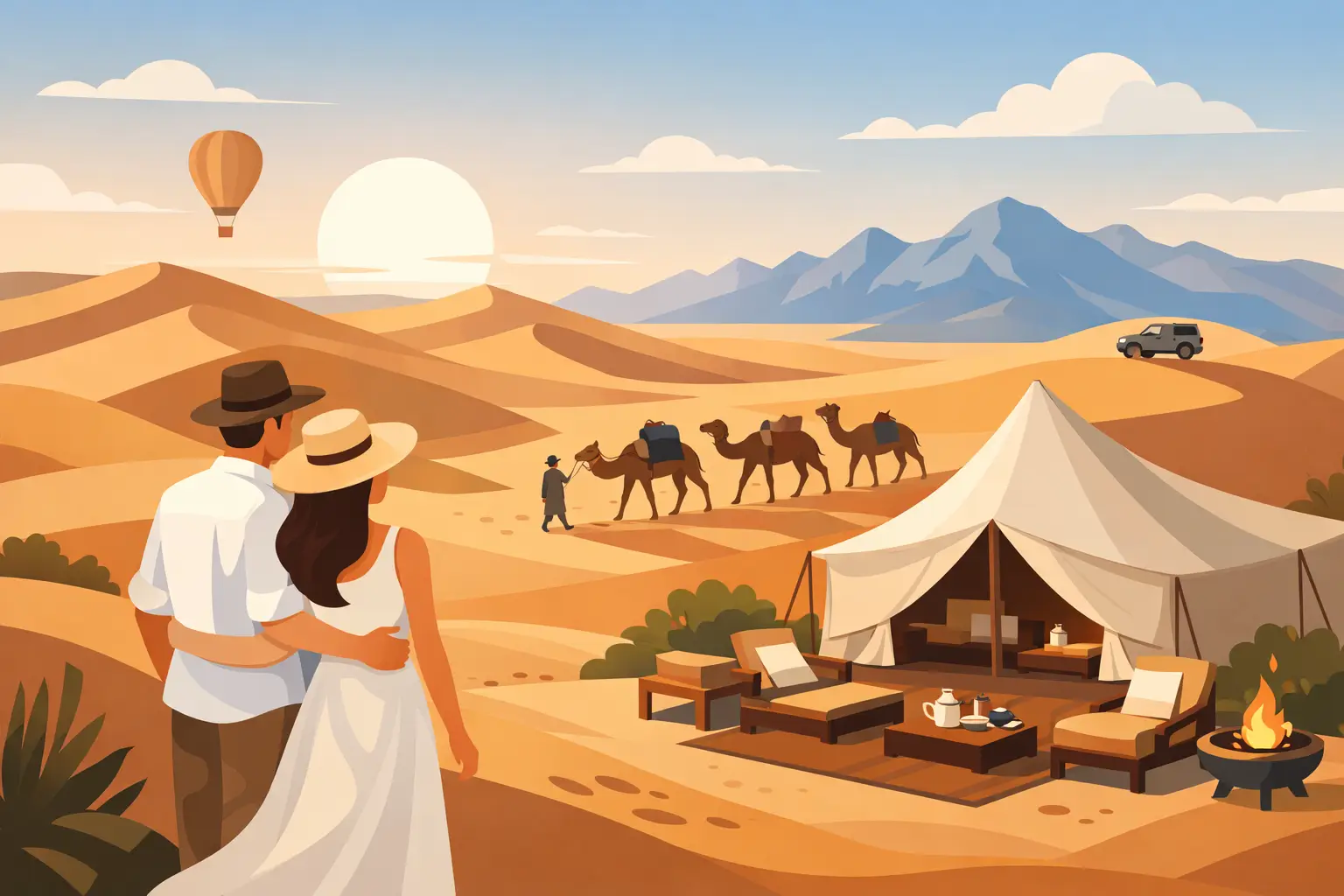
At dawn in the southern Gobi, the desert is not simply sand. It is a vast palette of copper rock, pale grass, black mountain silhouettes, and a sky that seems to begin at your doorstep. A Gobi Desert luxury tour makes room for this scale while removing the friction that can otherwise define travel in Mongolia's most remote region. You travel privately, sleep well, eat thoughtfully prepared meals, and arrive with the confidence that the details have been anticipated.
The real luxury of the Gobi is not excess brought into the wilderness. It is the rare privilege of experiencing the desert's silence, nomadic hospitality, and ancient landscapes with time, comfort, and knowledgeable local guidance.
What Luxury Means in Mongolia's Gobi Desert
A meaningful desert journey must respect the fact that the Gobi is immense. Distances are long, paved roads are limited, and the terrain changes quickly from open steppe to duneland, canyon, and rocky plain. Comfort depends less on a particular hotel label than on sound planning, reliable vehicles, a well-paced route, and a team that knows where to be and when.
Private 4x4 transport is central to the experience. It gives travelers room for luggage, camera equipment, and the small pauses that make a day memorable: stopping beside a herd of Bactrian camels, walking toward an empty ridge, or sharing tea with a herding family. Rather than following a fixed group schedule, a private itinerary can adapt to the weather, your energy, and the discoveries that arise along the road.
Refined Ger Camp Stays
The most atmospheric places to stay in the Gobi are often ger camps, where traditional round dwellings sit beneath open skies. The best camps balance Mongolian character with genuine rest: comfortable beds, attentive service, private or well-appointed bathing facilities, warming meals, and a setting that feels connected to the landscape rather than insulated from it.
A ger is not a city suite, and that distinction is part of its appeal. You may hear wind moving over the felt walls or wake to the sound of horses in the distance. But after a day on the desert tracks, there is deep pleasure in a hot shower, a carefully prepared dinner, and a warm bed beneath the Eternal Blue Sky.
A Guide Who Brings Place Into Focus
The Gobi can appear stark to a first-time visitor. A Mongolian-born guide reveals its texture. They can explain why a family moves camp with the seasons, identify the plants that sustain livestock, share the stories attached to a sacred mountain, and help make a respectful introduction when a visit to a local household is appropriate.
This expertise also improves the rhythm of each day. Your guide understands the practical realities of desert travel, from changing road conditions to the best light at a canyon. More importantly, they know when to allow a place to speak for itself.
The Landscapes That Define a Gobi Desert Luxury Tour
Most travelers arrive in the Gobi expecting dunes. They leave remembering the variety. A thoughtfully designed itinerary connects several distinct landscapes without treating the region as a checklist.
The Flaming Cliffs, known locally as Bayanzag, rise in red and orange layers above the plain. This is one of the world's great paleontological landscapes, associated with early dinosaur fossil discoveries and the first scientifically documented dinosaur eggs. Walking here near sunset, when the sandstone catches fire-colored light, is compelling even for travelers who do not consider themselves geology enthusiasts.
Yolyn Am, or Eagle Valley, offers a sharp contrast. Set within the Gurvan Saikhan Mountains, this narrow gorge holds a cooler microclimate and dramatic walls of rock. Depending on the season, ice can linger in shaded sections well after winter. It is a place for an unhurried walk and a reminder that the Gobi is far more varied than its name suggests.
Then come the Khongor Sand Dunes, a monumental sweep of sand stretching across the desert. Their scale is best appreciated at the edges of the day, when heat softens and the dunes throw long shadows. Climbing them is optional, not obligatory. For some travelers, the ascent and the low hum of shifting sand are the highlight. For others, a camel ride through the surrounding valley and a quiet sundowner facing the dunes offer a more satisfying way to be present.
Cultural Encounters That Are Earned, Not Staged
The Gobi remains a living nomadic heartland. Families raise camels, goats, sheep, horses, and cattle across a landscape that demands seasonal knowledge and resilience. A visit to a ger household can be one of the most resonant moments of a journey, particularly when it is arranged with care and guided by local relationships.
These encounters should never feel like performances. A thoughtful host visit may be simple: being welcomed inside, tasting dairy products, observing the practical order of a family home, or talking through a guide about the year's pasture conditions. The value lies in the exchange, not in trying to compress a way of life into a photo opportunity.
Travelers should also understand the trade-off. Authentic rural hospitality operates on local time and local priorities. A family may be busy with livestock or preparing for a move. Flexibility, patience, and genuine curiosity make the experience more rewarding for everyone involved.
How Long to Spend in the Gobi
For travelers flying from Ulaanbaatar into Dalanzadgad, four to six nights in the Gobi allows for a comfortable introduction to the region's signature landscapes. It provides time for Eagle Valley, the Flaming Cliffs, the dunes, and meaningful pauses between drives. A longer stay can add lesser-visited valleys, desert wilderness camps, or a more relaxed pace for photography and family travel.
The right length depends on your priorities. Travelers drawn to active walking, landscape photography, or deeper cultural visits should allow at least six nights. Those combining the Gobi with Khuvsgul Lake, the Orkhon Valley, or the Altai Mountains may prefer a focused four-night desert chapter within a wider Mongolia journey.
Choosing the Best Season
June through September is the principal season for a Gobi journey. June brings fresher tones to the steppe and cooler temperatures, though weather can still be variable. July and August are generally warm, with occasional summer rain that can briefly transform dry valleys. September often brings crisp, clear conditions, beautiful light, and a quieter feeling in the camps.
Desert temperatures can shift significantly between day and night in every season. A luxury itinerary accounts for this with the right packing guidance, flexible timing, and accommodations selected for their warmth and comfort. It is also wise to leave room in the schedule for weather or flight adjustments, especially when connecting remote regions.
The Details That Let You Travel Freely
In Mongolia, good logistics are a form of hospitality. The right operator coordinates domestic flights, private airport transfers, experienced drivers, camp reservations, dietary preferences, and contingency planning before you arrive. During the journey, round-the-clock in-country support provides reassurance without intruding on the feeling of escape.
This is particularly valuable for couples celebrating a milestone, families traveling across generations, and small groups with different activity levels. One person may want to walk at sunrise while another would rather enjoy a slower morning at camp. A private journey can accommodate both without compromising the experience.
At Nomadic of the Blue Sky, more than 15 years of destination knowledge informs each route, from the practical timing of a domestic connection to the trusted local relationships that give a journey its depth. The aim is not to make the Gobi feel ordinary. It is to make its extraordinary nature feel welcoming, safe, and deeply personal.
Planning a Journey With Intention
The strongest Gobi itineraries begin with a few honest decisions: how much time you have, what level of comfort matters most, and whether your greatest interest is landscape, culture, wildlife, or a balance of all three. From there, a specialist can shape the route around your travel style rather than asking you to fit a preset schedule.
Consider building in unplanned time. The Gobi rewards it. An extra hour at the Flaming Cliffs may bring the evening light you hoped for. A slower drive may reveal a herd of gazelle on the horizon. A quiet afternoon outside your ger may become the moment you remember most clearly.
Come prepared for a place that does not hurry to impress. With thoughtful planning and the right local team, the Gobi offers something rarer than a luxury escape: the space to feel fully present in one of the world's last great open landscapes.
Plan Your Mongolia Journey
Explore locally operated tours or ask our Mongolia team to tailor a private journey.