Mongolia Travel Blog
What to Expect on a Golden Eagle Festival Tour
Plan a golden eagle festival tour with clear advice on timing, Altai travel, Kazakh traditions, photography, stays, and respectful time at the festival.
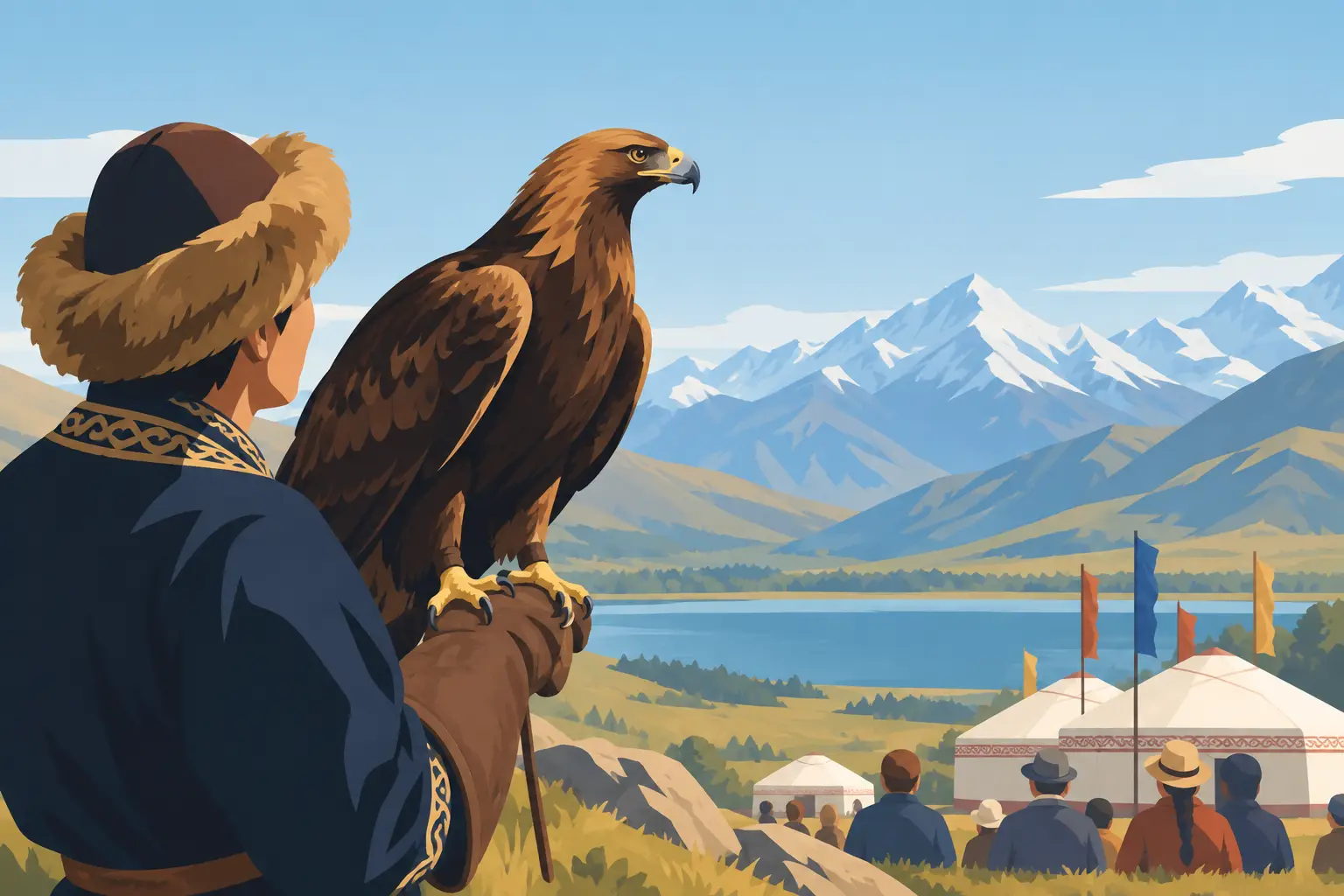
A golden eagle festival tour brings travelers to Mongolia’s far western Altai, where autumn light reaches across open steppe, snow begins to touch the high ridges, and Kazakh eagle hunters gather with their birds. This is not simply a spectacle of horses, traditional dress, and enormous raptors. It is a chance to understand a living hunting tradition in the landscape that shaped it - provided you arrive with realistic expectations, enough time, and respect for the people at its center.
The main festivals take place in Bayan-Olgii Province, a remote region of western Mongolia with a distinct Kazakh culture, mountain horizons, and long travel days. For many visitors, the festival is the focal point of a broader Altai journey rather than a stand-alone event. That approach usually creates a richer experience: the competition is memorable, but so are the family ger stays, the drive through broad valleys, and the quiet moments when an eagle hunter prepares his bird before the crowds arrive.
Choosing the Right Golden Eagle Festival Tour
There is more than one eagle festival in western Mongolia, and the atmosphere can differ considerably. The larger Golden Eagle Festival near Olgii is often the best choice for first-time visitors who want a full program, a wide range of competitors, and dependable festival infrastructure. It draws photographers and cultural travelers from around the world, so the grounds can feel lively and busy at key events.
The Sagsai Eagle Festival, held in a more rural setting, can feel smaller and more intimate. It may suit travelers who value a closer village atmosphere and are comfortable with simpler logistics. Neither is automatically better. The right choice depends on whether you prefer the energy and scale of Olgii or a quieter setting with fewer visitors.
Festival dates, venues, and flight arrangements should be confirmed for the specific year before booking international travel. Autumn weather, local administration, and domestic aviation can all affect the practical shape of an itinerary. A locally organized journey should allow room for these realities rather than treating western Mongolia like a fixed city-break schedule.
What happens at the festival
Eagle hunters, known in Kazakh as berkutchi, compete in events that demonstrate riding skill, traditional dress, and the responsiveness of their golden eagles. One of the most anticipated moments is the calling competition, when a hunter summons an eagle from a distant hillside or high point. Watching the bird fold its wings and descend toward its handler is powerful, especially against the open Altai landscape.
Other contests may include hunting-related demonstrations, horseback games, and judging of equipment and attire. Programs vary, and events do not always run exactly to the printed order. Wind, horses, birds, spectators, and the practical pace of a local festival all have their say. Patience is part of the experience.
It is also worth understanding what you are seeing. Golden eagles are not props. They are highly capable birds handled by skilled hunters, and the relationship between hunter and eagle is central to the tradition. Ask permission before close portraits, follow your guide’s instructions around birds and horses, and avoid stepping into a working area for a better angle.
Getting to the Altai and Moving Around
Most festival journeys begin with an internal flight from Ulaanbaatar to Olgii. Flights save a great deal of time, but schedules can be limited and weather can cause changes. Travelers should avoid placing a tight international connection immediately after their planned return to Ulaanbaatar. A buffer night is sensible, especially during the autumn travel season.
From Olgii, travel is usually by 4WD vehicle. Roads may combine pavement, rough tracks, river crossings, and wide unmarked valleys. Distances that appear short on a map can take several hours. This is one reason a well-paced itinerary matters: trying to add too many remote valleys, families, and mountain viewpoints around festival days can turn meaningful travel into continual driving.
Accommodation depends on the route. In Olgii, travelers generally stay in a local hotel, where standards are practical rather than urban-polished. Outside town, ger camps and stays with Kazakh families provide a more direct connection to the region. These can be warm, welcoming, and memorable, but visitors should expect shared facilities in many locations, limited hot water, and variable electricity. A private tailor-made trip can often improve comfort and pacing, while a small group journey offers the companionship and shared anticipation that suit a festival setting.
Weather: Prepare for Four Seasons in a Day
Autumn in the Altai can be crisp, bright, and remarkably clear. It can also be windy, cold, and suddenly snowy. Festival grounds are exposed, and spectators may spend long periods standing or sitting outside before the next competition begins. The difference between a comfortable day and a difficult one is usually your clothing, not your tolerance for adventure.
Bring an insulated jacket, warm mid-layers, a windproof outer shell, thermal base layers, gloves, a warm hat, and sturdy boots with good grip. Sunglasses and sunscreen are useful even in cold weather because of the intense high-altitude sun. A small daypack, refillable water bottle, hand warmers, and a seat pad can make long outdoor sessions much easier.
If you are prone to motion sickness, bring suitable medication. The drives are scenic, but uneven tracks and long mountain roads can be tiring. Travelers with limited mobility should discuss the festival terrain and vehicle access in detail before choosing an itinerary.
Photography Without Missing the Experience
For photographers, the visual appeal is obvious: fur-trimmed traditional clothing, embroidered details, horses in motion, weathered faces, eagles in flight, and the blue-and-gold tones of the steppe. The challenge is not finding subjects. It is working respectfully and staying ready when the action happens quickly.
A telephoto lens is useful for eagle flights and horseback events, while a moderate wide-angle lens helps place hunters within the vast landscape. Cold weather reduces battery performance, so keep spare batteries warm in an inside pocket. Dust can also be an issue on tracks and at crowded festival grounds, making a protective camera cover worthwhile.
The best images often happen outside the formal competition. A hunter adjusting a leather hood, a family greeting relatives, or a horseman crossing the valley at first light can reveal more than a tightly framed action shot. Always ask before making close portraits, especially in family homes. If you want time for dawn landscapes, private portraits, or extended visits with eagle hunter families, build extra days around the festival rather than hoping to fit everything into competition hours.
Cultural Etiquette That Makes a Difference
Kazakh hospitality is generous, and visitors are often offered tea, dairy foods, bread, or a meal when visiting a family ger. Receive food and drink with your right hand or with both hands, and do not rush the exchange. Your guide can help explain local customs and translate conversation, but warmth and curiosity go a long way.
Dress modestly at the festival and in family settings. Avoid treating traditional clothing or household objects as costumes for your own photos. When entering a ger, wait for guidance on where to sit and where to place bags. Small gestures of consideration are noticed, particularly in remote communities that host visitors only during a short travel season.
Responsible travel also means being clear-eyed about the experience. Festival tourism can help create income for local families, drivers, guides, and hosts, but it should not reduce a complex tradition to a photo opportunity. Choose an itinerary that includes local guides, fair time with host families, and enough space to engage beyond the main arena. Nomadic of the Blue Sky designs Altai journeys with this balance in mind: practical support on the road, paired with encounters that remain grounded in local life.
Give the Festival Room to Breathe
A two-day festival may seem like the natural length of a trip, but western Mongolia rewards travelers who can stay longer. Add time in Olgii, a visit to a Kazakh family, or drives into the surrounding Altai valleys. This creates flexibility if a flight shifts, gives you a rest between long travel days, and lets the festival remain a highlight rather than a rushed checkbox.
The lasting memory of a Golden Eagle Festival is rarely just the moment an eagle takes flight. It is the stillness afterward: a rider crossing the grassland, the cold air under Mongolia’s Eternal Blue Sky, and the sense that you have traveled far enough to meet the nomadic heartland on its own terms.
Plan Your Mongolia Journey
Explore locally operated tours or ask our Mongolia team to tailor a private journey.