Mongolia Travel Blog
Mongolia Group Tours: What the Journey Is Really Like
Mongolia group tours offer remote landscapes, nomadic hospitality, and expert logistics. Learn how seasons, routes, comfort, and group size shape the trip.
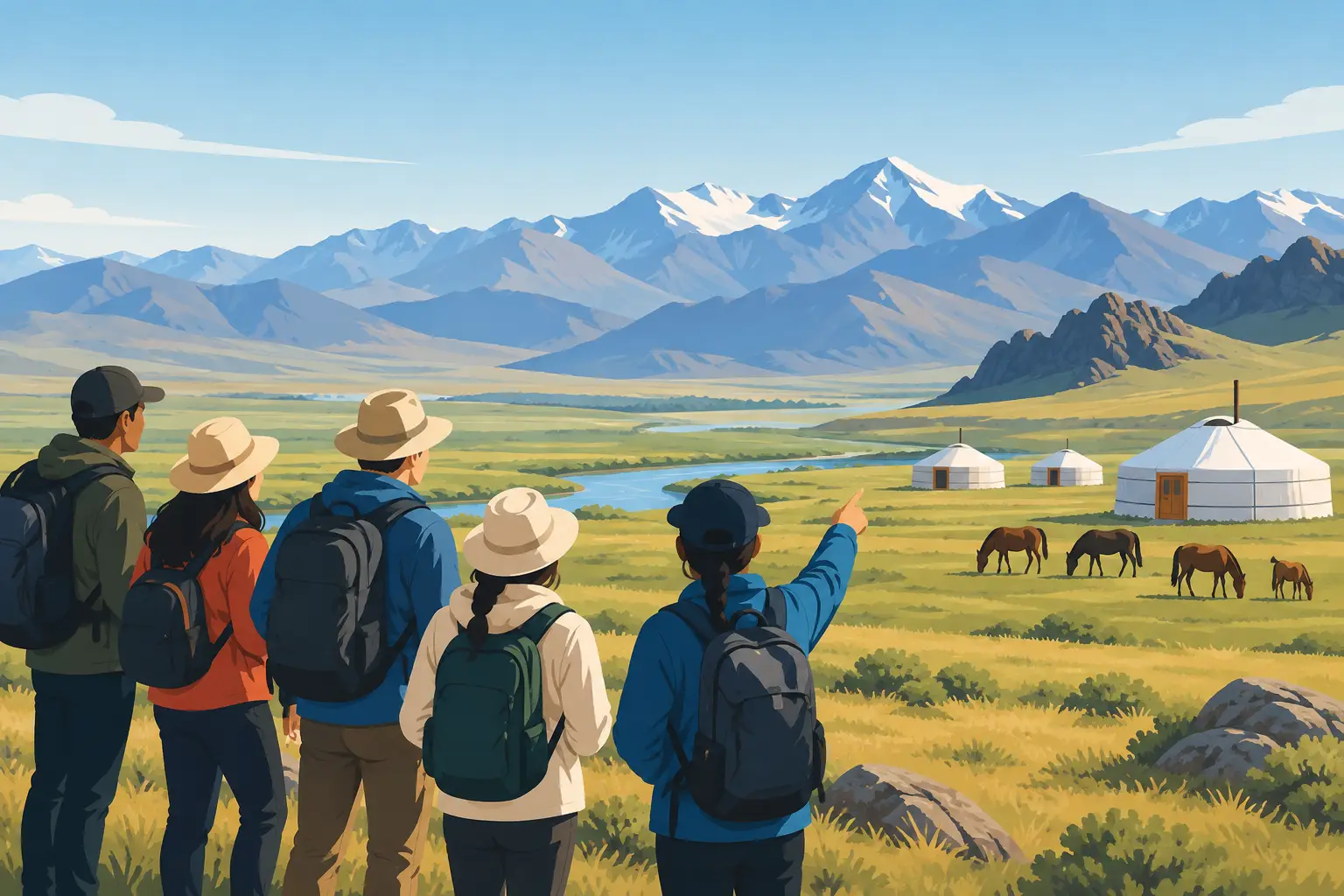
The first thing to understand about Mongolia group tours is that the journey between places is part of the experience. A day may begin beside a ger camp under the Eternal Blue Sky, cross open steppe with no road in sight, and end with salty milk tea in the home of a nomadic family. That sense of distance is precisely what makes Mongolia extraordinary, but it also calls for a group tour designed with patience, capable guides, and realistic expectations.
For travelers who want to see Mongolia beyond Ulaanbaatar without managing long overland routes, changing weather, and remote logistics alone, a well-run small group can offer a remarkable balance of adventure, comfort, and connection.
Why choose a small-group journey in Mongolia?
Mongolia is not a destination where the most memorable moments always appear on a map. A herd of horses moving across the valley at dawn, an impromptu stop at a roadside ovoo, or a conversation with hosts through your guide can become the defining part of a trip. In a small group, there is room to stop, adjust to weather, and share these moments without the pace of a large coach itinerary.
The practical value matters just as much. Outside the capital and larger provincial towns, English is not widely spoken, fuel stops can be far apart, and routes may be tracks rather than paved highways. An experienced Mongolian guide and driver do more than lead the way. They read conditions, manage timing, explain customs, and help create respectful introductions to local communities.
Small groups also suit solo travelers particularly well. Mongolia can feel wonderfully remote, and traveling with a compatible group brings companionship around the campfire or dinner table while still leaving space for quiet walks, photography, and reflection.
What Mongolia group tours usually include
Most journeys combine private ground transportation, a Mongolian guide, driver, accommodations, meals outside the city, and planned activities such as short hikes, camel riding, horseback experiences, or visits with nomadic families. The exact balance depends on the route and season.
Accommodation is often more comfortable than first-time visitors expect, though it should be understood on Mongolia's terms. In the Gobi Desert, travelers may stay in organized ger camps with beds, shared or private bathroom arrangements depending on the camp, and restaurant-style meals. In remote areas of the Altai, northern taiga, or steppe, facilities are simpler and the atmosphere more expedition-like. A ger, Mongolia's circular felt dwelling, is warm, practical, and deeply tied to nomadic life, but it is not a hotel room with identical amenities every night.
A thoughtful itinerary makes these transitions clear before departure. It should distinguish between ger camps, local guesthouses, hotel nights in Ulaanbaatar, and homestays with herding families. Travelers can then choose a trip that fits their preferred level of comfort rather than being surprised by it on the road.
Transport and road conditions
Distances in Mongolia can be deceptive. On a map, the Gobi may look close enough for a short transfer, but travel times are shaped by road surface, weather, photo stops, and livestock on the track. Some major routes are paved, while many of the most scenic sections remain unpaved. A four-wheel-drive vehicle is often essential, not a styling choice.
Long drives are common on classic itineraries, especially those linking the Gobi's dunes, canyons, and fossil-rich landscapes or traveling toward western Mongolia. Good group tours break up driving days where possible and give guests a reason to be outside the vehicle: a walk through Yolyn Am gorge, sunset at the Khongor Sand Dunes, a picnic on the steppe, or time with a local family.
Flights can reduce travel time for western and northern regions, but domestic schedules can be weather-dependent and may change. Travelers who need every day planned to the minute are usually better served by a private journey with greater flexibility, or by choosing a more focused small-group route.
Choosing the right season and route
Mongolia changes dramatically through the year. The best group tour is not simply the one with the most famous stops. It is the one that matches the landscape, cultural events, activity level, and weather you want to experience.
Summer: grasslands, Gobi landscapes, and Naadam
June through August is the main season for broad overland travel. The steppe is green, ger camps are open, and routes into the Gobi, Khuvsgul Lake region, and central Mongolia are generally most accessible. Days can be warm or hot, especially in the desert, but evenings may turn cool quickly.
This is also the season for Naadam, Mongolia's celebrated gathering of wrestling, horse racing, and archery. Festival tours need careful planning because accommodation and transport can be in high demand. Smaller provincial Naadam celebrations can feel more intimate than the largest events, but the experience varies by location and year.
Early fall: festivals and western Mongolia
September and early October bring clear light, crisp mornings, and rich autumn color in some regions. It is a particularly compelling time for western Mongolia and the Altai Mountains, including Golden Eagle Festival and Sagsai Eagle Festival journeys. These events offer exceptional photography, but travelers should be prepared for cold winds, rough terrain, and simple rural facilities.
Winter: a different kind of expedition
Winter Mongolia is beautiful, quiet, and demanding. Temperatures can fall far below freezing, particularly in northern valleys and overnight in remote areas. Winter group tours require specialized packing, dependable vehicles, warm accommodations, and a route built around daylight and conditions. They are rewarding for travelers drawn to snowbound landscapes, winter festivals, and the resilience of nomadic life, but they are not a casual add-on to a summer-style itinerary.
Cultural encounters that feel respectful
Meeting nomadic families is one of the reasons many travelers come to Mongolia. These visits are most meaningful when they are approached as real encounters, not staged performances. Families are going about daily life: tending animals, preparing meals, repairing tack, making dairy products, or moving with the seasons.
Your guide will help with introductions and local etiquette. Accepting tea or food when offered is polite, even if you only take a small amount. Avoid stepping on the threshold of a ger, and do not lean against its support poles. Ask before photographing people, children, homes, religious objects, or animals being handled. A few considerate gestures go a long way.
Responsible tourism also means recognizing that remote hospitality has limits. Do not expect every family to host visitors at any time, and do not treat a home as a backdrop. The strongest group itineraries allow time for exchange while respecting the hosts' work, privacy, and seasonal routines.
Photography, wildlife, and the value of time
Mongolia rewards travelers who do not rush. Light can transform a familiar landscape within minutes: the red cliffs of the Gobi at sunrise, horses silhouetted against a ridge, or eagle hunters preparing their birds on a cold autumn morning. Photography-focused groups may build in longer stops, early starts, and flexibility for changing light. General cultural tours can still offer excellent photographic opportunities, but their priority is usually a broader shared experience.
Wildlife sightings are never guaranteed. You may see gazelles on the steppe, marmots in the mountains, wild camels in suitable desert areas, or abundant birdlife around lakes and wetlands. The rarest species require specialized routes, patience, and often a dedicated wildlife focus. A responsible guide will never promise an encounter that nature cannot provide.
How to know whether a group tour suits you
Group travel works well when you enjoy sharing a journey, can be flexible about daily timing, and see long drives as part of reaching places few travelers access independently. It is especially appealing for couples, solo travelers, friends, and photographers who value local guidance without needing a fully private vehicle and schedule.
It may not be the best fit if you need complete control over daily stops, have highly specific dietary or mobility needs, or want several unplanned days in one location. In those cases, a tailor-made private journey can offer more control. The trade-off is that private travel generally costs more and still follows the practical realities of terrain, weather, and remote services.
Before booking, ask about maximum group size, vehicle configuration, the number of long driving days, accommodation standards, bathroom arrangements, domestic flights, and what happens if weather affects the route. Clear answers are a sign of careful planning. With more than 15 years of local experience, Nomadic of the Blue Sky designs itineraries around those realities rather than hiding them behind perfect photos.
The right Mongolia group tour should leave room for the unplanned: a change in weather, a herd crossing the track, a longer conversation over tea, or an evening when the sky is too clear to go indoors. Those are often the moments that stay with you long after the dust has left your boots.
Plan Your Mongolia Journey
Explore locally operated tours or ask our Mongolia team to tailor a private journey.