Mongolia Travel Blog
Mongolia Horse Treks: What the Ride Is Really Like
Planning Mongolia horse treks? Learn when to ride, how fit you need to be, where you sleep, and how to travel respectfully with nomadic hosts in Mongolia.
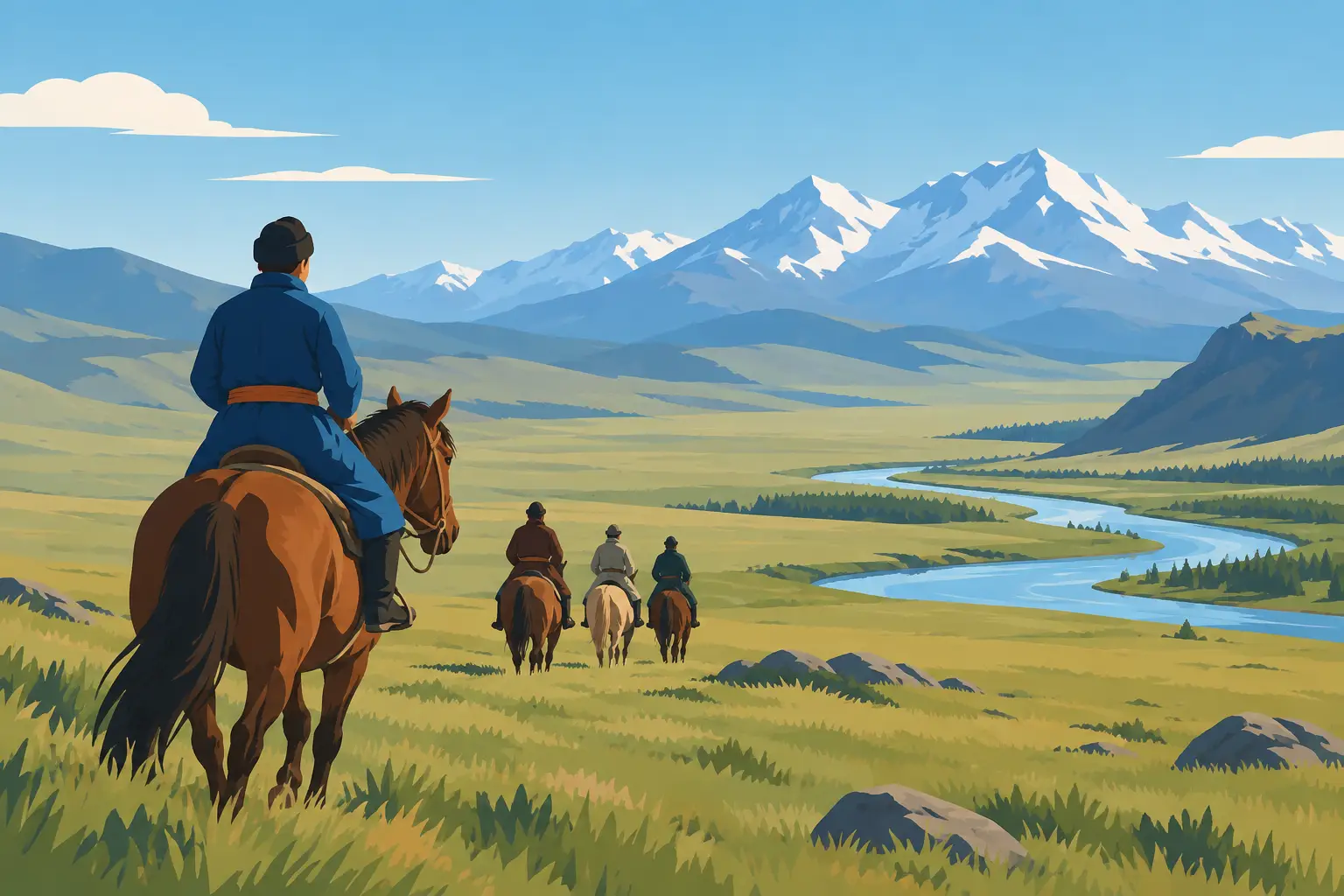
A Mongolian horse can carry you across a wide valley where the only sounds are hoofbeats, wind in the grass, and a distant flock of sheep. That sense of space is the reason Mongolia horse treks stay with travelers long after they return home. But this is not a polished ranch vacation with predictable trails and identical horses. It is an active journey through a living nomadic landscape, with real weather, variable terrain, practical comforts, and a pace shaped by horses and herding families.
For travelers who arrive prepared, riding in Mongolia offers an unusually direct connection to the country’s nomadic heartland. You travel at the height of the grasslands rather than viewing them through a vehicle window, stop at family gers, and follow routes that have long been used by local herders. The right trek is not necessarily the longest or most remote one. It is the one that matches your riding confidence, available time, and appetite for simple, memorable travel.
What Mongolia horse treks are really like
Most treks take place beyond the paved roads, often in central, northern, or western regions where open pastureland, river valleys, forested slopes, and mountain passes create natural riding country. Days commonly combine several hours in the saddle with breaks for lunch, photographs, and visits with local families. Distances depend on terrain, weather, and the ability of the group, not a rigid riding schedule.
Mongolian horses are small, strong, sure-footed, and deeply woven into local life. They are not typically trained in the same style as horses at a Western riding stable. Their tack can feel unfamiliar, and the riding style is often practical rather than refined. A good local horseman and guide make an enormous difference, matching horses carefully and helping riders settle into the rhythm of the journey.
Expect uneven ground. You may cross streams, ride through long grass, descend stony slopes, or travel over open steppe with no visible trail. These changing conditions are part of the experience, but they also explain why an honest assessment of your ability matters. A trek should feel adventurous, not like a daily test of endurance.
Choose a route that fits your experience
A first-time rider can enjoy Mongolia, but should not automatically choose a multi-day wilderness expedition. Short rides near a ger camp or a carefully paced private journey can be an excellent introduction. Riders who are comfortable walking, trotting, steering independently, and spending several hours in the saddle have more route options.
Experienced riders may seek longer treks through the steppe, around mountain lakes, or into more remote valleys. Even then, strong riding skills do not remove the physical demands of travel. Long hours sitting in a saddle, changing weather, and basic overnight conditions can be tiring. Core strength, general fitness, and the willingness to adapt matter as much as technical riding ability.
When discussing a route with a local operator, be specific. Say how often you ride, whether you have ridden outside an arena, how you manage uneven terrain, and whether you are comfortable trotting or cantering. It is far better to be modest about your experience than to spend a week on a horse that feels beyond your control.
Private journeys and small groups
A private horse trek allows greater flexibility around riding pace, rest days, photography stops, and the balance between riding and cultural visits. This can work particularly well for couples, families with capable older children, and friends with similar experience levels.
Small-group riding journeys offer companionship and logistical simplicity, but every rider should be reasonably well matched. One very nervous beginner in an otherwise experienced group can make the itinerary difficult for everyone. A thoughtful operator will ask questions before confirming the trip rather than promising that any route suits every rider.
When to go riding in Mongolia
The main horse trekking season generally runs from late spring into early fall. Summer brings the greenest pastures, long daylight hours, and a busy nomadic calendar. It is also the period when weather can change quickly. A bright, warm morning can turn windy or wet by afternoon, especially in mountain country.
Late spring can bring fresh landscapes and fewer travelers, but conditions may still be cold, muddy, or unsettled in higher areas. Mid-summer offers comfortable riding days in many regions, although afternoon rain and insects are possible. It can also coincide with Naadam celebrations, creating an appealing opportunity to see Mongolia’s equestrian culture in a festival setting.
Early fall often provides crisp air, rich grassland colors, and a quieter feeling on the land. Nights become colder, and families may be increasingly occupied with seasonal work. It can be a superb period for experienced travelers who value clear light and photography, provided they pack for sharp temperature changes.
Winter riding is a specialized undertaking, not simply a summer trek with extra layers. Snow, severe cold, limited daylight, and more complex logistics require a different level of preparation. For most travelers, the warmer riding season offers a more comfortable and accessible first experience.
Sleeping, eating, and the rhythm of camp
Accommodation varies widely by route. Some horse treks use established ger camps with beds, shared facilities, and prepared meals. Others include nights in family gers, where the welcome can be warm and personal but facilities remain simple. More remote expeditions may involve tented camps supported by vehicles and a local crew.
A ger stay is not a hotel room placed in the countryside. Families may be busy with livestock, children, cooking, milking, or preparing for a move to new pasture. Guests should arrive with curiosity and patience rather than expectations of a staged cultural performance. Your guide is central here, translating conversation, explaining customs, and ensuring that visits are respectful.
Meals on supported journeys are usually practical and filling, with a combination of Mongolian dishes and familiar options adapted to the group. Dietary requirements can often be planned for, but travelers should give notice well in advance. In remote areas, choice is naturally more limited than in Ulaanbaatar.
What to pack for the saddle
Good equipment prevents small discomforts from becoming the defining memory of a trek. Bring riding pants or durable pants without bulky inner seams, broken-in boots with a heel, warm layers, a waterproof outer shell, gloves, sun protection, and a refillable water bottle. A buff or scarf is useful against dust and wind.
Helmets are strongly recommended. Ask in advance whether one is supplied and whether it meets your personal comfort standard. If fit matters to you, bringing your own helmet is often the simplest option. Riders should also consider padded cycling shorts or a sheepskin-style seat cover if they are not used to consecutive long days in the saddle.
Keep camera equipment protected from dust, rain, and jolting movement. A small secure bag is more practical than trying to ride with a large backpack. Mongolia’s open horizons are extraordinary for photography, but a rider’s first job is still to stay balanced and attentive to the horse.
Respecting horses, hosts, and local customs
Horse travel in Mongolia is meaningful because it remains part of everyday life for many families. Treat horses as working animals deserving calm handling, not props for photographs. Follow the horseman’s instructions when mounting, dismounting, tying up, or approaching a horse. Avoid sudden movements around livestock, and never feed animals without permission.
Inside a ger, wait for guidance on where to sit and how to accept food or drink. It is courteous to receive items with your right hand or both hands. Ask before photographing people, homes, religious objects, or intimate family moments. A few genuine conversations, even through translation, are more valuable than collecting images without connection.
Responsible trekking also means leaving little trace. Carry reusable items where possible, limit single-use waste, and respect water sources and grazing land. Small groups, locally led routes, and realistic itineraries help keep the experience grounded in the places and communities that make it possible.
Plan for the journey beyond the ride
Reaching a riding area can involve domestic flights, long overland transfers, and hours on rough tracks. Mongolia is vast, and maps can make distances look deceptively simple. Build buffer time into an itinerary, especially if you are connecting with an international flight or a festival date.
Travel insurance should cover horse riding at the level planned, as standard policies sometimes exclude it. Discuss medical considerations, medication, dietary needs, and any concerns about altitude or mobility before departure. A well-organized trek includes clear support, reliable vehicles for luggage and emergencies where terrain permits, and guides who understand both the route and the people who live along it.
The finest rides here rarely depend on covering the most ground. They come from slowing down enough to notice a herd moving across the valley, the smell of wood smoke at a ger door, and the vast quiet beneath Mongolia’s Eternal Blue Sky. Choose a trek that gives you time for those moments, and the ride becomes far more than a way to travel.
Plan Your Mongolia Journey
Explore locally operated tours or ask our Mongolia team to tailor a private journey.