Mongolia Travel Blog
Planning a Mongolia Reindeer Herders Tour
Plan a Mongolia reindeer herders tour with clear advice on seasons, travel to the taiga, stays, etiquette, photography, and responsible visits in Mongolia.
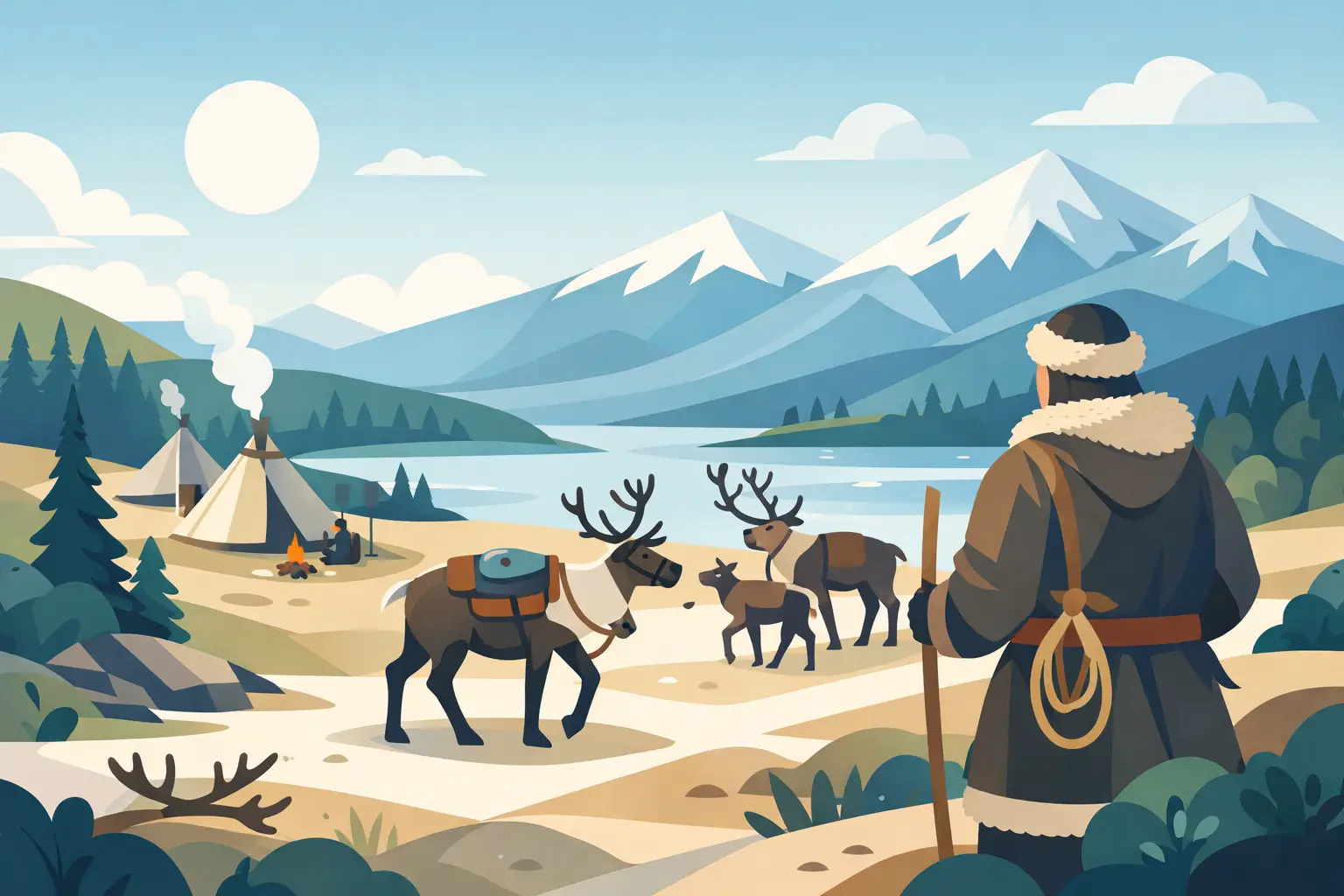
A Mongolia reindeer herders tour takes you beyond the road network into the taiga near the Russian border, where the Darkhad Valley opens into forested mountains, rivers, and wide northern skies. This is not a quick cultural stop. Reaching the families known as the Tsaatan, or Dukha, requires time, patience, and a willingness to travel according to weather, trail conditions, and the rhythms of reindeer-herding life.
For travelers drawn to Mongolia's nomadic heartland, the reward is extraordinary: mornings scented with woodsmoke, reindeer moving quietly between larch trees, and conversations shaped less by itinerary than by the day unfolding around you. It is one of the country's most memorable journeys, provided you approach it with realistic expectations and genuine respect.
Who are the Tsaatan reindeer herders?
The Tsaatan are a small community of reindeer herders living in northern Mongolia's taiga. Many people also use the name Dukha, reflecting their distinct cultural identity and historical ties to the wider Sayan region. Their reindeer are central to transport, milk, household life, and seasonal movement through the forest.
Visitors sometimes imagine a fixed village waiting at the end of the trail. In reality, families move their camps seasonally to find suitable grazing, shelter, and conditions for their animals. A visit is therefore an encounter with a living pastoral culture, not a staged attraction. Camp locations, the number of families present, and the daily routines you witness can all change.
That uncertainty is part of the experience. It also means the best journeys are planned with local guides who can adapt respectfully rather than forcing a rigid schedule on hosts and travelers.
What a Mongolia reindeer herders tour really involves
The route usually begins in Ulaanbaatar, followed by travel north toward Murun and the Darkhad Valley. Depending on the itinerary and season, this may involve a domestic flight followed by long overland days, or a fully overland expedition. From there, the journey continues across open valley, river crossings, forest tracks, and mountain terrain toward the taiga.
Road travel in northern Mongolia is an adventure in itself. There are few paved roads once you leave the regional center, and rain can turn sections of track into mud. In drier periods, dust and rough corrugations are common. The final approach may require riding horses, hiking, or using off-road vehicles where conditions allow. The exact balance depends on the camp location, weather, traveler ability, and local access rules.
This is why a short visit can feel rushed. Allowing several days for the approach, time at camp, and the return journey creates room for weather changes and makes the experience more rewarding. A private journey can be shaped around your comfort level, while a well-designed small group shares the practical demands of a remote expedition.
Accommodation and comfort in the taiga
Expect simple accommodation. You may stay in a traditional teepee-style dwelling near a herding family, in a nearby ger camp, or in expedition tents, depending on the route and operator's arrangements. Sleeping conditions are basic, with limited washing facilities and no expectation of constant electricity or phone signal.
A good support team makes a meaningful difference. Reliable vehicles for the overland sections, warm bedding, carefully planned meals, experienced drivers, and a knowledgeable Mongolian guide turn remote travel into a well-supported adventure. Comfort here is not about hotel amenities. It is the confidence that practical details have been considered while the place itself remains wonderfully wild.
Bring layers even in summer. Northern Mongolia can feel warm during a sunny afternoon and sharply cold after dark, while rain and wind are always possible. Waterproof outerwear, sturdy boots, a warm hat, gloves, a headlamp, and a personal water bottle belong on every packing list. In colder months, specialist winter clothing and a more serious approach to cold-weather safety are essential.
Choosing the right season
There is no single best season for every traveler. Summer generally offers greener landscapes, longer daylight, and easier conditions for people who prefer milder temperatures. It is a strong choice for photography, horseback travel, and combining the taiga with Khuvsgul Lake or the Darkhad Valley.
Autumn can bring clear light, golden forest colors, and a more atmospheric sense of the approaching winter. Nights become colder, and conditions can change quickly. This season suits travelers who value landscape photography and are comfortable with more variable weather.
Winter trips reveal a very different taiga: deep snow, smoke rising from warm shelters, and a silence that feels almost immense. They can be profoundly beautiful, but they demand excellent preparation, flexible logistics, and tolerance for severe cold. Winter is best for travelers who specifically want a true cold-weather expedition rather than simply a cultural visit.
Spring can be unpredictable as snowmelt affects tracks and river crossings. It may still be a worthwhile time for an adaptable private journey, but it is rarely the moment to insist on a tightly timed route. Reindeer and herding families come first, and responsible planning recognizes that access is never guaranteed in the way it might be at a conventional destination.
How to visit with respect
The most valuable thing you bring to a taiga camp is not a gift or a camera. It is patience. Families may be busy with animals, children, visitors, weather, or household tasks. Your guide should ask before entering a dwelling, photographing people, touching belongings, or approaching reindeer.
Reindeer are working animals and living creatures, not props. Riding may be possible in some circumstances, but it should never be assumed or treated as the purpose of the visit. The animal's welfare, the herder's decision, and local conditions must lead. Avoid feeding reindeer unless invited to do so by the family.
Small, practical gifts can be appreciated when arranged through a local guide, but they should not create pressure or turn an interaction into a transaction. Ask in advance what is appropriate for the particular visit. Buying locally made handicrafts directly from makers, when available, can be a more meaningful way to contribute.
Simple courtesy goes a long way. Accept offered tea or food graciously where possible, use your right hand or both hands when receiving something, and follow your guide's lead around household customs. You do not need to perform expertise in Mongolian traditions. Respectful curiosity and good manners are enough.
Photography: powerful images, thoughtful choices
The taiga offers remarkable photographic moments: reindeer against misty pines, riders crossing a valley, textured faces by firelight, and the contrast between a small camp and vast wilderness. Yet the strongest images come after trust, not before it.
Always ask before making close portraits, especially of elders and children. Do not photograph inside a home without clear permission. Put the camera down sometimes. Helping with a simple task when invited, sharing tea, or listening through your guide can create a more natural connection than immediately reaching for a lens.
For practical photography, bring weather protection, spare batteries, and enough memory cards. Cold drains batteries quickly, while dust and rain are equally real concerns in other seasons. A flexible itinerary matters more than a fixed shot list, since light, movement, and camp life cannot be scheduled.
Is this journey right for you?
A reindeer-herder journey is ideal for travelers who value remoteness, cultural exchange, and landscapes that have not been arranged for visitors. It suits photographers, adventurous couples, small private groups, and families with older children who can handle long travel days and basic facilities.
It may not be the right choice if you need predictable daily driving times, private bathrooms every night, reliable connectivity, or guaranteed animal encounters. The taiga asks travelers to trade certainty for depth. That trade is precisely why it stays with people long after they return home.
From our experience designing travel across Mongolia, the most successful taiga journeys are built with extra time, realistic expectations, and guides who understand both the terrain and the importance of respectful introductions. Nomadic of the Blue Sky can help shape a route around the season, your preferred level of comfort, and the wider northern Mongolia experience you hope to have.
When you arrive beneath the Eternal Blue Sky, let the journey be slower than you expected. In the taiga, that is often when the most meaningful moments find you.
Plan Your Mongolia Journey
Explore locally operated tours or ask our Mongolia team to tailor a private journey.