Mongolia Travel Blog
Mongolia Taiga Tour With Tsaatan Reindeer Herders
Plan a Mongolia taiga tour to meet Tsaatan reindeer herders, travel through the Darkhad Valley, and prepare for a remote, meaningful journey this summer.
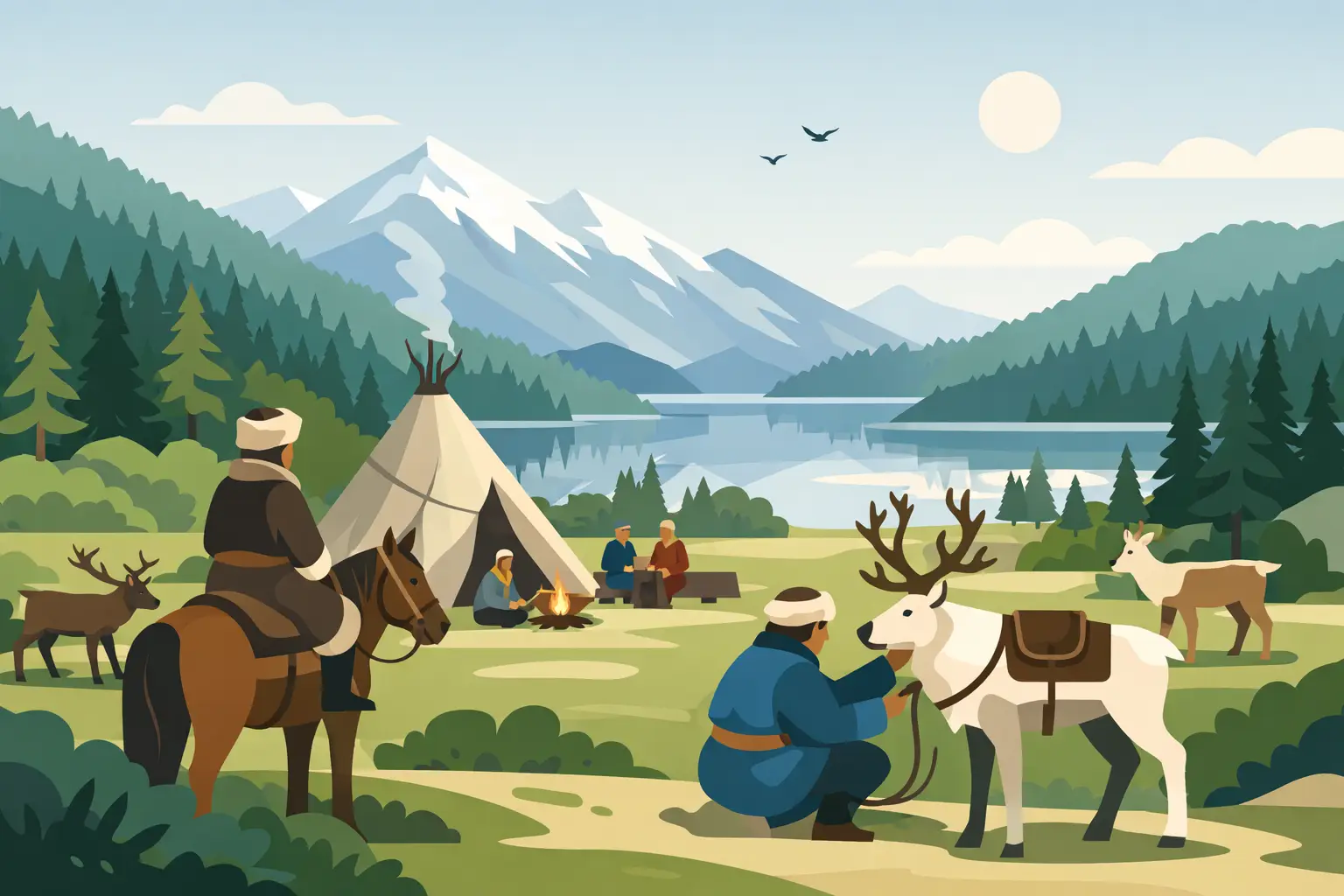
At the end of a long northern track, where larch forest gives way to open pasture and the air carries the sharp scent of pine, reindeer appear beside a small camp of teepees. A Mongolia taiga tour is not a quick cultural stop. It is a journey into one of the country’s most remote nomadic regions, shaped by weather, distance, and the daily rhythm of Tsaatan reindeer herders.
For travelers drawn to Mongolia’s living traditions, this is an extraordinary experience. It also calls for the right expectations. Reaching the taiga takes patience, conditions can change quickly, and comfort is simpler than in the Gobi or the steppe. In return, you have time to understand a way of life that cannot be reduced to a photograph.
What Makes a Mongolia Taiga Tour Different
Mongolia’s northern taiga lies beyond the Darkhad Valley, close to the Siberian border. The landscape feels distinct from the wide grasslands many travelers picture first: dark forest, marshy valleys, clear streams, mountain slopes, and high summer pastures. The road ends well before the journey does.
The Tsaatan, also known as Dukha, are reindeer-herding people whose lives are closely tied to their animals and to seasonal movement through the forest. Families may relocate their camps according to grazing, weather, and the needs of the herd. That means no visit should promise a fixed, staged scene. A well-planned journey is built around local contact and flexibility, not a timetable imposed from far away.
This is why experienced Mongolian guides matter. They understand the long approach through the Darkhad Valley, maintain relationships with local families, and make practical decisions when rain affects trails or a camp has moved. Their role is not simply translation. It is the connection between a visitor’s curiosity and the realities of the taiga.
The Journey to the Reindeer Herders
Most taiga journeys begin with travel north from Ulaanbaatar toward Khuvsgul Province, often by domestic flight and overland vehicle. From there, the route crosses the broad, hauntingly beautiful Darkhad Valley. Its rivers, wetlands, and far ridgelines offer a powerful introduction to northern Mongolia before the forested country begins.
The final approach varies by season and itinerary. Some routes involve long hours in a capable 4WD vehicle over rough ground, while others include horseback riding or hiking to reach the camp. The choice depends on road conditions, the location of the herders, and each traveler’s confidence in the saddle. A private journey can allow more time for a gradual approach; a small-group departure shares the experience while keeping logistics well organized.
The remoteness is part of the meaning. Travelers who want daily hotel changes, guaranteed Wi-Fi, and tightly controlled timing may find the taiga demanding. Those willing to trade predictability for a genuine northern wilderness experience often find it becomes the most memorable part of a Mongolia journey.
What a Respectful Camp Visit Feels Like
A visit to a Tsaatan camp is best approached as an invitation into someone’s home, not an attraction. Your guide will help with greetings, explain local customs, and advise when photographs are appropriate. Time may be spent sitting by the stove, sharing tea or a meal, hearing stories through translation, and watching the work that keeps the camp moving.
Reindeer are central to daily life. They may be milked, tended, saddled, or brought close to camp, but their welfare always comes first. Depending on the family and conditions, travelers may have an opportunity for a short ride. It should never be assumed, and it should not be the sole reason for coming.
The quieter moments often remain longest in the memory: the low sound of bells among the trees, a child leading a reindeer through camp, smoke rising from a teepee at dusk, and a conversation that reveals how deeply knowledge of weather, forest, and animals is carried across generations.
When to Travel to the Taiga
Summer, generally from June through September, is the most practical season for a Mongolia taiga tour. Days are longer, access is more manageable, and the taiga is green with grazing. July and August are popular for combining northern Mongolia with the Naadam Festival, although summer rain can make tracks muddy and river crossings more challenging.
Early summer can be fresh and quiet, with changing conditions after snowmelt. Late August and September bring colder nights, rich autumn color, and a more atmospheric feel in the forest. Photographers often appreciate this period for softer light and the contrast of reindeer, camp life, and gold-toned larch. The trade-off is that warm layers become essential, and routes may be less forgiving.
Winter travel in the Darkhad Valley and reindeer-herder country is possible only as a specialized expedition. It offers deep snow, intense silence, and remarkable photographic conditions, but temperatures can be severe and logistics require serious preparation. It suits travelers with a strong appetite for winter adventure, not a first-time visitor looking for an easy introduction to Mongolia.
Comfort, Packing, and Practical Expectations
A taiga itinerary is adventurous, but it does not need to be careless. A thoughtful operator plans reliable vehicles, capable drivers, good camping equipment where needed, nutritious meals, and clear communication before departure. Even so, remote travel means accepting basic facilities and adapting to the day as it unfolds.
Bring layers rather than relying on one heavy item. Weather can shift from warm sunshine to cold rain in a few hours, especially at night. Waterproof outerwear, sturdy walking boots, gloves, a warm hat, a refillable water bottle, and a headlamp are all useful. A small daypack should hold your camera, extra batteries, rain protection, and personal essentials.
For photography, protect equipment from dust, moisture, and cold. A flexible lens choice is more useful than carrying too much gear, since access to a camp may involve riding or walking. Ask before making close portraits, and resist the urge to direct people or animals for a shot. Patience produces better images and a better encounter.
Health preparation also deserves attention. The taiga is remote, so travelers should discuss personal medical needs with their operator well in advance and carry essential medications. The pace can be physically demanding, especially if horseback riding or walking is part of the route. There is no prize for pushing beyond your comfort level. An honest conversation during planning helps create an itinerary that fits you.
Responsible Travel in a Fragile Region
The Tsaatan community and the taiga environment both deserve more than passing interest. Responsible travel starts with choosing journeys that prioritize local relationships, fair community benefit, and small groups. It continues in camp through simple behavior: follow your guide’s advice, keep waste to a minimum, avoid intrusive photography, and respect private spaces.
Gifts should be handled thoughtfully rather than distributed casually. Your guide can advise on what is useful and culturally appropriate, or whether a contribution through the host family is preferable. Purchasing handmade items when available can be meaningful, but there should be no pressure on families to perform, sell, or change their routines for visitors.
A respectful visit also means allowing people to be complex. Reindeer herding is not frozen in time. Families balance tradition with education, changing livelihoods, weather pressures, and modern connections. Travel becomes more rewarding when you arrive ready to listen rather than searching for a version of the taiga that matches a postcard.
Building the Right Northern Mongolia Itinerary
The taiga works especially well as part of a longer northern journey. Khuvsgul Lake offers open water, mountain horizons, and a different expression of nomadic life. The Darkhad Valley provides the vital landscape between the lake region and the forest. Adding a few unhurried days makes the expedition feel less like a difficult transfer and more like a journey with its own unfolding story.
For a first visit, allow enough time for travel delays and changing conditions. A rushed schedule can turn a meaningful encounter into a box to check. Tailor-made private journeys offer the most flexibility for pacing, photography, family needs, or a particular interest in riding. Small-group adventures can be an excellent fit for travelers who value shared experience and the reassurance of a well-supported route.
At Nomadic of the Blue Sky, our local team plans northern journeys with the care this region requires: realistic routing, experienced Mongolian guides, and respect for the communities who make a visit possible. The goal is not to make the taiga feel ordinary. It is to help you reach it prepared, present, and ready for its own rhythm.
If the sound of reindeer bells in a northern forest calls to you, give this journey the time it deserves. The taiga is far from the usual route, and that distance is precisely what allows its welcome to feel so rare.
Plan Your Mongolia Journey
Explore locally operated tours or ask our Mongolia team to tailor a private journey.