Mongolia Travel Blog
Mongolia Tsaatan Reindeer Tour in the Taiga
Plan a Mongolia Tsaatan reindeer tour with local insight on seasons, travel conditions, respectful camp visits, and the wild beauty of the northern taiga.
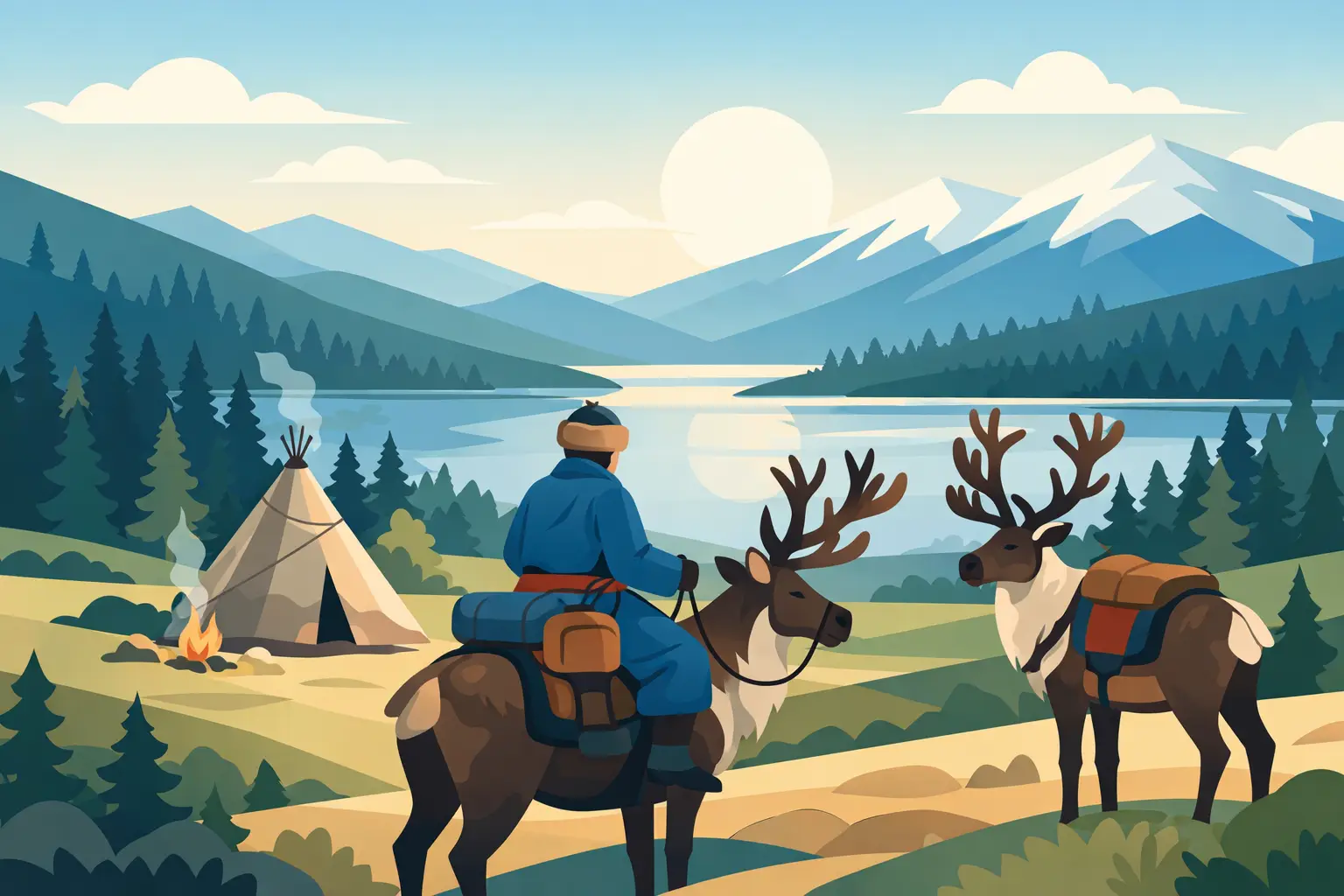
The road ends long before the journey does. Beyond the forests and open valleys of northern Mongolia, the taiga begins: a vast country of larch, peat bogs, clear streams, and weather that can change before lunch. A Mongolia Tsaatan reindeer tour brings travelers into this remote landscape to meet the Dukha, often known as the Tsaatan, a reindeer-herding community whose seasonal movements remain closely tied to their animals and the land.
This is not a visit designed around a fixed schedule or a staged cultural performance. It is an expedition into a living pastoral landscape, where plans must follow weather, trail conditions, and the location of the herder camps. For travelers willing to trade certainty for depth, it can be one of Mongolia’s most moving cultural journeys.
What Makes a Mongolia Tsaatan Reindeer Tour Different
The Tsaatan live in the northern taiga near the Darkhad Depression, close to Mongolia’s border with Siberia. Their reindeer provide transport, milk, and companionship, but they are not simply livestock. They are at the center of family life, seasonal knowledge, and cultural identity.
A respectful visit begins with understanding that a camp is a home, not an attraction. Families may welcome visitors into their ortz, the conical shelters traditionally used in the taiga, share salty milk tea, or explain how they care for reindeer through changing seasons. These moments are memorable precisely because they are unscripted. A herder may be out checking animals, a family may be preparing to move camp, or a storm may make travel impossible for a few hours.
That unpredictability is part of the experience. Rather than racing through a checklist, a well-planned journey allows time to settle into the rhythm of the taiga, listen to local stories through your guide, photograph morning mist over the forest, and understand the daily work behind reindeer herding.
The Journey to the Reindeer Herders
Reaching the Tsaatan is an adventure in its own right. Most journeys begin with an internal flight or a long overland route toward Khuvsgul Province and the Darkhad Valley. From there, travelers continue by 4WD across broad valleys, forest tracks, and river crossings before setting out toward the active herder camps.
The final approach may involve riding or hiking, depending on the season, trail conditions, and camp location. Some camps are easier to reach in summer, while winter travel can require snow vehicles, horses, or carefully planned support. There is no single route that works every month or every year.
This is why local knowledge matters. A Mongolia-based team can confirm current conditions with regional contacts, plan realistic driving days, organize experienced drivers and guides, and adjust the route when the taiga demands flexibility. Small groups and private departures are especially well suited to this kind of travel because they can move at a more considered pace.
Expect simple conditions, not a hardship contest
Accommodation is generally simple but purposeful. Depending on the itinerary, you may sleep in a ger camp or local guesthouse before entering the remote region, then stay in a tent or basic camp setup near the herders. Facilities can be limited, and hot showers are not a realistic expectation in the taiga.
Comfort comes from preparation: a warm sleeping system, good food, reliable vehicles, an attentive guide, and a support plan that respects the remoteness of the route. Travelers do not need to be extreme athletes, but they should be comfortable with uneven ground, changing weather, and days when the journey itself takes priority over the clock.
Choosing the Right Season
The best time depends on what you hope to feel, photograph, and tolerate. Summer offers greener landscapes, longer daylight, and generally more accessible trails. It suits travelers who want to combine a Tsaatan visit with Khuvsgul Lake, the Gobi Desert, or a wider Mongolia journey. Mosquitoes can be present in wet areas, and rain can turn tracks into mud, so waterproof layers remain essential.
Autumn brings crisp air, rich color in the larch forests, and particularly beautiful photography conditions. The weather is cooler and the nights can be cold, but the taiga often feels quieter. It is an excellent choice for travelers who prefer walking, landscapes, and more dramatic light.
Winter is the most demanding and perhaps the most atmospheric season. The Darkhad Valley becomes a world of deep snow, frozen rivers, wood smoke, and brilliant stars beneath the Eternal Blue Sky. A winter expedition to the reindeer herders requires serious cold-weather clothing, flexible timing, and confidence in remote travel. In return, it offers a rare perspective on how families and animals endure the northern winter.
Spring can be rewarding but is often less predictable. Thawing trails and changing conditions may affect access. If your dates are fixed, summer or early autumn often provides the most practical balance. If your priority is winter photography and a true cold-season expedition, careful planning can make an extraordinary journey possible.
How to Visit Respectfully
A meaningful Tsaatan experience is built on patience and good manners. Your guide will help with introductions, translation, and local etiquette, but the most important approach is simple: arrive as a guest.
Ask before taking close portraits, especially of children or private family moments. Do not touch reindeer without permission, and avoid treating the animals as props. Reindeer may be gentle, but they are working animals with their own routines and sensitivities. If a family offers tea or food, accepting a small amount is a warm sign of respect when dietary needs allow.
Photography can be deeply rewarding here, from the texture of an ortz to the quiet connection between a herder and a reindeer. It also requires restraint. A strong image should come after a real human exchange, not before it. Travelers who slow down, learn a few Mongolian greetings, and spend time listening usually leave with far more than photographs.
Responsible travel also means keeping camp impact low. Pack out waste, use water carefully, and follow your guide’s advice around fires, trails, and wildlife. Tourism can provide useful income for remote families, but only when visits are thoughtfully arranged and do not disrupt the seasonal work that sustains them.
Building a Journey Beyond the Taiga
The reindeer herders are a powerful centerpiece, but northern Mongolia rewards a wider itinerary. The Darkhad Valley’s open grasslands and sacred mountains provide a striking contrast to the enclosed forest of the taiga. Khuvsgul Lake adds clear water, lakeside horse culture, and sweeping views, while Ulaanbaatar offers a useful starting point for understanding Mongolia’s contemporary life and history.
For travelers with more time, a tailor-made route can connect the north with a Naadam Festival celebration, the Gobi’s vast dunes, or western Mongolia’s Golden Eagle Festival. The contrast is part of Mongolia’s magic: one journey may move from reindeer tracks in snow to wrestling grounds, desert cliffs, or eagle hunters in the Altai Mountains.
It is worth resisting the temptation to fit every signature experience into one rushed itinerary. The taiga deserves enough days for weather delays, camp visits, and quiet observation. A shorter private journey can be deeply rewarding when it is well paced; a longer expedition works best for travelers who want to absorb the landscape rather than simply cross it.
Prepare for the Experience, Not Just the Weather
Warm, layered clothing is essential in every season, including summer evenings. Bring broken-in waterproof boots, a refillable water bottle, sunscreen, insect protection in warmer months, and a camera setup that can handle dust, cold, and rain. In winter, insulated boots, mittens, face protection, and hand warmers are practical necessities, not extras.
Just as valuable is the right mindset. Mobile service may disappear. Roads may become tracks, and tracks may vanish into forest. Your guide may change the plan because a family has moved camp or a river crossing is unsafe. Those changes are not a failure of the itinerary. They are evidence that the journey is being led responsibly in a landscape that sets its own terms.
With more than 15 years of local experience, Nomadic of the Blue Sky can shape a small-group or tailor-made taiga journey around the season, your comfort level, and the kind of encounter you hope to have. The best preparation is to leave room for the unexpected: a reindeer bell in the morning fog, a shared cup of tea in an ortz, and the feeling of being welcomed into one of Mongolia’s most remote nomadic homelands.
Plan Your Mongolia Journey
Explore locally operated tours or ask our Mongolia team to tailor a private journey.