Mongolia Travel Blog
Mongolia Visa Requirements for a Well-Planned Trip
Mongolia visa requirements explained for travelers: passports, entry permissions, visas on arrival, timing, and practical arrival advice for Mongolia.
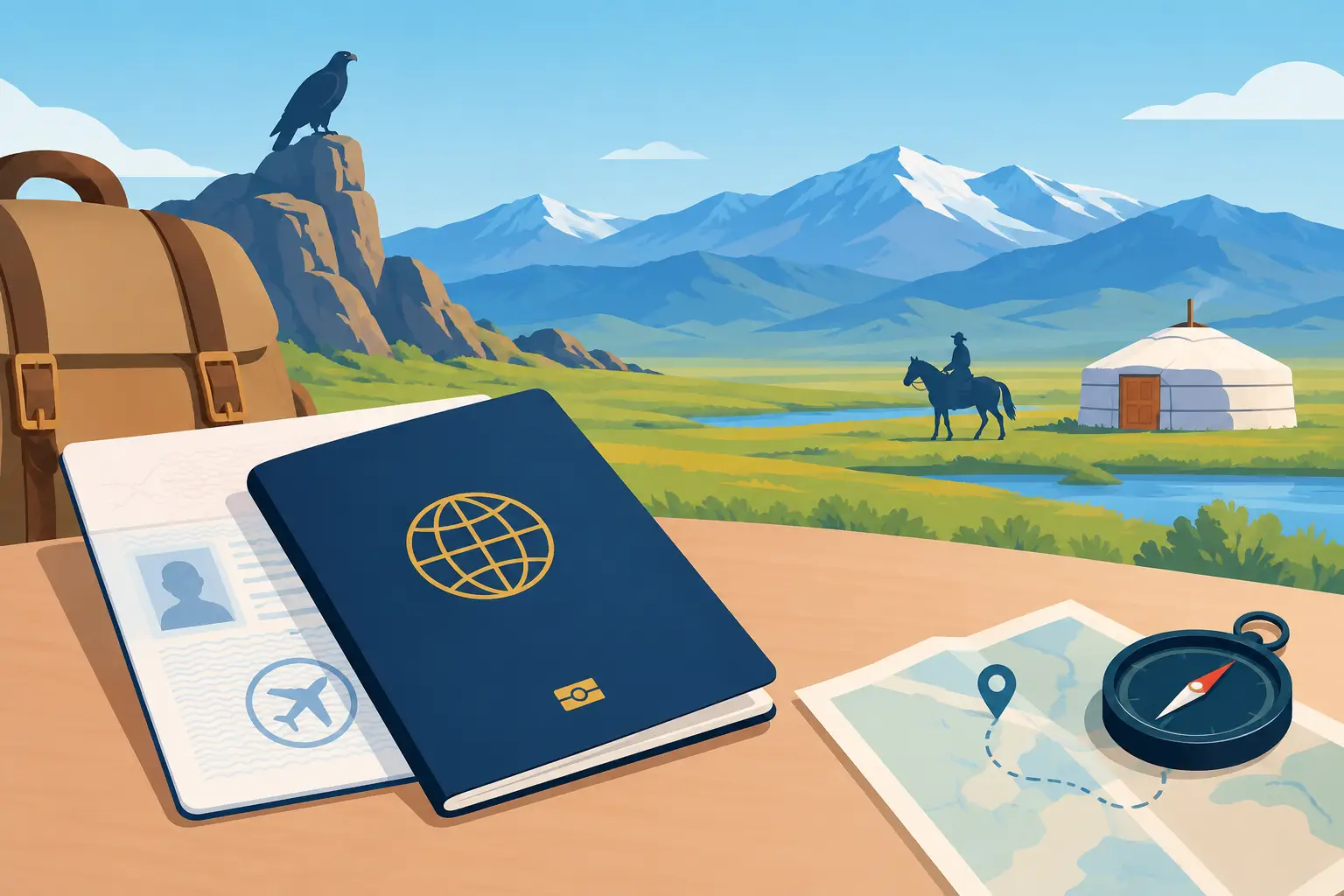
A Mongolia journey can begin with a night under Ulaanbaatar’s bright city lights and end far beyond paved roads, beside a family ger or beneath the immense blue of the Gobi. Before planning those distances, travelers need to understand the Mongolia visa requirements that apply to their passport. Entry rules are manageable, but they can change, and Mongolia is not a destination where it is wise to leave documentation until the week before departure.
Start With Your Passport and Nationality
Mongolia has visa-exemption arrangements with a number of countries, and the permitted length of stay is not the same for every nationality. Citizens of some countries, including several common visitor markets, may be able to enter for short tourism stays without arranging a visa in advance. Other travelers need an approved visa before flying.
This is why nationality, rather than where you currently live, is the starting point. A U.S., Canadian, Australian, European, or Asian passport may each have different conditions. Dual nationals should also decide which passport they will use for the journey and carry that same passport throughout the trip.
As a practical rule, your passport should be valid for at least six months beyond your intended arrival or departure date, with blank pages available for entry stamps. Airlines can refuse boarding when a passport or visa does not meet their document checks, even if the traveler expects to resolve the question on arrival.
Visa policies can be adjusted without much notice. Before purchasing nonrefundable flights, confirm the current rules through the relevant Mongolian embassy, consulate, or Mongolia’s official immigration authorities. A tour operator can help you understand the travel-planning implications, but only the authorities can confirm your legal entry status.
Mongolia Visa Requirements for Tourism
For most leisure visitors, the relevant category is a tourist visa or visa-exempt visitor entry. The exact application process depends on your nationality and where you apply, but authorities commonly request a completed application, a passport copy, a recent photo, and travel details. They may also ask for accommodation information, an onward or return flight, and evidence that your stay is genuinely for tourism.
Do not assume that a tourism entry permission covers every purpose of travel. Activities such as paid work, long-term study, volunteering, journalism, research, or business assignments can require a different visa category or additional permission. Photographers traveling for personal enjoyment on a holiday itinerary are generally different from a crew undertaking commercial filming, for example. If your plans involve a professional project, clarify the category early.
The duration granted matters as much as the visa itself. Check the number of permitted days, the validity window for entering Mongolia, and whether the entry is single or multiple. A visa may be valid for a period before arrival but still allow only a defined number of days in the country. Count carefully if your itinerary includes extra time in Ulaanbaatar before or after a remote expedition.
E-visa, embassy application, or visa on arrival?
Where available to your nationality and travel purpose, an electronic visa can make planning simpler. Complete applications carefully, using the exact spelling and passport number shown on your travel document. Small errors can create problems at check-in or immigration.
For travelers who are not eligible for an e-visa, an embassy or consulate application may be required. Processing times vary by location and season, so allow a generous buffer. Summer departures, Naadam Festival travel, and autumn journeys to the Altai for eagle festivals are periods when international flights and trip arrangements are often finalized well in advance.
Some travelers ask about visas on arrival. This option should never be treated as a default backup plan. Availability can be limited by nationality, prior approval, arrival airport, and the purpose of travel. If you have been told you may use it, obtain clear confirmation before departure and carry every document requested. Arriving at Chinggis Khaan International Airport without the correct authorization can mean an anxious and expensive disruption before the trip has begun.
Documents Worth Carrying in Your Hand Luggage
Immigration questions are usually straightforward when your documents match your plans. Keep your passport, visa approval if applicable, onward travel details, and the first night’s accommodation or local contact information in your carry-on rather than checked luggage.
For an organized journey, it is also sensible to have a simple itinerary showing dates, regions, and your operator’s contact number. Mongolia’s great journeys can involve a domestic flight, a long drive to the Gobi, or an overland route toward Khuvsgul Lake or Western Mongolia. Immigration does not need every detail of a nomadic itinerary, but clear travel information provides reassurance if asked.
Travel insurance is not a substitute for a visa, yet it is an essential companion to one. Medical facilities are strongest in Ulaanbaatar and more limited in remote areas. Choose a policy that includes medical evacuation and covers the activities you actually plan to do, whether that means horse riding, winter travel, hiking, or time far from urban centers.
Arrival in Mongolia: What to Expect
Most international visitors arrive at Chinggis Khaan International Airport near Ulaanbaatar. At immigration, present your passport and supporting visa documentation if required, answer questions honestly, and check your entry stamp before leaving the desk. Make sure the recorded date and permission align with your travel plans.
The airport experience is generally uncomplicated when paperwork is in order. The more significant adjustment often comes afterward: Mongolia is vast, weather can shift quickly, and a journey beyond the capital needs realistic timing. A visa confirms your right to enter, but it does not make a 600-mile drive across open steppe any shorter.
If you are joining a small-group departure, share your flight information well ahead of time and build in a little flexibility. Delayed luggage, late arrivals, and missed domestic connections are much easier to manage in Ulaanbaatar than in a provincial airfield or desert camp. Private journeys can offer more flexibility, but flights and seasonal camp arrangements still shape what is realistic.
Registration and longer stays
Visitors staying beyond the period allowed by their entry permission may need to register, extend their stay, or obtain a different visa through the appropriate Mongolian authorities. Requirements can depend on visa type, length of stay, and address in Mongolia. Do not overstay while assuming it can be corrected at the airport.
This is particularly relevant for travelers who decide to add time after a festival, remain in the country for a longer cultural project, or change plans due to weather. Discuss a possible extension before your permitted stay is close to ending. Remote touring should not be scheduled so tightly that you need to rush back to Ulaanbaatar for an immigration matter.
Plan Your Visa Timeline Around the Season
The best time to begin checking entry requirements is when you first choose your travel window. For a summer trip combining Naadam with the Gobi Desert, that may be several months before departure. For Golden Eagle Festival journeys in western Mongolia, early planning gives you time to secure flights, arrange visas if needed, and build sensible contingency days around domestic travel.
Winter deserves even more margin. Snow, cold, and limited daylight create extraordinary photography and cultural experiences, especially in northern regions, but they also make flexible scheduling more valuable. Your entry date should leave enough room for an overnight in Ulaanbaatar if international flight timing changes.
Keep printed and digital copies of your visa approval, passport details, insurance policy, and key contacts. Digital copies are useful, but battery life and connectivity cannot always be taken for granted once you leave the capital. A small paper folder remains remarkably practical on a Mongolia expedition.
A Few Common Questions
Can I enter Mongolia with a one-way ticket?
Entry officers or airlines may ask for proof of onward travel. Even if a one-way ticket is not explicitly prohibited for your nationality, a return or onward booking is the simplest way to show that your visit fits the terms of a tourist stay.
Does a tour booking guarantee a visa?
No. An itinerary, hotel confirmation, or invitation information may support an application when requested, but the visa decision rests with Mongolian authorities. Apply under the correct category and provide accurate information.
What if my passport expires soon after my trip?
Renew it before applying or traveling. Airlines and border authorities often apply passport-validity rules strictly, and replacing a passport from Mongolia can disrupt a carefully planned journey.
A little preparation protects the freedom that makes Mongolia so memorable. Confirm your entry rules early, leave room around your flight dates, and then let your attention return to the experiences ahead: the first sight of the steppe, the warmth inside a family ger, and the long, clear horizon under the Eternal Blue Sky.
Plan Your Mongolia Journey
Explore locally operated tours or ask our Mongolia team to tailor a private journey.