Mongolia Travel Blog
A Mongolia Winter Adventure Worth Planning
Plan a Mongolia winter adventure with private guides, warm ger stays, and rare access to nomadic traditions, sacred mountains, and the Eternal Blue Sky.
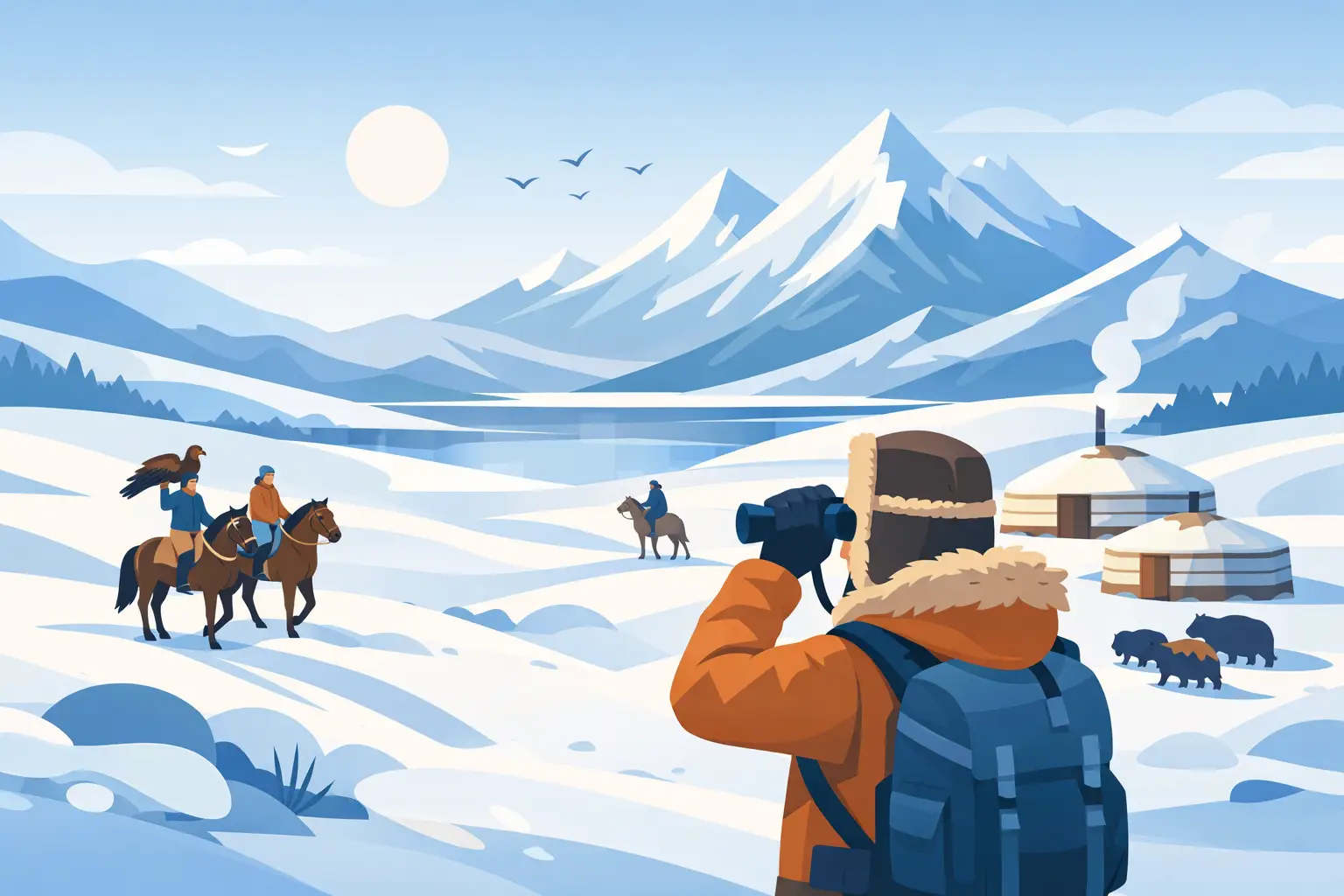
Winter in Mongolia is not a softened version of the country. It is Mongolia at its most elemental: wide valleys sealed in snow, horses moving through silver grass, woodsmoke rising from gers, and an Eternal Blue Sky so clear it seems almost within reach. A Mongolia winter adventure asks travelers to embrace real cold, but rewards them with profound quiet, remarkable cultural encounters, and a sense of space that few places on earth can offer.
For travelers accustomed to well-orchestrated journeys, the key is not roughing it for its own sake. It is experiencing the nomadic heartland with the right pace, the right local knowledge, and thoughtful comfort at the end of each day. With private transport, a Mongolian-born guide, carefully selected accommodations, and continuous in-country support, winter becomes less an obstacle than the setting for an exceptional journey.
Why Choose a Mongolia Winter Adventure?
Mongolia's winter season, generally from November through March, is crisp, dry, and undeniably cold. Temperatures can fall well below zero, particularly after sunset and in the open steppe. Yet the dry air, abundant sunshine, and dramatic visibility give the landscape an extraordinary clarity. Snow traces the folds of the mountains around Terelj, frozen rivers become pale ribbons across the valleys, and the Gobi's dunes take on an almost sculptural stillness.
The season also changes the rhythm of travel. Visitor numbers are low, roads and camps are quiet, and encounters often feel more personal. In a ger, the warmth of a stove and a shared bowl of milk tea carry a meaning that is easy to miss in summer. Winter reveals the practical grace of nomadic life: how families care for livestock, prepare food, preserve warmth, and welcome guests across a demanding landscape.
This is not the right trip for someone who wants every day to be spent outdoors from dawn until dark. It is ideal for travelers who value atmosphere over checklist sightseeing and want access to Mongolia's culture in its lived, seasonal form. The finest itineraries balance time outside with warm interiors, unhurried drives, and flexible adjustments when weather calls for them.
The Winter Experiences That Stay With You
Stay in a Warm Ger Beneath the Stars
A traditional ger is built for Mongolia's climate. Its round form, felt insulation, and central stove create a deeply comforting refuge after a day on the steppe. Well-managed winter camps offer a higher level of ease, with attentive hospitality, substantial meals, heated communal spaces, and private arrangements where available.
The appeal is not simply sleeping in a distinctive accommodation. It is waking to the sound of a fire being tended, stepping outside into a silent white world, and looking up at a night sky free from urban glow. Comfort in winter Mongolia is thoughtful rather than excessive, and that is precisely what makes it memorable.
Meet Nomadic Families in Their Winter Routine
A meaningful visit to a nomadic household is never a performance. It should be arranged with care, guided by people who understand local customs and have enduring relationships in the regions they visit. Guests may share tea, learn about the household's animals, watch daily work unfold, and gain perspective on a way of life shaped by mobility, family, and the seasons.
Winter adds depth to these exchanges. The work is urgent and physical, the hospitality is generous, and the contrast between the severe environment and the warmth inside a family ger is striking. Respect matters. A good guide helps travelers understand when to ask questions, how to accept food and drink graciously, and how to be present without intruding.
Ride or Travel by Horse Across the Steppe
For experienced riders, a winter horse experience can be a powerful way to understand Mongolia's enduring equestrian culture. Routes should be selected conservatively, with suitable horses, local horsemen, and conditions assessed daily. A short ride through a snowy valley may be more rewarding than an ambitious all-day expedition in biting wind.
Those who prefer not to ride can still feel the power of Mongolia's horse culture through close encounters with herders, winter livestock movements, and drives across the open steppe. Private 4x4 transport provides warmth, flexibility, and the ability to reach remote viewpoints without sacrificing the day's comfort.
Seek Out the Eagle Hunters of Western Mongolia
In the Altai Mountains, Kazakh eagle hunters maintain a celebrated hunting tradition using golden eagles. Winter is closely associated with this heritage, and the snow-covered mountains create a dramatic setting for meaningful cultural encounters and photography.
Reaching western Mongolia in winter requires more planning than visiting destinations near Ulaanbaatar. Domestic flight schedules, mountain weather, and road conditions all shape the itinerary. For travelers with the time and appetite for a more remote expedition, the Altai can be extraordinary. For a shorter first journey, Terelj National Park and the central steppe may offer a more relaxed introduction without diminishing the sense of discovery.
Where to Go in Winter
Terelj National Park, a relatively accessible journey from Ulaanbaatar, offers granite formations, forested slopes, and open valleys that are especially beautiful under snow. It works well as part of a shorter private journey or as a gentle beginning before traveling farther into the countryside.
The Orkhon Valley brings together expansive scenery and Mongolia's historic core. Its winter appeal lies in the open steppe, ancient sites, and rural life rather than long outdoor hikes. Days can be planned around brief walks, local visits, and scenic drives, followed by time to rest in a warm ger camp.
The Gobi Desert is often associated with summer, but winter brings a rare serenity to its vast spaces. It demands realistic expectations: some camps operate seasonally, services are more limited, and temperatures can be severe. With a well-equipped vehicle and an experienced team, however, the desert's empty horizons and stark beauty can feel intensely private.
Khuvsgul Lake and the far north can be magnificent for travelers who specifically seek a deeper cold-weather expedition. Frozen lake landscapes, taiga culture, and dog sledding possibilities create a distinct experience, but travel days are longer and conditions are more demanding. This is a destination best approached with time, preparation, and a genuine interest in winter travel rather than as an add-on.
Planning for Comfort, Safety, and Flexibility
The success of a winter journey rests on details that should be invisible once the trip begins. Vehicles need to be suitable for icy roads and remote distances. Drivers must know how weather affects routes. Accommodations should be confirmed for winter operation rather than assumed available, and every day should allow room for adjustment.
Packing is equally important. A high-quality insulated coat, thermal base layers, warm midlayers, windproof outerwear, insulated boots, thick socks, gloves, a hat, and face protection are essential. Avoid relying on fashion-forward cold-weather pieces that look substantial but do little in wind. Your guide and driver can manage the logistics, but personal warmth is the foundation of enjoying the landscape.
It is also wise to plan less than you might in a mild climate. Winter days are shorter, drives can take longer, and the most rewarding moments are often unplanned: a pause for hot tea, a conversation in a family ger, or a sunset over a frozen valley. Private travel gives you the freedom to follow those moments rather than racing toward the next scheduled stop.
For families, couples, and small groups, the itinerary should reflect the group's tolerance for cold and interest in activity. A photographer may welcome dawn departures and long periods outside. A family with younger children may prefer a shorter route, a premium ger camp, and frequent warm-up stops. Neither approach is more authentic. The best journey is the one designed around how you want to experience Mongolia.
Travel With Local Knowledge
Mongolia's distances can look deceptively simple on a map. In winter, local judgment is what turns an ambitious idea into a well-run journey. It informs which valley is sheltered from wind, which road remains reliable after snow, when an internal flight needs a buffer day, and how to create a respectful introduction to a host family.
Nomadic of the Blue Sky designs private winter journeys around that local knowledge, combining expert guides, reliable transport, carefully considered stays, and round-the-clock support. The aim is not to insulate travelers from Mongolia's wildness. It is to make room for them to meet it with confidence.
A winter journey here leaves you with more than photographs of snowbound mountains. It offers the rare feeling of having been welcomed into a country at its quietest, most resilient, and most beautiful.
Plan Your Mongolia Journey
Explore locally operated tours or ask our Mongolia team to tailor a private journey.