Mongolia Travel Blog
A Mongolia Winter Expedition Beyond the Cold
Plan a Mongolia winter expedition with local guides, reindeer herder encounters, snowbound landscapes, and comfort from start to finish with expert care.
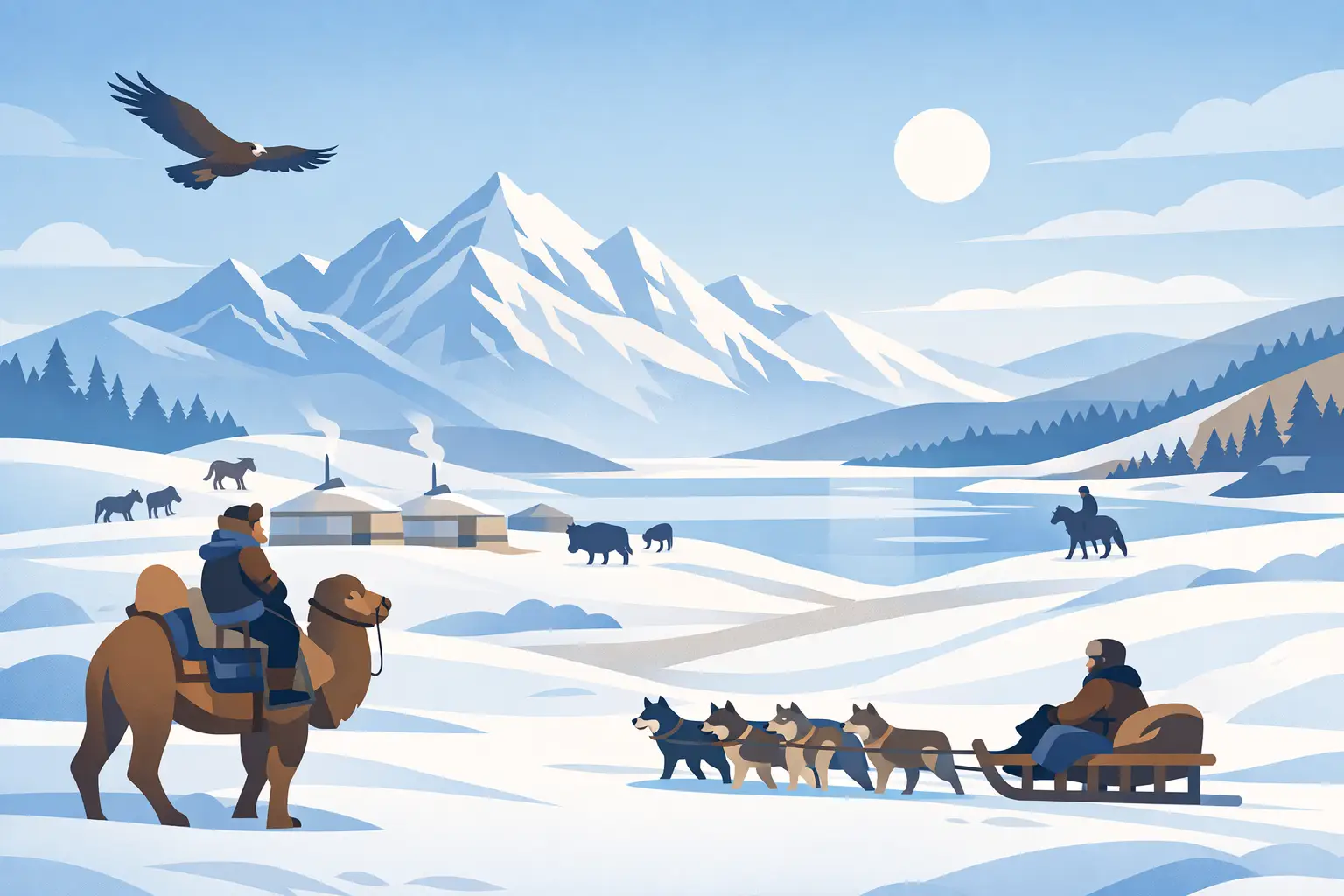
At -30°F, the sound of a horse’s hooves carries across the frozen steppe with startling clarity. A Mongolia winter expedition is not a holiday built around simply enduring cold. It is a rare chance to see the nomadic heartland at its most elemental: smoke rising from a family ger, the dark line of sacred mountains beyond the snow, and a night sky so clear it seems close enough to touch.
Winter asks more of travelers than summer, but it gives something equally rare in return. The country feels quieter, more intimate, and deeply alive. With thoughtful planning, capable local guides, dependable vehicles, and the right expectations, this is one of Mongolia’s most meaningful seasons to travel.
Why Choose a Mongolia Winter Expedition?
The winter landscape strips Mongolia back to its essential forms. The wide grasslands become white horizons, rivers turn to ice roads, and remote valleys settle into a stillness that makes every small encounter memorable. A herder tending animals before sunrise, children racing across packed snow, or tea shared beside a coal stove can become the moments travelers remember most.
This is also a season for those who want to photograph more than famous sights. Low winter light reveals texture in the Altai Mountains and northern taiga. Frost catches on horses’ manes. Eagle hunters in their heavy fur deels stand out against snow-covered slopes. In the Darkhad Valley, the immense open country and forested ridges create a setting that feels genuinely remote.
There is a trade-off. Winter travel requires flexibility because severe weather, snow conditions, and local family movements can affect a route. The reward is that itineraries can be shaped around real conditions rather than rushed through a fixed checklist. A well-designed journey leaves room for a change in weather, an unplanned cultural invitation, or a longer stop when the light is right.
The Darkhad Valley and the Reindeer Herders
Northern Mongolia’s Darkhad Depression is among the country’s most compelling winter regions. Encircled by mountains and crossed by frozen rivers, the valley is a gateway to communities whose lives remain closely connected to their animals, seasonal movement, and the taiga.
A visit with Tsaatan reindeer herders is often the defining experience of a winter journey. Their camps are not staged attractions. They are working homes in a demanding environment, and respectful visits depend on timing, weather, and the wishes of host families. Reindeer herding families may be moving between camps or caring for animals in conditions that require privacy and practical focus.
That is why local relationships matter. An experienced Mongolian guide can help create a visit that is considerate rather than intrusive, explaining local customs, arranging appropriate gifts or contributions when needed, and translating the stories that turn a welcome cup of tea into genuine connection. Travelers should arrive with curiosity and humility, not assumptions about what a day in the taiga should look like.
Accommodation in the north can be simple, especially beyond town centers. Heated gers, basic guesthouses, and family stays offer warmth and hospitality, but not urban-style amenities. For many travelers, that contrast is part of the experience: stepping from sharp winter air into a ger glowing with stove heat, then sitting down to a generous meal and conversation.
What Winter Travel Really Feels Like
Cold in Mongolia is dry, which can feel more manageable than damp cold elsewhere, but the temperature is still serious. In December through February, temperatures in northern and central regions can fall well below zero, particularly at night. Wind can change how quickly the cold reaches exposed skin, and simple tasks such as using a camera or adjusting boots take more time.
The key is not bravado. It is preparation. Good expeditions plan for warm interiors, regular hot meals, realistic driving days, and time to acclimatize. Travelers should expect to wear insulated boots, wool base layers, warm mid-layers, a windproof outer shell, heavy gloves or mittens, a hat that covers the ears, and a face covering for colder days. Hand warmers and spare camera batteries are useful, but well-fitted boots and layers matter more.
Photography travelers should be especially prepared. Batteries drain quickly, lenses can fog when moved from cold air to a heated ger, and metal tripod legs are uncomfortable without gloves. Keeping spare batteries close to the body and allowing equipment to adjust gradually to temperature changes makes a noticeable difference. The winter light, however, is worth the extra care: soft at the edges of the day and beautifully clear across open country.
How the Journey Is Planned
A successful winter route is not measured by how many miles it covers. It is measured by how confidently it adapts. Domestic flights can be helpful for reaching northern regions, while four-wheel-drive vehicles are essential for overland sections where snow, ice, and unmarked tracks shape the pace.
Road conditions vary widely. Main roads and town approaches may be relatively straightforward, while remote areas demand experienced drivers who understand the terrain and carry appropriate winter equipment. A few hours on a map can become a full day in deep snow or poor visibility. Building sensible buffers into the itinerary protects both safety and the quality of the experience.
For private travelers, a winter expedition can be tailored around priorities. Some guests want more time with reindeer herders and fewer long drives. Others are focused on winter wildlife, landscapes, or cultural photography. Small groups offer a shared sense of expedition while keeping the experience personal and manageable. In either case, the strongest route balances ambition with comfort and never treats weather as an inconvenience to be ignored.
Warmth, Food, and Everyday Comfort
Winter in remote Mongolia is adventurous, but it does not mean being cold all day. Vehicles are prepared for winter conditions, overnight stops are selected for reliable heating where possible, and hot meals are a central part of the day. Mongolian winter food is hearty by necessity, often centered on meat, dairy, soups, dumplings, and warming tea. Dietary requirements can usually be planned for in advance, though choices naturally become more limited in remote communities.
Facilities also depend on location. Ulaanbaatar and provincial towns offer conventional hotels and restaurants, while countryside stays are more basic. A good operator explains this honestly before departure. The aim is not to make remote Mongolia feel like a city, but to make sure travelers are well supported as they experience it.
Cultural Respect in a Winter Camp
A winter ger is both a home and a refuge from the weather. Visitors should enter with care, follow the host family’s lead, and ask before photographing people, children, animals, or private areas. Small gestures matter: receive offered food or tea respectfully, avoid stepping in front of an elder without awareness, and give conversations time even when translation is involved.
Responsible travel has a practical side, too. Remote households may have limited fuel, water, and supplies in winter. Guests who travel with experienced local teams help ensure visits are organized thoughtfully, contributions are handled fairly, and local communities benefit directly from the encounter. Authenticity is not about arriving unannounced. It is about being welcomed in a way that respects the rhythm of the people hosting you.
Is This the Right Journey for You?
A Mongolia winter expedition suits travelers who are comfortable with changing plans, remote conditions, and long stretches of wilderness. It is particularly rewarding for photographers, culturally curious couples, adventurous families with older children, and small groups seeking an experience far beyond standard sightseeing.
It may not be the best fit for travelers who need predictable daily schedules, extensive dining choices, or guaranteed access to every remote camp. Winter asks for patience, but that patience opens doors to a Mongolia few visitors ever see. The country’s famous summer festivals are spectacular, yet winter reveals another side of the Eternal Blue Sky: quieter, tougher, and profoundly personal.
With more than 15 years of local experience, Nomadic of the Blue Sky plans winter journeys around the people, roads, and seasonal realities that shape each route. The most memorable expeditions are never rushed. They allow enough time to warm up, listen closely, and let the landscape set the pace.
If the thought of a frozen valley, a smoking ger chimney, and reindeer tracks disappearing into the taiga stays with you, start planning early. The best winter journey begins with a clear idea of your comfort level, your interests, and the moments you hope to bring home long after the snow has melted.
Plan Your Mongolia Journey
Explore locally operated tours or ask our Mongolia team to tailor a private journey.