Mongolia Travel Blog
Northern Mongolia Winter Tour in Darkhad
Plan a northern mongolia winter tour with local insight: meet reindeer herders, cross the Darkhad Valley, prepare for deep cold, and travel with confidence.
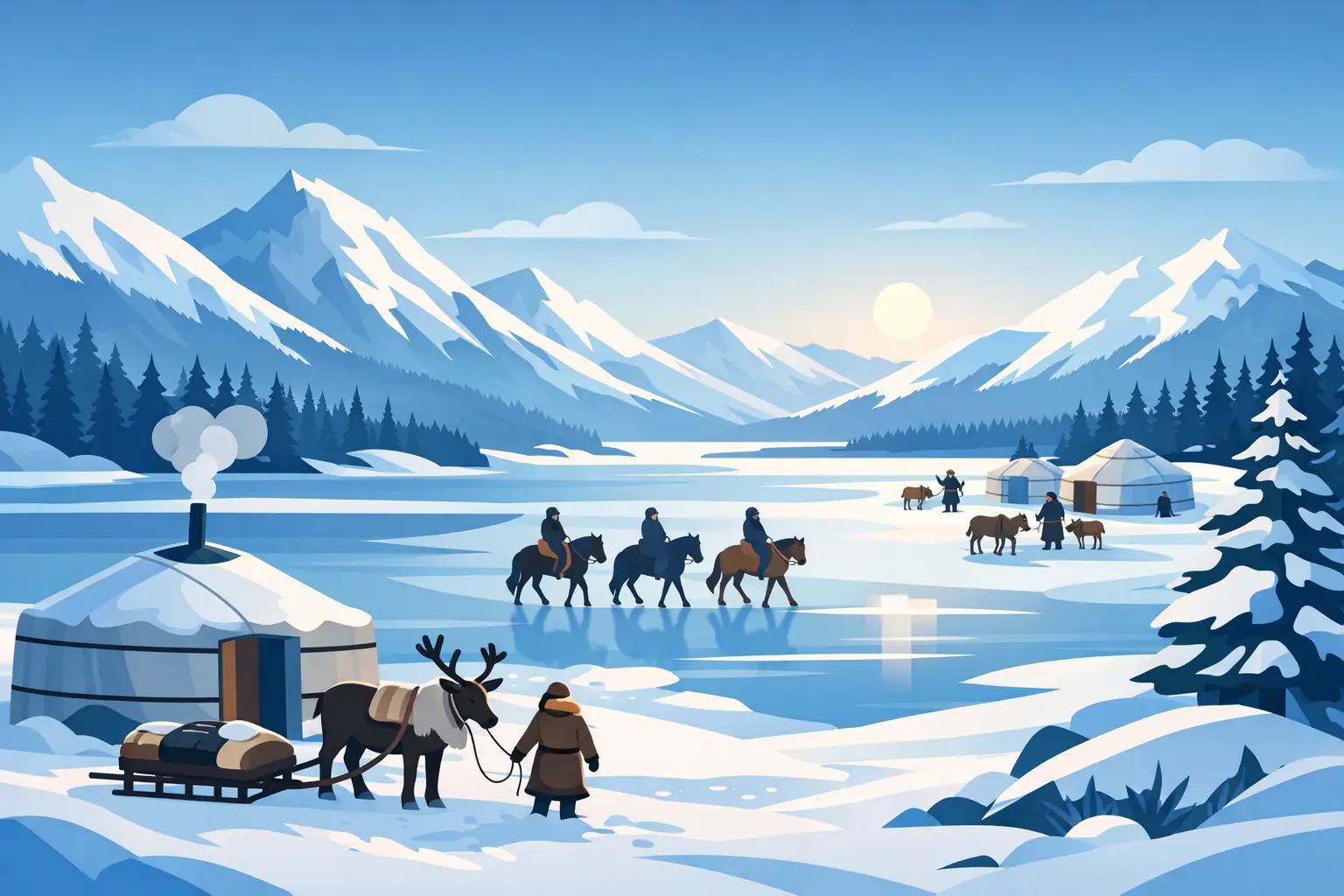
A northern mongolia winter tour begins where the road narrows, the forests deepen, and the silence becomes part of the journey. In the Darkhad Valley, snow settles across wide river plains beneath the Eternal Blue Sky, while smoke rises from nomadic homes and horses move through a landscape shaped by deep cold. This is not a winter escape built around observation from a distance. It is a chance to travel carefully into Mongolia’s northern nomadic heartland, guided by people who know what the season asks of both travelers and local communities.
For those drawn to remote cultures, winter photography, and journeys with real texture, northern Mongolia offers an experience that summer cannot replicate. The trade-off is clear: conditions are demanding, travel days can be long, and temperatures can fall dramatically. With the right preparation, a well-planned route, and an experienced local team, that challenge becomes the source of the journey’s power.
Why winter changes northern Mongolia
Northern Mongolia is beautiful in every season, but winter reveals its most elemental character. The Darkhad Depression, near the northern frontier, becomes a vast white basin edged by forested mountains. Frozen rivers create natural corridors across the valley. At night, the cold sharpens the stars until the sky feels extraordinarily close.
This is also the season when the rhythm of nomadic life is most visible. Families prepare fuel, tend livestock, maintain winter shelters, and make practical decisions according to weather and pasture. Visitors may share a meal in a ger, warm their hands beside a stove, and hear stories that carry a sense of place far deeper than a museum visit could offer.
The experience should never be treated as a performance. A respectful winter journey works around the daily lives of host families, weather conditions, and local permission. Some encounters will be planned; others will emerge naturally over tea, during a short walk through camp, or while watching a family prepare for the evening.
The Darkhad Valley and Tsaatan reindeer herders
For many travelers, the great draw of a northern Mongolia winter tour is the possibility of visiting the Tsaatan, Mongolia’s reindeer-herding communities. Their camps are found in the taiga, a remote forest region beyond the Darkhad Valley. Reaching this area is an expedition in itself, often involving long drives, changing trail conditions, and sometimes travel by horse or reindeer depending on the route and snow.
The Tsaatan maintain a reindeer-based way of life that is culturally distinct and closely tied to the forest. A visit can offer a meaningful introduction to their traditions, but it requires humility. Reindeer herders are not there to provide a spectacle, and winter is a working season. Responsible arrangements prioritize permission, fair local payments, small groups, and a pace that does not disrupt the camp.
It also depends on the weather and the location of the herders. Camps move, trails change, and a route that is possible one week may be unsafe the next. A strong itinerary keeps enough flexibility to adapt rather than promising access at any cost. That flexibility protects travelers, guides, and the communities welcoming them.
What a visit may feel like
A taiga visit is often quieter than travelers expect. There may be the soft sound of reindeer bells, the scent of woodsmoke, and long stretches without another vehicle in sight. You may be invited into a teepee-like shelter for tea, meet the family’s animals, or photograph the camp only after asking permission.
The most rewarding moments are often simple: learning how the cold affects daily routines, listening to a local guide interpret a conversation, or seeing the care with which reindeer are handled. Every visit is different, and that is precisely why it remains memorable.
What winter travel actually requires
The cold in northern Mongolia is serious. From December through February, temperatures can regularly fall well below 0°F, especially overnight and in exposed valleys. March can bring longer daylight and a little more warmth, but conditions are still firmly wintry. Cold is only one factor: wind, snow, distance, and limited facilities all shape the experience.
Travelers do not need to be extreme athletes, but they should be comfortable with a genuine expedition environment. Driving between settlements can take longer than maps suggest. Heated accommodation may be simple, and bathroom facilities can be basic outside towns. A flexible attitude matters as much as physical preparation.
Warm clothing is not a cosmetic detail. Layering allows you to adjust between a heated vehicle, a ger, and the open landscape. Your packing should include insulated boots with room for thick socks, thermal base layers, fleece or wool mid-layers, a down jacket, windproof outerwear, warm gloves with a backup pair, a hat that covers the ears, and a face covering for windy days. Hand warmers and a thermos are small items that make long outdoor stops much more comfortable.
Photography travelers should protect batteries from the cold by keeping spares in an inside pocket. Condensation can be an issue when moving equipment from freezing air into a warm ger, so allow cameras to adjust gradually inside a bag before opening it.
How a well-planned route makes the difference
Winter travel in remote Mongolia should not be rushed. The best itineraries allow for weather days, sensible driving distances, and time to absorb the region rather than checking off stops. Reliable four-wheel-drive vehicles, experienced drivers, warm accommodation where available, and guides who can communicate with local families all matter greatly.
A local guide does more than translate. They read the road conditions, understand regional etiquette, coordinate with hosts, and know when a change of plan is the wise decision. In winter, that judgment is one of the most valuable parts of the journey.
Nomadic of the Blue Sky designs winter expeditions around these realities, balancing remote access with practical support. Some travelers prefer a small-group departure that shares the experience with like-minded adventurers. Others choose a tailor-made private journey, allowing additional time for photography, cultural visits, or a pace that suits their family or small group.
Build in comfort where it matters
An authentic journey does not require discomfort at every turn. Comfortable hotels in Ulaanbaatar, well-maintained vehicles, thoughtfully chosen local stays, and hot meals after a day outdoors create the foundation for a rewarding expedition. The goal is not to soften northern Mongolia into something it is not. It is to make its extraordinary winter landscapes accessible without losing their character.
Is this the right trip for you?
A northern winter expedition is ideal for travelers who want more than a scenic drive. It suits photographers searching for clear winter light, couples looking for a rare shared adventure, culturally curious travelers, and small groups who value local connection over fixed routines.
It may be less suitable for anyone who needs guaranteed schedules, consistently mild temperatures, or high levels of urban comfort throughout the trip. Families can travel well in winter if children are prepared for the cold and the itinerary is designed with realistic driving times. Private travel is often the better choice for families, older travelers, or those wanting more control over pace and accommodation.
The key is to be honest about your expectations before you go. If you come for the snow, the silence, the nomadic hospitality, and the possibility of plans changing with the weather, northern Mongolia will reward you generously.
A season that stays with you
Winter in the Darkhad Valley is not a place to rush through. It asks you to slow down, listen to the stove crackle in a ger, notice hoofprints crossing fresh snow, and accept that the most meaningful encounters cannot be scheduled to the minute. Plan with care, travel with respect, and leave room for the northern landscape to set the rhythm.
Plan Your Mongolia Journey
Explore locally operated tours or ask our Mongolia team to tailor a private journey.