Mongolia Travel Blog
What a Tsaatan Tribe Mongolia Tour Is Really Like
Plan a Tsaatan tribe Mongolia tour with clear advice on seasons, travel time, reindeer-herder etiquette, remote camps, weather, and responsible local visits.
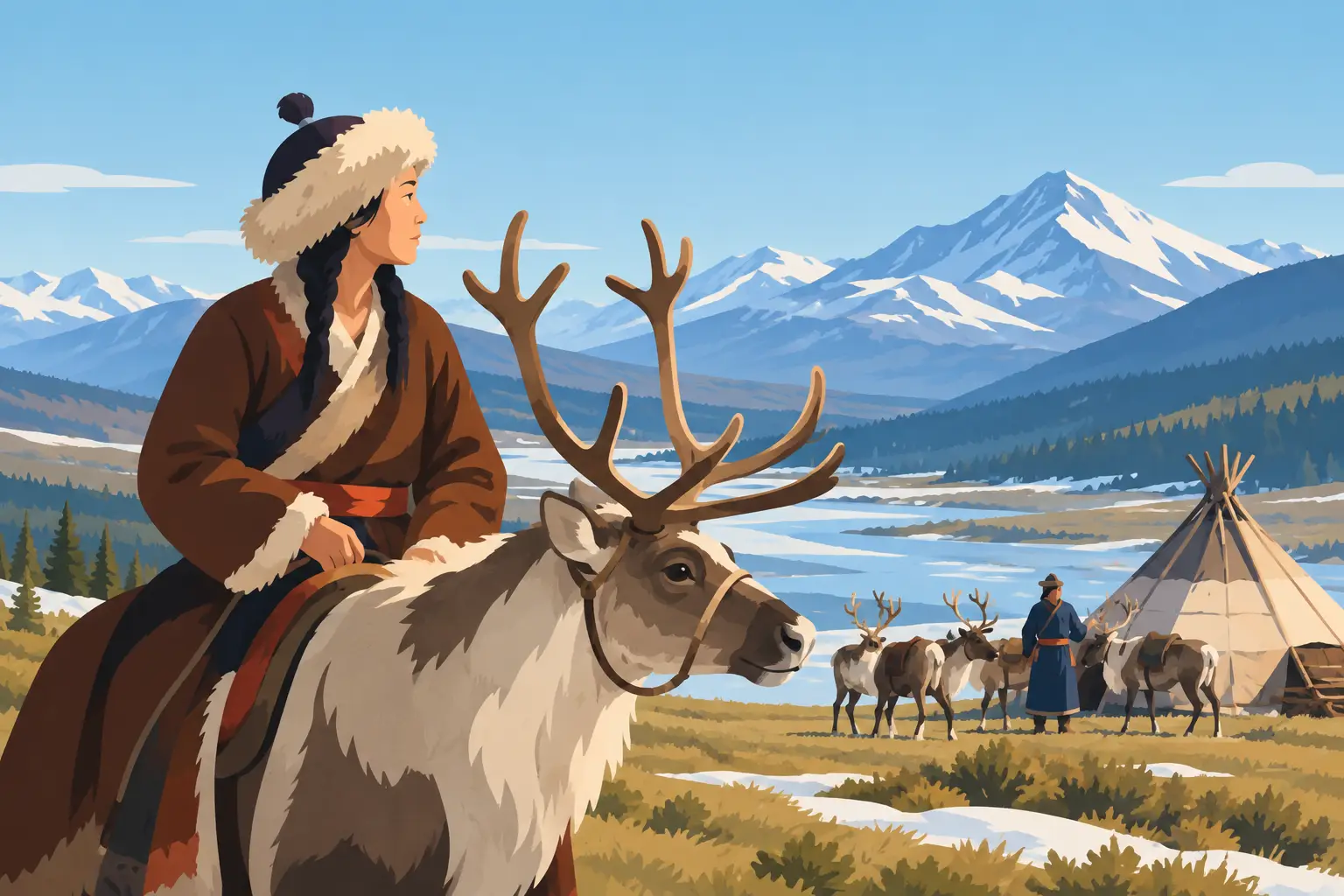
A Tsaatan tribe Mongolia tour is not a quick cultural stop between more accessible sights. It is a journey into the northern taiga, where forests close around rough tracks, weather can change within an hour, and reindeer-herding families live according to the needs of their animals and the land.
The Tsaatan, also known as the Dukha, are reindeer herders whose seasonal camps lie in the remote taiga beyond the Darkhad Valley. For many travelers, meeting a Tsaatan family is one of Mongolia's most powerful cultural experiences. It can also be misunderstood. A good journey is not about arriving with a camera and expecting a performance. It is about traveling patiently, accepting simple conditions, and visiting only where families are willing to receive guests.
What makes a Tsaatan tribe Mongolia tour different
Northern Mongolia has a quieter rhythm than the Gobi or the festival grounds around Ulaanbaatar. The journey itself is part of the experience. After reaching the provincial center of Murun, travelers continue north through the wide Darkhad Depression, a landscape of rivers, larch forest, open pasture, and distant mountains. Roads become tracks, and tracks may disappear into grass, mud, or river crossings.
The final approach to a reindeer-herding camp often requires travel by horse or on foot, depending on the season, trail conditions, and camp location. This is why a Tsaatan journey cannot be planned like a fixed city itinerary. Families move their camps, rain affects crossings, and the best route changes from one week to the next.
The reward is a sense of genuine remoteness under Mongolia's Eternal Blue Sky. At camp, daily life may include tending reindeer, preparing tea, collecting wood, repairing equipment, and caring for children. Visitors are guests in a working home, not spectators at an attraction.
Choose your season with care
The best time depends on the experience you want and the level of comfort you are prepared to accept. Summer offers the most practical access for many travelers. Days can be pleasantly mild, the forest is green, and horseback travel is generally easier than in winter. Yet rain can turn routes difficult, mosquitoes can be present, and temperatures still drop sharply after sunset.
Early fall brings golden larch forests, clearer light, and a more dramatic sense of the northern landscape. It is especially rewarding for photographers, though nights become colder and weather is less forgiving. By late fall, snow and freezing conditions may arrive.
Winter is beautiful but demanding. The taiga can be silent beneath deep snow, with smoke rising from camp and reindeer moving through a white forest. It is also a serious cold-weather expedition. Travel times lengthen, daylight is limited, and suitable clothing is essential. Winter journeys are best for travelers who are comfortable with basic accommodation, extreme cold, and a flexible approach to daily plans.
Spring can bring thawing ground and challenging conditions on the trails. For most first-time visitors, summer through early fall is the more approachable window. A locally planned itinerary should always leave room for weather and route changes.
Understand the real logistics
The remote setting is precisely what makes this journey special, but it requires realistic expectations. A visit to the Tsaatan cannot be compressed into a short excursion. Reaching the taiga takes several stages: travel from Ulaanbaatar to northern Mongolia, a long overland approach through the Darkhad Valley, then onward travel to the camp. Flight disruptions, changing road conditions, and river levels can affect timing.
Private journeys offer the greatest flexibility because vehicles, support, and pacing can be adjusted to the travelers' abilities and the conditions on the ground. Small-group expeditions can be equally rewarding, particularly for travelers who enjoy sharing remote camp life and the unpredictability that comes with it. In either case, a knowledgeable Mongolian guide, reliable drivers, and local coordination make a substantial difference.
Accommodation is usually simple. Depending on the route and camp, nights may be spent in a ger, a tent, or a traditional conical shelter near a host family. Do not expect hotel-style bathrooms, steady electricity, or reliable mobile service. You may have a stove for warmth, basin washing, and meals prepared around local ingredients. Comfort comes from good equipment, thoughtful support, warm bedding, and the welcome offered by hosts - not from polished facilities.
How to visit with respect
Reindeer are central to Tsaatan life, but they are not props. Keep a respectful distance unless a host invites you closer, avoid sudden movements, and follow instructions about feeding, touching, or photographing them. Reindeer can be sensitive to noise and unfamiliar behavior, especially around calves.
Photography requires the same consideration. Ask before photographing people, children, homes, religious items, or private moments. A guide can help with language, but a pause and a clear gesture of permission are often just as meaningful. If someone declines, accept the answer without pressure.
Small, useful gestures matter more than treating a visit as a transaction. Dress modestly, remove shoes when asked, accept food or tea graciously if you can, and avoid arriving with assumptions about how people should live. If gifts are appropriate, they should be discussed with a local operator in advance so they are useful, culturally suitable, and do not create expectations for future families.
Responsible travel also means recognizing that camp visits should be limited and arranged with consent. The taiga environment is fragile, and families need space to continue their work. Choosing an itinerary that allows time, uses established local support, and respects hosts' decisions is a more meaningful approach than trying to fit in as many stops as possible.
What to pack for the taiga
Packing well can transform the experience. Weather protection matters more than fashionable travel clothing. Bring warm layers even in summer, including a thermal base layer, insulating mid-layer, waterproof outer shell, warm hat, gloves, and sturdy waterproof boots with ankle support. Wool socks are particularly useful after a day in damp grass or on horseback.
A headlamp, refillable water bottle, personal medications, sunscreen, lip balm, insect repellent, and a power bank are sensible additions. For photographers, carry spare batteries close to your body in cold weather and protect cameras from dust, rain, and sudden temperature changes. Long lenses are useful for reindeer and landscapes, but a small portrait lens can be better for intimate moments when hosts have agreed to be photographed.
Horse riding may be part of the approach, but it should never be assumed. Experience, fitness, trail conditions, and the welfare of horses all matter. Tell your travel planner honestly about riding experience, mobility needs, dietary requirements, and comfort level with simple facilities before the route is finalized.
The moments travelers remember
The most memorable parts of the taiga are often quiet: reindeer bells moving beyond the trees, wood smoke in cold morning air, a cup of milk tea offered inside a warm shelter, or the sudden scale of the forested mountains after days of open steppe. These are not experiences that can be rushed or guaranteed.
For travelers willing to meet Mongolia on its own terms, the Tsaatan homeland offers a rare encounter with a living nomadic tradition and one of the country's most remote landscapes. Give the journey enough time, travel with humility, and let the people, weather, and taiga set the pace.
Plan Your Mongolia Journey
Explore locally operated tours or ask our Mongolia team to tailor a private journey.