Mongolia Travel Blog
Golden Eagle versus Sagsai Festival: Which Fits?
Compare Golden Eagle versus Sagsai Festival in Mongolia: crowds, culture, photography, access, and the practical details that shape the right trip well.
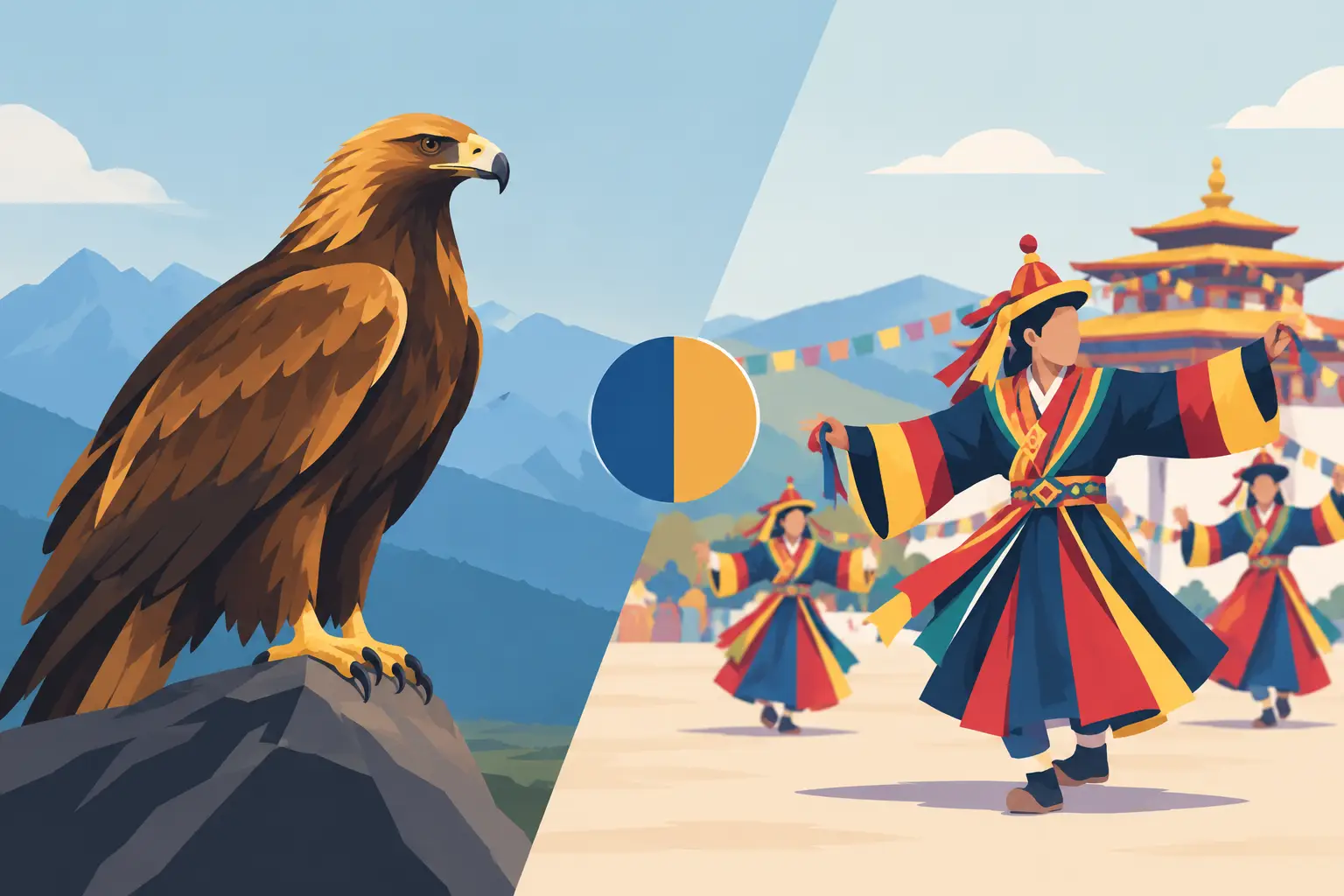
The question of Golden Eagle versus Sagsai Festival comes down to the kind of encounter you want in western Mongolia. Both celebrate the extraordinary tradition of Kazakh eagle hunting beneath the Altai Mountains, where hunters ride on horseback with golden eagles trained to hunt across the open steppe. Yet the atmosphere, scale, access, and rhythm of each gathering are distinctly different.
For travelers with limited time, the larger Golden Eagle Festival near Ölgii is often the more straightforward choice. For those drawn to a smaller setting with deeper village character and a quieter photographic experience, the Sagsai Eagle Festival can be especially rewarding. Neither is simply a performance. These are living community events, and traveling well means allowing room for weather, local timing, and the realities of a remote region.
Golden Eagle Festival versus Sagsai Festival at a glance
The Golden Eagle Festival is the better-known event. It is generally held near Ölgii, the provincial center of Bayan-Ölgii in western Mongolia, and brings together eagle hunters, families, visitors, horses, musicians, and local vendors. Its larger arena setting gives travelers a clear view of headline competitions, including eagle calling, traditional dress, horseback skills, and games played on the steppe.
Sagsai Eagle Festival takes place in or near Sagsai soum, a rural district west of Ölgii. It is usually more intimate in scale and feels closer to everyday community life. Instead of a large, purpose-built festival ground with substantial visitor infrastructure, travelers should expect a more local setting, fewer distractions, and a stronger sense of being in the nomadic heartland rather than at a major regional event.
The best choice depends on what you value most. Ölgii suits first-time festival travelers, families, and anyone who wants a broad program with easier logistics. Sagsai often appeals to photographers, returning visitors, and travelers who prefer a smaller gathering where patience and respectful interaction matter as much as the scheduled competitions.
The atmosphere: spectacle or intimacy?
At the Golden Eagle Festival near Ölgii, the energy is high from the beginning. Rows of mounted hunters in fur-trimmed coats, eagles perched on gloved arms, and sweeping mountain views create the scenes most people imagine when planning an Altai journey. The event is more structured, and the main competitions are easier to follow with a guide who can explain the rules and the cultural context.
That visibility is a genuine advantage. There are more hunters to see, more movement across the field, and a fuller calendar of activities. It can also mean more spectators. The best viewing areas become busy, particularly during dramatic eagle-calling contests, when hunters release their birds from a hillside and call them back to the arm of the rider below.
Sagsai feels less formal. You may spend more time observing people preparing horses, greeting relatives, adjusting an eagle's equipment, or waiting for the next event to begin. Those quieter intervals are part of its appeal. They offer a fuller impression of the community behind the festival, although they also demand flexibility from visitors used to tightly timed events.
Neither setting is better in every respect. Travelers who want constant action may find Sagsai too unhurried. Those who dislike crowds may find Ölgii's festival grounds more public than expected. A well-planned itinerary can make either experience meaningful, especially when it includes time with Kazakh families beyond the festival itself.
What you will see at both festivals
Both festivals center on berkutchi, the eagle hunters who work with female golden eagles. These birds are powerful, wild-born raptors trained over years to respond to their hunter. The relationship is demanding and should never be reduced to a costume photograph. Eagle hunting is part of the cultural heritage of Mongolia's Kazakh community, with knowledge passed through families and adapted to modern life.
Expect mounted eagle hunters in traditional clothing, eagle-calling demonstrations, horseback competitions, and regional games. Depending on the program, there may be displays of traditional music, dress, and craft. The exact order and content can change with local decisions, weather, and the availability of participants, so annual programs should always be confirmed closer to travel.
The most memorable moments are often unscripted: an eagle shifting its weight on a hunter's arm, a child watching from beside a horse, or the sudden silence before a bird drops low over the grassland. A local guide can help visitors understand what they are seeing without intruding on the occasion.
A note on respectful photography
Both events are remarkable for photography, but the best images come from patience rather than pushing close. Ask before photographing people at rest, families, or private moments around gers. Avoid blocking riders, standing in an eagle's flight path, or using a drone unless explicit permission and all local requirements are in place.
At Ölgii, longer lenses can help isolate riders and eagles from the larger crowd. At Sagsai, a wider approach may work beautifully: portraits, hands on leather equipment, horses against the Altai foothills, and the textures of camp life. Cold-weather camera batteries drain quickly in western Mongolia, so carry spares close to your body.
Access and travel conditions in western Mongolia
Ölgii is the practical gateway for both festivals. Most itineraries begin with a domestic flight from Ulaanbaatar, followed by road travel into the surrounding valleys. Flight timing can shift because of weather and operational conditions, particularly during Mongolia's changing autumn season. Building a little flexibility into the beginning and end of the journey is wise.
The Golden Eagle Festival near Ölgii generally involves shorter transfers from town. This makes it easier to combine festival days with hotel accommodation or a comfortable ger camp arrangement, depending on the itinerary. It can be a strong option for private travelers who want reliable support without sacrificing the adventure of western Mongolia.
Sagsai requires additional driving across open country. Roads may be rough, dusty, muddy, or slow after rain, and travel times are better treated as estimates than promises. The reward is the landscape itself: broad river valleys, livestock herds, distant snow-streaked peaks, and a sense of space that defines the Altai.
Accommodation around festival time is limited. In Ölgii, choices can include local hotels and guesthouses, though standards are simpler than in Mongolia's capital. Outside town, travelers may stay in ger camps or with local families where suitable. Facilities are often basic, with shared bathrooms, variable heating, and limited Wi-Fi. A good operator plans transport, meals, warm bedding, and backup arrangements carefully rather than assuming remote logistics will run exactly as they do in a city.
Weather, clothing, and comfort
Eagle festivals are typically held in autumn, when western Mongolia can be brilliantly clear, windy, and cold. Morning frost is possible, while sunny midday conditions can feel surprisingly warm if you are active. Temperatures drop quickly once the sun disappears behind the mountains.
Bring an insulated jacket, warm layers, windproof outerwear, gloves, a hat, and sturdy boots that can handle uneven ground. A seat cushion or compact insulated pad is useful during long viewing periods. Sunglasses and sunscreen still matter at altitude, even on cold days.
Travelers should also prepare for long festival days. Food choices are usually straightforward, and dietary requirements need advance planning. Carry water, snacks, hand sanitizer, personal medication, and a power bank. These small preparations make a substantial difference when you are several hours from the nearest full-service town.
Which festival is right for your Mongolia journey?
Choose the Golden Eagle Festival near Ölgii if you want the fullest introduction to eagle-hunting traditions, a larger field of participants, and simpler access from the provincial center. It works particularly well for a first journey to western Mongolia or for travelers combining the festival with a broader route through the Altai.
Choose Sagsai if a smaller-scale cultural gathering matters more than a major event atmosphere. It is an excellent fit for travelers who can accept longer road journeys, basic rural comforts, and a less predictable schedule in exchange for a closer sense of place.
For photographers, the decision may be less about which is more dramatic and more about visual preference. Ölgii offers scale, action, and a concentration of subjects. Sagsai offers intimacy, landscape, and room to work slowly. In either case, adding a few days before or after the festival creates opportunities to visit Kazakh households, ride through open valleys, and see the Altai beyond the main program.
Festival dates and logistics should be checked for the specific year before flights are booked. From our experience planning Mongolia journeys, the strongest western Mongolia itineraries leave space for the unexpected: a weather delay, an invitation for milk tea in a ger, or an extra hour of golden light across the sacred mountains. That unhurried space is often where the real journey begins.
Plan Your Mongolia Journey
Explore locally operated tours or ask our Mongolia team to tailor a private journey.