Mongolia Travel Blog
How to Attend Naadam Festival in Mongolia
Learn how to attend Naadam Festival in Mongolia, from tickets and timing to etiquette, transport, countryside events, and memorable local experiences.
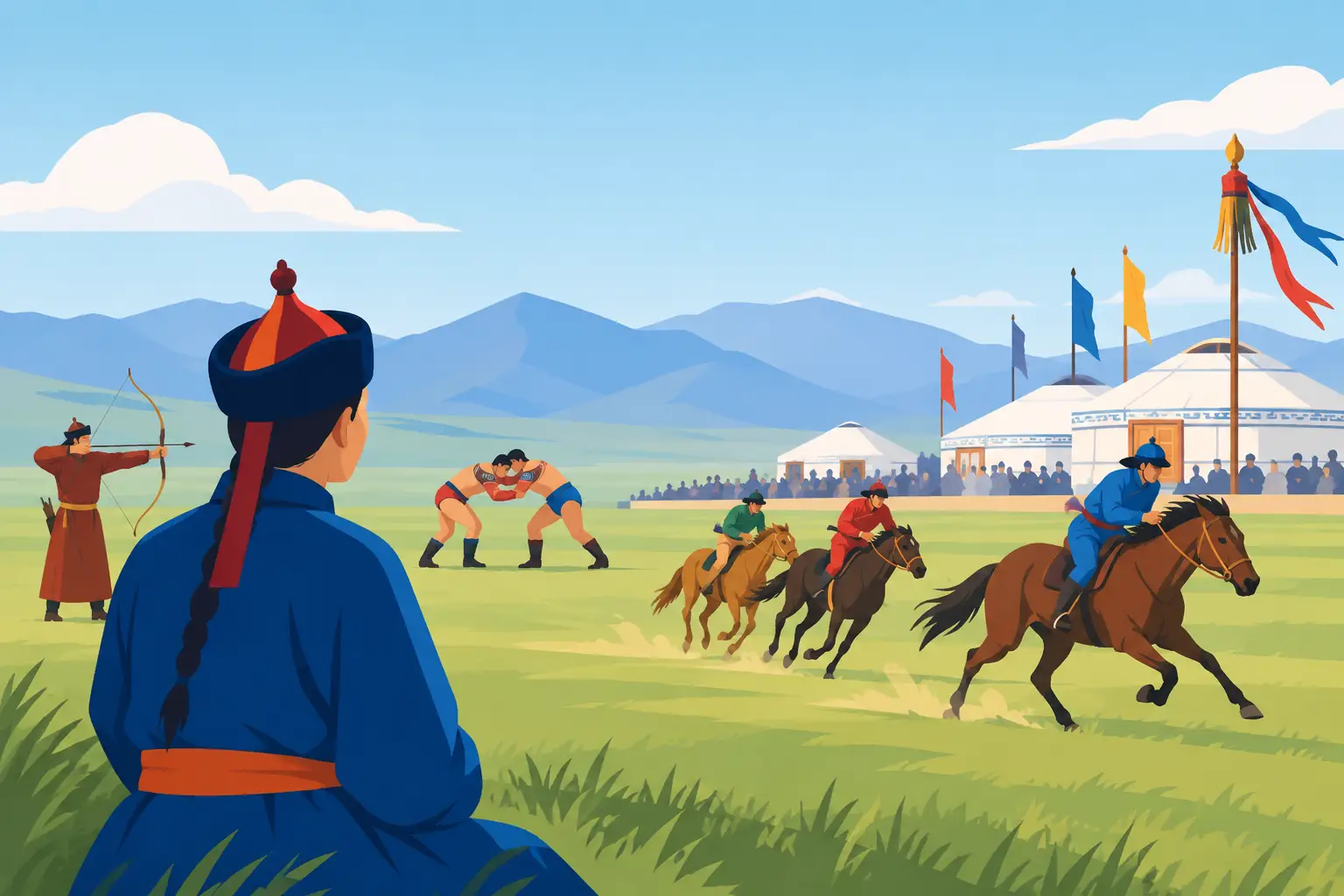
The first roar from the wrestling arena, the flash of silk deels in the stadium stands, and the distant dust of racing horses across the steppe make Naadam far more than a sporting event. For travelers wondering how to attend Naadam Festival, the key is to decide whether you want the scale and ceremony of Ulaanbaatar or the intimate, community-centered atmosphere of a provincial celebration - then build the rest of your Mongolia journey around it.
Naadam is Mongolia’s most important national festival, celebrating the “Three Manly Games”: wrestling, horse racing, and archery. Today, women compete prominently in archery, and girls also race horses in many areas. The festival carries centuries of history, but it remains a living part of Mongolian summer: families reunite, herders travel in from the countryside, children wear their best deels, and national pride fills the air beneath the Eternal Blue Sky.
Choose the Right Naadam for Your Journey
The national Naadam in Ulaanbaatar is generally held around July 11-13 each year, though travelers should confirm the official program and opening arrangements when planning. It is the most accessible choice for first-time visitors, with the main opening ceremony, large stadium events, well-known wrestlers, and a city-wide festive atmosphere. It is also the busiest version of Naadam, and the most structured in terms of seating, traffic, and logistics.
A provincial or countryside Naadam offers a different kind of reward. In an aimag center or rural community, you may stand closer to the archery field, watch families picnic beside the wrestling ground, or see young horse riders return dusty and exhilarated from the open steppe. These events are usually smaller and less theatrical, but often feel more personal. Timing and programs can be more flexible than in the capital, so local support and a patient attitude are particularly valuable.
For many travelers, the strongest itinerary combines both. Attend the opening festivities or selected competitions in Ulaanbaatar, then continue into the Gobi, central steppe, Khuvsgul region, or western Mongolia for a local Naadam and time with nomadic families. This avoids treating the festival as a single stadium visit and gives it a wider cultural setting.
How to Attend Naadam Festival: Plan Early
Naadam falls during Mongolia’s short, popular summer travel season. Flights, comfortable city hotels, domestic connections, drivers, and experienced guides are in demand well before July. If Naadam is central to your trip, begin planning several months ahead, particularly if you want private arrangements, a small group departure, or a route that continues into remote regions.
The national opening ceremony is the event most likely to require advance ticket planning. Seating categories, collection procedures, and access rules can change from year to year. A local operator can help travelers understand the practical differences between seats, arrange transport, and avoid spending the morning negotiating crowded city traffic. Do not assume that arriving at the stadium gates will guarantee a good view.
For provincial Naadam, tickets may be simple, inexpensive local admissions or may not be the main issue at all. The real planning challenge is getting there. Mongolia’s distances are significant, and roads beyond the capital can range from paved highways to long tracks across open grassland. A festival that looks close on a map may still require a full day of driving, especially after rain.
Understand What You Will See
Mongolian wrestling is ceremonial as well as competitive. Wrestlers wear an open-fronted jacket, briefs, and traditional boots, then perform the eagle dance before and after bouts. There are no weight divisions, so a smaller athlete can face a much larger opponent. Even without knowing every rule, the ritual, music, and crowd response make the competition compelling.
Horse racing is very different from a racecourse event. Horses race over long distances across the steppe, with child jockeys often riding the youngest and lightest horses. The finish can be exciting, chaotic, and emotional as families, trainers, and spectators gather around arriving riders. Give the horses, children, and handlers space, follow your guide’s directions, and never step into the moving crowd for a photograph.
Archery is quieter but no less impressive. Archers shoot at small leather targets from a considerable distance while judges and spectators sing or call out when an arrow lands true. It is one of the best events for observing traditional dress, concentration, and the sociable rhythm of the festival.
You may also encounter ankle-bone shooting, food stalls, music, and informal celebrations outside the official arena. The most memorable moments are often found between the headline events: an elder adjusting a child’s deel collar, a family sharing dairy products, or a line of horses moving toward the horizon.
Dress, Weather, and Festival Comfort
July weather can change quickly. Ulaanbaatar may be warm during the day, but mornings, evenings, wind, and sudden rain can make a light insulated layer and waterproof shell very useful. In the countryside, sun exposure is often stronger than visitors expect. Bring a brimmed hat, sunglasses, sunscreen, refillable water bottle, and shoes that can handle dust, uneven ground, and a little mud.
Dress neatly but practically. There is no requirement for foreign visitors to wear traditional clothing, although a locally made deel can be a meaningful addition if bought respectfully and worn with care. Avoid clothing that is overly revealing at rural events or when visiting a family ger. Mongolia is welcoming, but Naadam is a proud cultural occasion rather than a costume opportunity.
Crowds can be dense around the Ulaanbaatar stadium and race finishes. Keep your passport, cash, and phone secure, carry a power bank, and agree on a meeting point with your companions or guide. Mobile signal is generally available in the capital but can be inconsistent at rural horse races and remote camps.
Etiquette That Helps You Be a Welcome Guest
Observe before photographing. Many people are happy to be photographed during public events, especially when they are dressed for the festival, but a smile and gesture asking permission remains good manners for close portraits. Be especially considerate around children, religious objects, and private family moments. A knowledgeable Mongolian guide can help bridge language and etiquette when an interaction becomes more personal.
At a ger camp or family visit, accept offered food or drink graciously when you can. If you need to decline, do so politely rather than abruptly. Use your right hand or both hands when receiving something, and avoid pointing your feet toward people, the hearth, or food. Small gestures of respect matter more than trying to perform every custom perfectly.
Naadam is not a reenactment for visitors. It is a holiday with deep meaning for Mongolians. Arrive with curiosity rather than a checklist, and allow time for the unplanned pauses that make the festival feel real.
Build a Journey Beyond the Stadium
A well-planned Naadam trip works best when the festival is paired with landscapes and experiences that reveal Mongolia beyond the capital. After Ulaanbaatar, travelers can head south to the Gobi Desert’s cliffs and dunes, west toward the Altai Mountains, or into central Mongolia’s valleys and historic monastery country. Horse riding, a stay in a ger camp, and time with nomadic hosts can add depth without rushing through the festival itself.
Photography travelers should consider their priorities before choosing an itinerary. Ulaanbaatar provides grand ceremonies, wrestlers, crowds, and formal color. Rural Naadam offers open horizons, horse culture, quieter portraits, and more room to work with light. Neither is automatically better; it depends on whether you are drawn to national spectacle or the everyday heart of the nomadic heartland.
Nomadic of the Blue Sky can help shape a Naadam journey around the events that matter most to you, whether that means reliable stadium logistics, a small-group route into the countryside, or a private itinerary with time to slow down. The best festival plans leave room for Mongolia’s natural rhythm: a changing sky, a delayed horse race, an unexpected invitation for tea, and the sound of hoofbeats fading across the grassland.
Come prepared, be patient with the movement of the day, and let Naadam unfold at its own pace. That is often when the festival becomes more than something you watched - it becomes a memory of Mongolia you can still hear long after the dust has settled.
Plan Your Mongolia Journey
Explore locally operated tours or ask our Mongolia team to tailor a private journey.