Mongolia Travel Blog
Reindeer Herders Mongolia: A Travel Guide
Meet reindeer herders Mongolia travelers know as the Tsaatan, and learn when to visit, how to travel responsibly, and what a remote stay is really like.
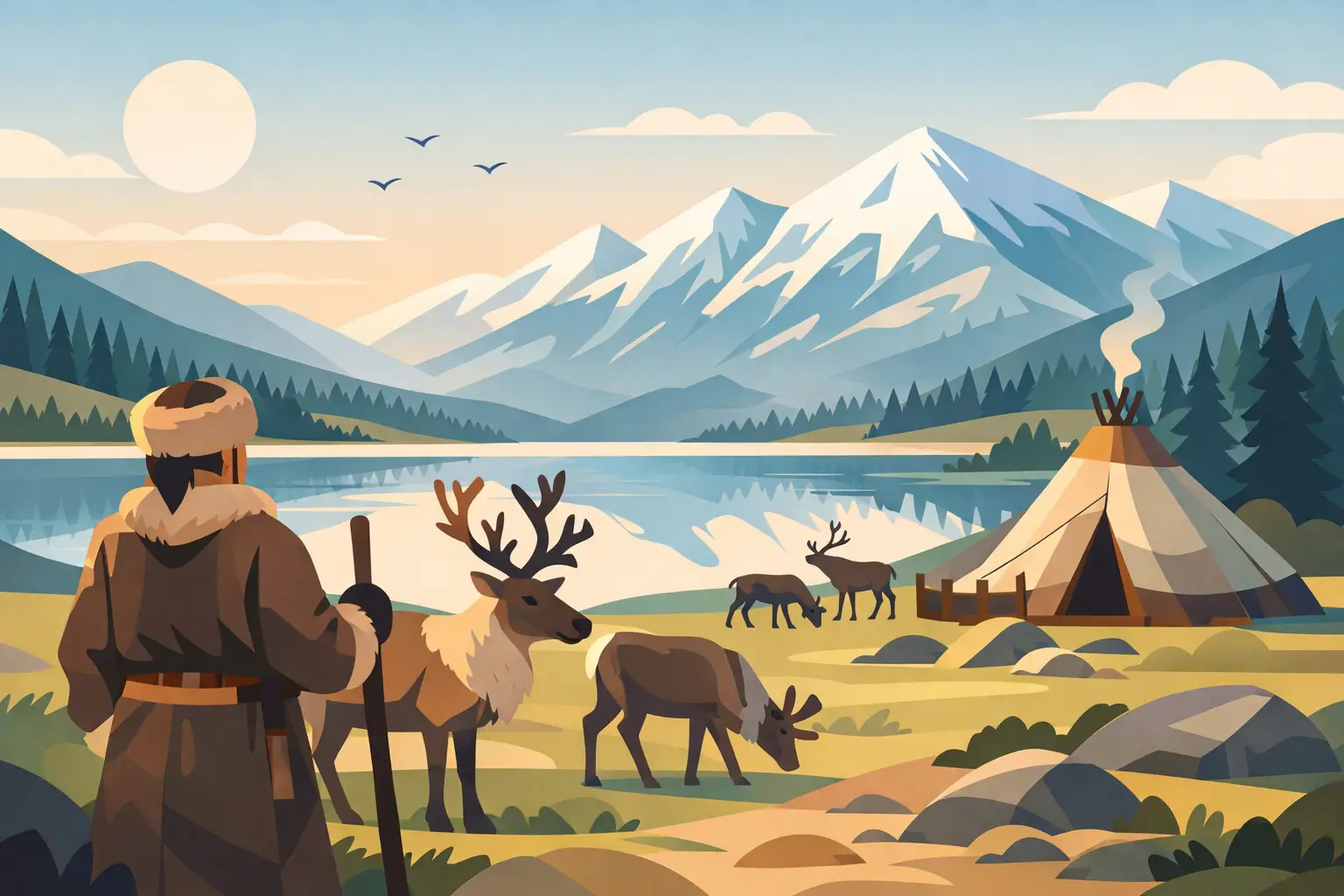
At the northern edge of Mongolia, beyond Khuvsgul Lake and the forested valleys of the Darkhad Depression, the reindeer herders Mongolia travelers seek are known as the Tsaatan. Their homeland is the taiga: a vast landscape of larch forest, marshy valleys, rivers, and low mountains close to the Russian border. Reaching it is a real expedition, but the reward is not a staged cultural stop. It is time spent in one of Mongolia's most remote nomadic regions, where reindeer remain central to daily life, transport, and identity.
The Tsaatan are often described as Mongolia's reindeer people, though their communities are small and their way of life should not be reduced to a photograph or a single overnight visit. A journey here asks for patience, flexibility, and genuine respect. In return, it offers a rare view of life shaped by weather, animals, family ties, and the rhythms of the northern forest.
Who Are the Tsaatan Reindeer Herders of Mongolia?
Tsaatan means "people with reindeer." The community is also connected to the Dukha, a Turkic-speaking people whose families have lived across this northern borderland for generations. Many Tsaatan households move seasonally through the taiga, relocating their camps to find suitable grazing, shelter, and conditions for their reindeer.
Reindeer provide milk and milk products, carry loads through difficult terrain, and remain deeply woven into family life. They are not simply livestock. Visitors quickly notice the close, practical relationship between herders and animals: reindeer may stand near the tents, calves are carefully watched, and each animal's health matters to the household.
Traditional Tsaatan homes are conical tents, often called ortz, built with wooden poles and covered with canvas or other weatherproof materials. Inside, space is compact and purposeful. A stove provides warmth, beds line the sides, and family possessions are arranged around the demands of daily life. Do not expect a hotel-style stay. The warmth comes from the welcome, the stove, and the remarkable setting rather than private bathrooms or predictable comfort.
The Taiga Is the Real Journey
A visit to Tsaatan communities is often described as a trip to the Darkhad Valley, but the valley is only part of the route. The final approach to a reindeer camp can involve long drives on rough tracks, river crossings when conditions allow, and travel on horseback or on foot. Routes change with rain, snow, river levels, and the seasonal location of families.
From our experience planning travel in northern Mongolia, the most successful itineraries allow extra time. The taiga does not run on fixed schedules. A vehicle may need to take a longer route around a wet section of ground, a camp may have moved, or bad weather may make an intended approach unsuitable. A well-organized journey builds in room for these realities instead of treating them as failures.
Most travelers begin by reaching Murun, the main provincial center in northern Mongolia, before continuing by road into the Darkhad region. The exact duration depends on the chosen route, road conditions, and where the host family is staying that season. This is why a Tsaatan visit works best as part of a thoughtfully paced northern Mongolia itinerary, not as a rushed overnight excursion.
Summer: The Most Accessible Season
Summer generally brings the most practical conditions for reaching the taiga. Forests are green, rivers and wetlands shape the landscape, and days are long enough for photography and travel. However, rain can turn tracks into mud, mosquitoes can be intense in some areas, and daytime warmth can give way to cold evenings.
This season suits travelers who want to combine a reindeer-herder stay with Khuvsgul Lake, horse riding, or wider exploration of northern Mongolia. Pack for wet ground and changing weather, not just for warm summer days. Waterproof boots, a warm insulating layer, rain protection, and a headlamp are useful even in mid-summer.
Winter: Beautiful, Demanding, and Deeply Cold
Winter brings a different kind of taiga experience. Snow settles into the forest, the sky can feel impossibly clear, and the camps are quieter. It is also one of the coldest environments most travelers will ever encounter. Temperatures can fall dramatically, transport is more challenging, and reliable winter equipment is essential.
A winter visit is best for travelers prepared for a serious expedition rather than a casual sightseeing trip. It can be especially rewarding for photographers and those drawn to Mongolia's stark seasonal landscapes, but it requires strong logistics, experienced local support, and an honest understanding of the cold. A private journey may be the better choice if you need a pace and equipment plan tailored to your confidence level.
What a Stay With a Tsaatan Family Is Like
The heart of the experience is ordinary life in an extraordinary place. You may watch animals being tended, share tea or a simple meal, listen to conversation through a translator, and spend time around the stove as the forest grows quiet outside. Some moments will be memorable because they are visually striking. Others will be small: smoke rising from an ortz at dawn, the sound of hoofsteps outside, or a child moving easily through the camp.
Accommodation is usually simple and shared. Sleeping arrangements may be in a family tent or a separate basic tent, depending on the camp and the group setup. Facilities are limited, electricity may be unavailable, and phone signal should never be assumed. Bring a power bank, personal medications, a refillable water bottle, and a willingness to adapt.
Food is shaped by what can be carried and what is available locally. Meals may include dairy products, bread, noodles, rice, meat, and tea. Dietary requirements need careful advance planning, particularly for vegetarian, vegan, allergy-sensitive, or medically necessary diets. Remote travel is not the place for last-minute assumptions.
Respect Matters More Than Getting the Perfect Photo
The Tsaatan are frequently photographed, and that attention can place pressure on families, children, and animals. The most responsible visitors arrive with curiosity rather than a checklist of images to collect.
Always ask before photographing people, inside a home, personal belongings, or spiritual objects. A local guide can help explain consent clearly and avoid misunderstandings. Do not enter a tent uninvited, and follow your host's cues about where to sit, when to eat, and how to interact with reindeer. Small gestures of patience carry more value than rushing to capture a scene.
It is also wise to avoid treating reindeer rides as an automatic part of the visit. Animal welfare, weather, terrain, and the needs of the herd must come first. Responsible travel means accepting that some activities may not be appropriate on a particular day.
When bringing gifts, practical items requested through a trusted local contact are more useful than random souvenirs. Buying locally made items when available and paying agreed hosting or photography fees through a transparent arrangement can also help ensure that tourism respects the time and work of host families.
Planning a Meaningful Taiga Journey
This is a destination for small groups and private travelers who value depth over speed. Choose a route with sufficient days for travel in and out, at least one unhurried full day in the taiga, and a contingency plan for weather. If you are traveling with children, have mobility concerns, or prefer more comfort, discuss these needs early. The journey can often be adapted, but remote conditions set real limits.
Photography travelers should bring weather protection for cameras, spare batteries kept warm inside clothing, and lenses that cover both intimate portraits and broad forest landscapes. Ask permission before setting up prolonged shoots around a family or herd. The best images usually come after trust and conversation, not immediately on arrival.
A knowledgeable Mongolian guide is particularly valuable here. Language support is only one part of the role. Good guides help manage expectations, read changing conditions, arrange respectful introductions, and make sure visitors understand the practical realities of a living nomadic camp.
The taiga is not a place to consume quickly. Travel there ready to listen, accept uncertainty, and let the pace of the reindeer herders shape the visit. That is when northern Mongolia feels less like a remote destination on a map and more like a meeting with a living nomadic heartland beneath the Eternal Blue Sky.
Plan Your Mongolia Journey
Explore locally operated tours or ask our Mongolia team to tailor a private journey.