Mongolia Travel Blog
Gobi Desert Guide for a Meaningful Journey
A practical Gobi Desert guide to seasons, roads, camps, culture, photography, and the Mongolian landscapes that make a well-planned journey worthwhile.
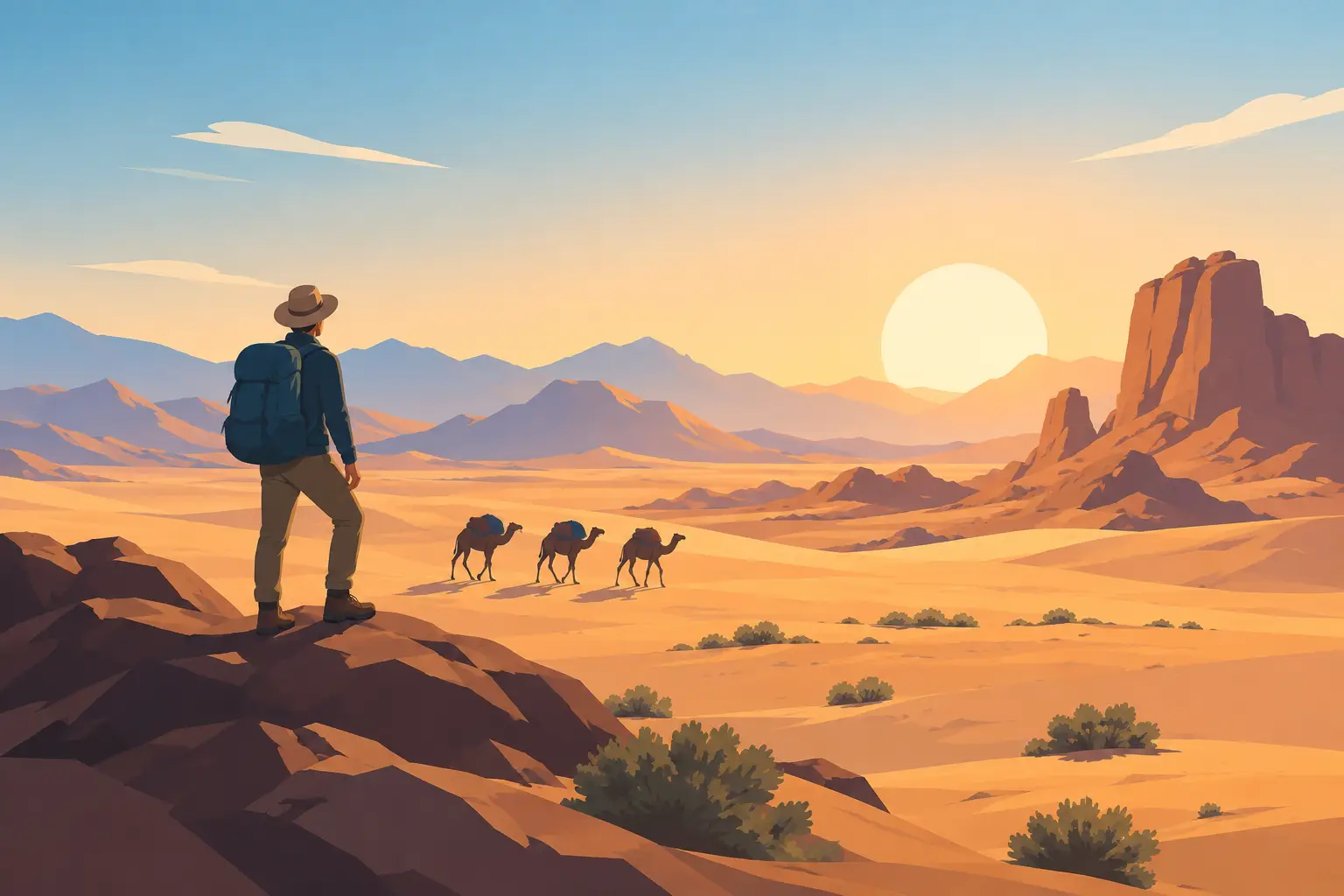
The Gobi is not a single sweep of sand waiting beyond Ulaanbaatar. It is a vast, changing region of gravel plains, red cliffs, dry riverbeds, dunes, mountains, and grazing land where camel herds can appear on the horizon long before a road does. This Gobi Desert guide is for travelers who want to understand what the journey actually involves: long distances, remarkable encounters, simple comforts, and landscapes that reward patience.
For many visitors, the Gobi becomes the emotional center of a Mongolia journey. Its scale creates a rare feeling of distance from ordinary life, while the presence of nomadic families, livestock, and sacred places keeps the desert deeply human.
Why the Gobi feels different from other deserts
The Gobi does have dunes, especially around Khongoryn Els, but it is not defined by dunes alone. Much of the landscape is open steppe and stone desert, shaped by wind, extreme temperatures, and a sky that seems to stretch beyond sight. A day may begin among ocher cliffs, cross broad valleys where gazelles may be seen, and end beside a dune ridge glowing gold at sunset.
That variety is why route planning matters. The classic southern Gobi circuit usually combines the Flaming Cliffs at Bayanzag, Yolyn Am in the Gurvan Saikhan Mountains, and the Khongoryn Els dunes. Each place offers a different experience. Yolyn Am brings a surprisingly cool mountain valley and narrow gorge; Bayanzag is known for its exposed dinosaur fossil beds and dramatic evening light; Khongoryn Els offers silence, climbing sand, and camel-herding country.
A longer route can include places such as Tsagaan Suvarga, with its eroded limestone escarpment, or lesser-visited valleys and local communities. The right itinerary depends less on how many pins can be placed on a map than on how much time travelers have to absorb the terrain.
When to travel: the season shapes the journey
Late spring through early autumn is the main travel season, but each period brings a different Gobi.
June is often green by desert standards after seasonal moisture, with cooler nights and a feeling of renewal across the steppe. July and August bring warmer days, fuller ger camps, and Mongolia's Naadam season. This can be an excellent time to combine the Gobi with cultural celebrations, although popular sites and domestic travel routes are generally busier.
September is a favorite for many photographers and travelers who prefer clear light, cooler temperatures, and a quieter rhythm. Days are usually comfortable, while nights become noticeably colder. By October, conditions can turn sharply toward winter, and not every camp or route operates in the same way.
The Gobi is possible in winter, but it is a specialist journey rather than a standard extension. Temperatures can be severe, daylight is shorter, and accommodation and transport require careful preparation. Travelers drawn to Mongolia's winter landscapes should choose a route designed specifically for the season instead of expecting a summer desert itinerary with an extra layer of clothing.
Weather is never a fixed promise. Wind can make a warm afternoon feel cold, rain can alter tracks, and sandstorms occasionally reduce visibility. A good plan allows room for conditions rather than treating every hour as guaranteed.
Getting around: distances are part of the experience
A map can be misleading in the Gobi. Locations may look close, but the terrain between them can involve hours on unpaved tracks. Road surfaces vary from paved highway to corrugated dirt, soft sand, rocky ground, and several parallel vehicle tracks across open country.
Most journeys begin with a domestic flight to Dalanzadgad or travel south by road from Ulaanbaatar. Flying reduces driving time and suits travelers with limited days, while an overland journey reveals the gradual transition from city to steppe to desert. Neither choice is automatically better. It depends on the itinerary, weather tolerance, and whether the journey itself is a priority.
Beyond the main access points, a capable four-wheel-drive vehicle and an experienced Mongolian driver are essential. There are few signs, and routes can shift with weather and seasonal use. Driving is not merely transport here. It is the connective tissue between places, with wide horizons, roadside tea stops, and occasional sightings of herders moving livestock across the plain.
For a first visit, allow at least five to seven days for the southern Gobi rather than trying to visit the major highlights in a rushed loop. Add time if you want to stay with a nomadic family, photograph at the best light, ride camels, hike, or travel farther west and east within the region.
Where you sleep: ger camps and nomadic hospitality
Tourist ger camps are the usual accommodation on established Gobi routes. A ger is Mongolia's traditional round felt dwelling, designed for a mobile pastoral life. Camps generally offer twin beds, a stove when temperatures require it, and shared bathroom facilities. Standards vary by location and season, so comfort expectations should be discussed clearly before booking.
At remote camps, electricity may be limited to certain hours and hot water may depend on generators, solar power, or the camp's water system. These are not failures of service. They are practical realities of operating far from urban infrastructure. The reward is waking to a silent desert morning rather than a hotel corridor.
A visit with a nomadic family can be one of the most meaningful parts of a Gobi journey, provided it is arranged respectfully and does not treat a home as a spectacle. Guests are usually welcomed with milk tea, dairy foods, or homemade bread. Accept what you can, use your right hand or both hands when receiving food or tea, and follow your guide's lead inside the ger. Ask before taking portraits, especially of children and private family moments.
What to pack for real desert conditions
The Gobi demands layers, not just summer clothing. Even during warm months, early mornings and evenings can be cold. Bring a warm insulated jacket, fleece or mid-layer, sun hat, sunglasses, sunscreen, lip balm, and a scarf or buff for wind and dust. Closed shoes with good grip are more useful than sandals for dune climbs, rocky paths, and camp life.
A reusable water bottle is worthwhile, though travelers should rely on the safe drinking water supplied by their guide, driver, or camp. Keep daily essentials accessible in a small bag: medication, hand sanitizer, tissues, a headlamp, charging battery, and a light rain layer. Dust is persistent, so protect camera bodies, lenses, and electronics in sealed cases or dry bags.
Internet coverage is limited outside towns and may disappear completely between camps. Tell family and colleagues that being offline is part of the experience, not a cause for concern. A local team should carry appropriate communication equipment and have a clear plan for changing weather, vehicle issues, or medical needs.
A Gobi Desert guide for photographers
The Gobi offers powerful images because its visual language is simple: a lone rider against an immense plain, camel tracks along a dune, shadows deepening on red rock, a ger beneath the Eternal Blue Sky. Yet the best photographs rarely come from rushing out at midday.
Plan to be outside at sunrise and late afternoon, when the desert has shape and color. At Khongoryn Els, a short walk away from the busiest dune approach can make a substantial difference. At Bayanzag, stay through the changing light if the schedule permits. Wind, dust, and cloud can be creatively useful, but always secure equipment before changing lenses.
People make the Gobi more than a landscape photograph. Portraits of herders, riders, and family life should be collaborative and unhurried. A guide can help with introductions and translation, but consent remains personal. Sometimes the strongest image is one you do not take because the moment belongs to the people living it.
Travel responsibly in a fragile landscape
Desert ground can look indestructible, but vehicle tracks, litter, and careless camping leave a lasting mark. Stay on established routes where possible, carry out personal waste, avoid removing rocks or fossils, and use water thoughtfully. Dinosaur fossil sites are especially vulnerable. Fossils belong in Mongolia's scientific and cultural heritage, not in a suitcase.
Responsible travel also means respecting the pace of rural life. Families may be working with animals, preparing food, or moving camp. Flexibility is part of being a good guest. The most memorable encounters are often quiet ones: sharing tea, watching a child tend goats, or listening to the wind move across the felt walls of a ger.
A well-planned Gobi journey leaves space for those moments. Choose an itinerary with realistic driving days, trusted local guidance, and time to stand still when the desert asks you to.
Plan Your Mongolia Journey
Explore locally operated tours or ask our Mongolia team to tailor a private journey.