Mongolia Travel Blog
What Gobi Desert Travel Really Feels Like
Plan a meaningful journey through the Gobi Desert with practical advice on seasons, travel times, ger camps, culture, wildlife, and photography in Mongolia.
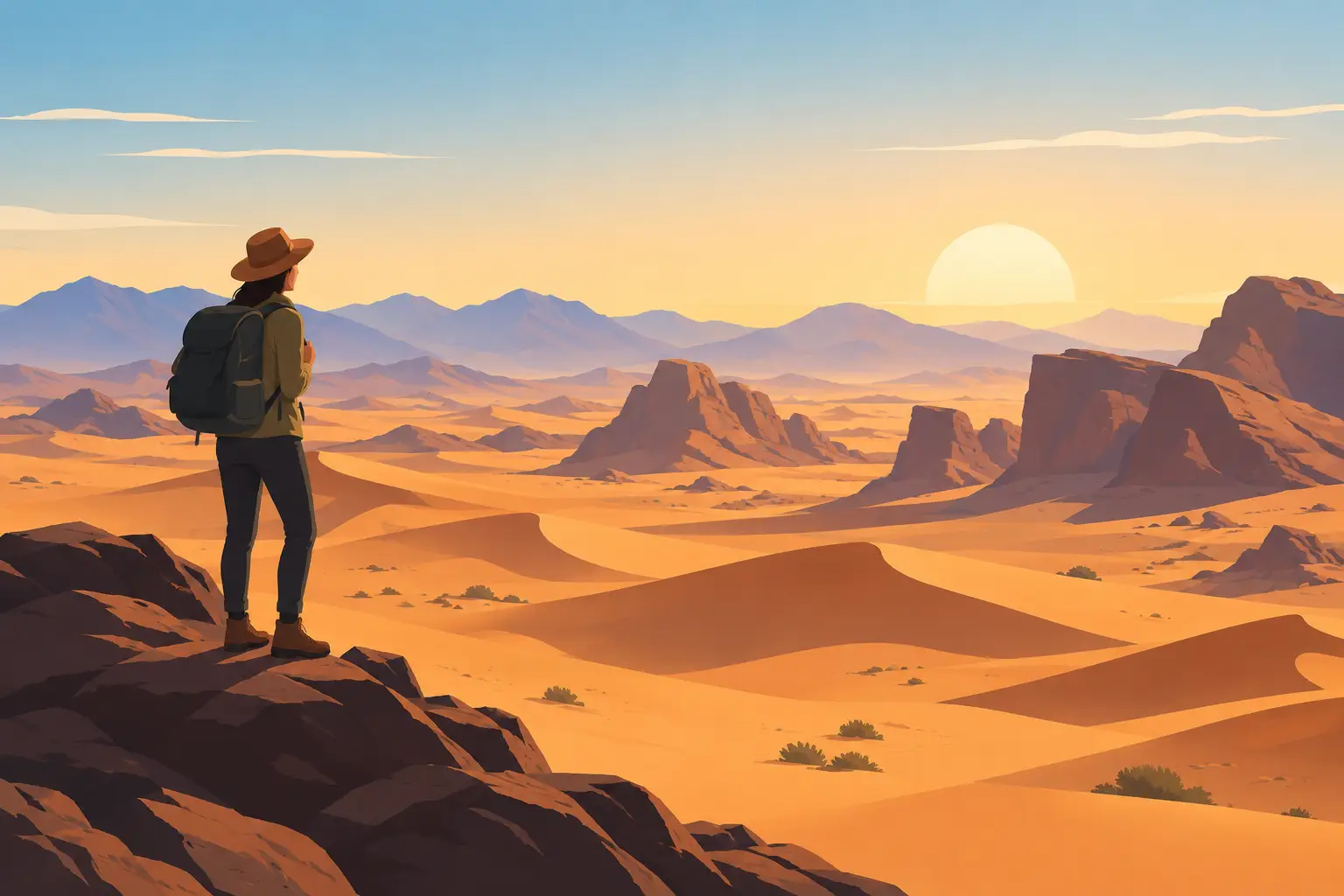
At sunrise, the dunes of Khongoryn Els shift from cool gray to gold while the sound of wind carries across the sand. This is the Gobi Desert many travelers picture, but it is only one part of a far larger and more surprising landscape. A journey here can include deep canyons streaked with ice, red cliffs rich in dinosaur history, wide gravel plains, camel herds, and evenings in a ger beneath Mongolia's Eternal Blue Sky.
The Gobi is not a destination for rushing. Distances are long, roads often become tracks, and the reward comes from allowing the landscape to unfold at its own pace. For travelers who value real encounters and dramatic, uncrowded scenery, it is one of Mongolia's most memorable regions.
The Gobi Desert Is More Than Sand
Many first-time visitors expect an endless sea of dunes. In reality, much of the Gobi is a vast semi-desert of open steppe, rocky plains, dry riverbeds, low mountains, and exposed cliffs. Sand dunes are certainly part of the experience, especially at Khongoryn Els, but they are not the whole story.
Most classic journeys through the South Gobi combine several distinct landscapes. Yolyn Am, also called Eagle Valley, lies within the Gurvansaikhan Mountains and offers a sharp contrast to the surrounding desert. Its narrow, shaded gorge can retain ice well into the warmer months, depending on the season. Bayanzag, known as the Flaming Cliffs, glows orange and red in late-day light and is internationally important for dinosaur fossil discoveries.
Khongoryn Els is the place for sweeping dune views, camel riding, and a sense of true scale. The dunes rise beside a green river valley where herding families may graze livestock - a reminder that the Gobi is a lived-in landscape, not an empty wilderness. A well-planned route brings these places together without treating them as quick photo stops.
What It Takes to Travel Through the Gobi
The South Gobi is reached from Ulaanbaatar by road or, on certain routes, with a domestic flight connection followed by overland travel. The best choice depends on how much time you have and whether the journey itself is part of what you want to experience.
Overland travel is slower but reveals Mongolia's changing terrain. It also requires patience. Road conditions vary greatly: a paved highway may give way to wide dirt tracks, corrugated surfaces, or multiple parallel routes across the open plain. A capable vehicle, an experienced Mongolian driver, and an itinerary with realistic driving days matter far more than trying to cover every landmark.
For many travelers, five to seven days gives a satisfying introduction to the South Gobi. With more time, it is possible to travel at a gentler pace, add lesser-visited valleys or rock formations, and spend longer with a nomadic family. A shorter route can work well if it focuses on two or three key areas rather than attempting an ambitious circuit.
Ger Camps and Nomadic Stays
Accommodation in the Gobi ranges from established ger camps to simple stays with local herding families. A tourist ger camp generally offers private or shared traditional felt gers, beds, meals, and shared bathroom facilities. Standards vary by location, and hot showers or reliable electricity are not always available. That is part of the reality of traveling in a remote region.
A family stay is more intimate and less predictable. You may share tea made with milk, watch daily work around the animals, or simply sit together as evening settles over the steppe. These visits should be arranged respectfully, with local guidance and without treating a family's home as a performance. Comfort is simpler, but the connection to the nomadic heartland can be profound.
Choosing the Right Season for a Gobi Desert Journey
Late spring through early fall is the usual travel season, but each period creates a different journey. The most comfortable choice depends on whether you prioritize wildflowers, warm weather, photography, fewer visitors, or cultural events.
May and June bring crisp mornings and a landscape that can hold more green after seasonal moisture. Daytime temperatures are often pleasant, though strong winds and cold nights are possible. This is a rewarding time for travelers who enjoy walking and wide-open scenery without the peak warmth of midsummer.
July and August offer the warmest conditions and long daylight hours. These months suit families and travelers combining the Gobi with Naadam celebrations, but daytime heat can be intense. Shade, water, sun protection, and a flexible pace are essential. Afternoon storms occasionally transform the desert sky and create remarkable photographic light.
September is often favored by photographers and travelers seeking cooler days, clearer air, and the golden tones of early autumn. Nights become noticeably colder, particularly in gers without full heating. By October, the Gobi can be beautiful and quiet, but weather becomes more variable and some camps begin to close for the season.
Winter travel is possible only with serious preparation and a purpose-built itinerary. The desert's cold can be severe, services are limited, and travel conditions change quickly. For most first visits, the warmer travel season provides a more accessible introduction.
Practical Details That Make a Real Difference
Desert weather changes rapidly. Pack breathable layers for warm days, but do not underestimate cold mornings and evenings. A windproof outer layer, warm mid-layer, sun hat, sunglasses, sunscreen, refillable water bottle, and comfortable closed shoes are all more useful than overly technical gear. Sandals can be pleasant at camp, but they are not ideal for walking on rocky ground or dunes.
Bring personal medication from Ulaanbaatar and keep a small day bag with water, snacks, hand sanitizer, and tissues during driving days. Remote camps may have limited supplies, and cash is useful for small personal purchases. Mobile signal can disappear for long stretches, which is often refreshing but requires realistic expectations.
A local guide does more than translate. They help interpret the landscape, communicate with host families, adjust plans when weather or roads change, and explain customs that are easy to miss. In a region where route knowledge is practical safety, that local expertise is central to a relaxed journey.
Respectful Encounters in the Nomadic Heartland
Hospitality is a defining part of rural Mongolia. When entering a ger, wait for your host or guide to indicate where to sit. Accepting tea, dairy products, or food with the right hand, or with both hands, is a simple gesture of appreciation. Do not step on the threshold, and ask before photographing people, children, or the inside of a family's home.
Photography is usually welcomed when trust has been established, but not every moment needs a camera. Spending time in conversation, watching animals return at dusk, or helping with a small task when invited can create a more meaningful exchange than arriving, shooting, and leaving.
The Gobi for Photography and Wildlife
The Gobi rewards patience. Its strongest photographs often come from changing light rather than famous locations alone: a camel silhouette at dawn, dust lifting behind a herd, cliffs illuminated after rain, or a ger's smoke rising into a darkening sky. A wide lens suits dunes and open valleys, while a moderate telephoto lens is useful for wildlife and distant details.
Wildlife sightings are never guaranteed, and that uncertainty should be respected. The region is home to species adapted to demanding conditions, including gazelles, ibex, raptors, and, in protected areas, rare animals such as wild camels and snow leopards. Your guide can advise on responsible viewing distances and the best times for quiet observation.
Give the Desert Enough Time
The Gobi Desert is at its best when a journey leaves room for the unexpected: a weather change, a longer tea visit, a quiet walk beyond camp, or an extra hour waiting for sunset on the dunes. It is not about collecting every landmark across southern Mongolia. It is about understanding how immense, inhabited, and varied this desert truly is.
Travel with a sensible route, good local support, and curiosity for the moments between the headline sights. Those are often the moments that stay with you long after the sand has left your boots.
Plan Your Mongolia Journey
Explore locally operated tours or ask our Mongolia team to tailor a private journey.