Mongolia Travel Blog
How to Plan a Mongolia Itinerary That Works
How to plan Mongolia itinerary days, seasons, routes, transport and stays - with practical advice for an authentic, well-paced journey across Mongolia.
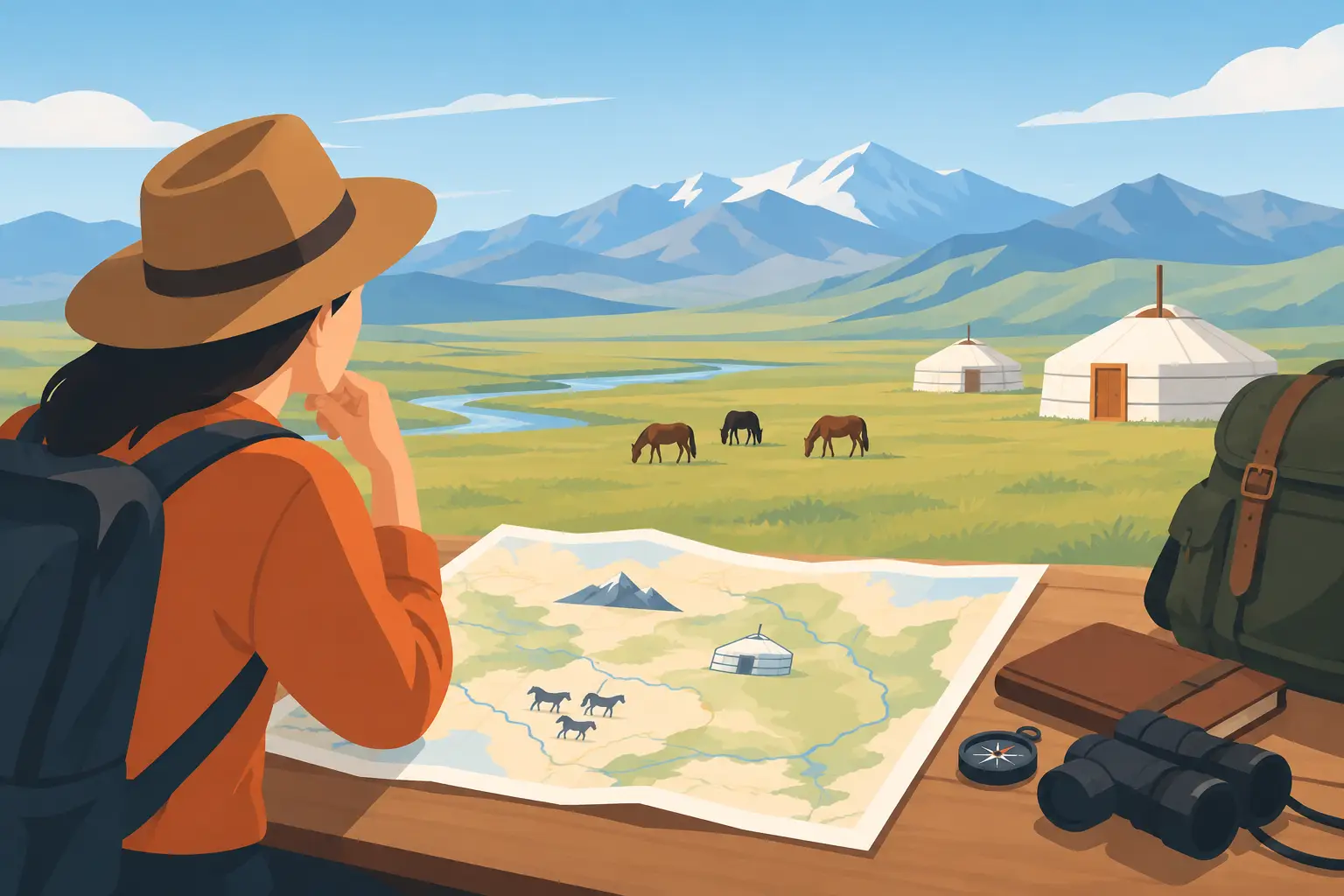
Mongolia is not a destination where adding pins to a map automatically creates a workable trip. A place that appears close by road can be separated by a river crossing, a mountain pass, or several hours of open steppe with no paved highway. How to plan Mongolia itinerary days well begins with accepting this reality: choose fewer regions, allow time for the journey itself, and leave room for the unexpected moments that make Mongolia memorable.
For many travelers, the most rewarding itinerary is not the one that covers the most ground. It is the one that balances dramatic landscapes with time in the nomadic heartland - sharing tea in a family ger, watching horses move across a wide valley, or seeing the Eternal Blue Sky change color over camp.
Start with your travel season
Season determines far more than what you pack. It shapes road conditions, available experiences, accommodation, daylight, and the rhythm of daily travel.
June through September is the main season for a first Mongolia journey. June brings green grasslands, wildflowers, and fuller rivers, although some routes can still be affected by rain. July is warm and lively, particularly around Naadam, when wrestling, horse racing, and archery offer a powerful introduction to national traditions. It is also a busy period, so festival travel needs advance planning.
August often offers warm, settled conditions for the Gobi Desert, central Mongolia, Khuvsgul Lake, and horse riding journeys. September brings crisp air, golden grass, and excellent light for photography. It is also the season for eagle festivals in western Mongolia, though an Altai itinerary requires serious travel time and should not be treated as a quick addition to a Gobi trip.
Winter Mongolia is extraordinary but specialized. Temperatures can fall dramatically, and travel requires suitable vehicles, warm equipment, flexible timing, and experienced local support. Winter can be deeply rewarding for travelers seeking the Darkhad Valley, reindeer herder culture, frozen landscapes, or a quieter view of daily life, but it is not simply summer travel with more layers.
Choose one main route, not every highlight
The most common planning mistake is trying to combine the Gobi Desert, Khuvsgul Lake, the Altai Mountains, and central Mongolia in a single short vacation. Mongolia is vast. Even where maps show a direct line, routes may involve long drives on unpaved tracks or domestic flights with limited schedules.
A useful starting point is to match your available days to one geographical story.
For 7 to 9 days: Central Mongolia and the Gobi
This is often the strongest first itinerary for travelers who want a varied introduction. Begin in Ulaanbaatar, then travel south through the changing landscapes of the Gobi. A well-paced route may include the flaming cliffs of Bayanzag, the dunes at Khongoryn Els, and the dramatic rock formations of Yolyn Am.
The Gobi is not only sand. It is a huge, textured desert of gravel plains, cliffs, canyons, and broad valleys. Build in time to stay at a ger camp and, where appropriate, visit a local family respectfully. One night in a place rarely creates meaningful connection; two or three nights in a region gives the landscape time to settle in.
For 10 to 14 days: Add the steppe and ancient capital region
With additional days, combine the Gobi with central Mongolia. The Orkhon Valley and Karakorum region offer a different perspective: river valleys, forested slopes, horses, and the legacy of the Mongol Empire. This route works especially well for travelers who want cultural depth alongside big scenery.
Road days remain substantial, so resist the temptation to change camps every night. A journey with a few two-night stays feels less rushed and creates better opportunities for walks, horseback riding, photography, and unplanned conversations.
For 12 to 16 days: Western Mongolia and the Altai
Western Mongolia is for travelers drawn to remote mountain landscapes, Kazakh eagle hunter traditions, and a more demanding expedition atmosphere. It is usually best planned as its own journey, often using domestic flights to reduce overland travel.
The Golden Eagle Festival and Sagsai Eagle Festival bring cultural energy and exceptional photography, but festival dates, weather, and local logistics should be confirmed carefully before committing to international flights. Outside festival periods, western Mongolia remains compelling for high valleys, glacier views, herding culture, and quiet camps beneath the Altai Mountains.
For 10 to 14 days: Khuvsgul Lake and northern landscapes
Northern Mongolia suits travelers who prefer forests, lakes, riding, and cool, clear summer air. Khuvsgul Lake can be combined with central Mongolia, but it needs enough time to feel like more than a long transfer. The lake is particularly appealing for families, active travelers, and photographers who enjoy softer light, water, and mountain scenery.
Build travel days honestly
In Mongolia, distance is measured in hours and conditions, not only miles. A 150-mile transfer may be straightforward on a paved road or may take much of a day on tracks across the steppe. Rain can change those conditions quickly. Livestock, roadworks, and detours are ordinary parts of overland travel.
Plan one major activity or sight each day, rather than stacking several. If you travel from one ger camp to another, stop for a walk, picnic, short ride, or visit along the way, then arrive with enough daylight to settle in. This rhythm is more comfortable and safer than chasing landmarks from dawn to dark.
Domestic flights can be useful for reaching the Altai or far north, but they should support the route rather than disguise an overambitious schedule. Keep a buffer night in Ulaanbaatar at the beginning or end of a flight-dependent itinerary, particularly around festivals or remote departures.
Decide the level of comfort before choosing the route
Mongolia offers a wide range of travel styles, from well-run tourist ger camps to private camps and carefully arranged stays with nomadic families. A ger camp is often the practical foundation of an overland journey: it provides a warm bed, prepared meals, toilet and shower facilities, and a base close to the landscape.
Conditions vary by region and season. Remote camps may have limited electricity, intermittent hot water, and simpler facilities. This is part of traveling beyond the city, but comfort should be discussed clearly before booking. Tailor-made private journeys can prioritize better-equipped camps, shorter driving days, private vehicles, and more flexible pacing, while small-group trips offer companionship and a shared expedition spirit.
A night with a nomadic family should be approached as a cultural visit, not a staged accommodation experience. Your guide can help with introductions, translation, and appropriate timing. Small gestures matter: accept offered tea or food graciously when you can, dress modestly, avoid stepping on a ger threshold, and ask before photographing people, children, homes, or religious objects.
Leave room for weather, wildlife, and photographs
The finest Mongolia itineraries have breathing space. A dust storm in the Gobi, rain on a mountain track, or a late return of a herding family may shift the plan. This is not poor organization. It is the reality of a living landscape where weather and livestock still shape the day.
Photographers should avoid treating every stop as a quick roadside shoot. Early morning and late afternoon offer softer light, while nomadic portraits require patience and consent. A dedicated photography journey may spend multiple nights in one area, allowing time to revisit a scene as the weather changes. Wildlife expectations should also stay realistic: sightings can never be guaranteed, though guides can plan around habitat and seasonal patterns.
Plan your Mongolia itinerary with the right questions
Before finalizing a route, be clear about what you most want to feel and do. Is your priority the silence of the Gobi, a Naadam celebration, eagle hunters in the Altai, riding across open steppe, family-friendly camp comfort, or winter’s stark beauty? The answer will narrow the itinerary more effectively than a long list of famous places.
Then consider your tolerance for driving, the number of nights you can be away, and how much flexibility you need. From our experience operating journeys across Mongolia, travelers are happiest when their route reflects their actual interests and pace rather than an attempt to see the entire country at once.
A well-planned Mongolia journey leaves you with time to look up from the road: at horses on a distant ridge, a line of gers in the grassland, or stars above a silent camp. Choose a route with space for those moments, and the country will do the rest.
Plan Your Mongolia Journey
Explore locally operated tours or ask our Mongolia team to tailor a private journey.