Mongolia Travel Blog
How to Plan a Winter Tour of Mongolia Safely
Plan a winter tour of Mongolia with advice on cold-weather routes, layers, transport, cultural stays, photography, and the realities of remote travel.
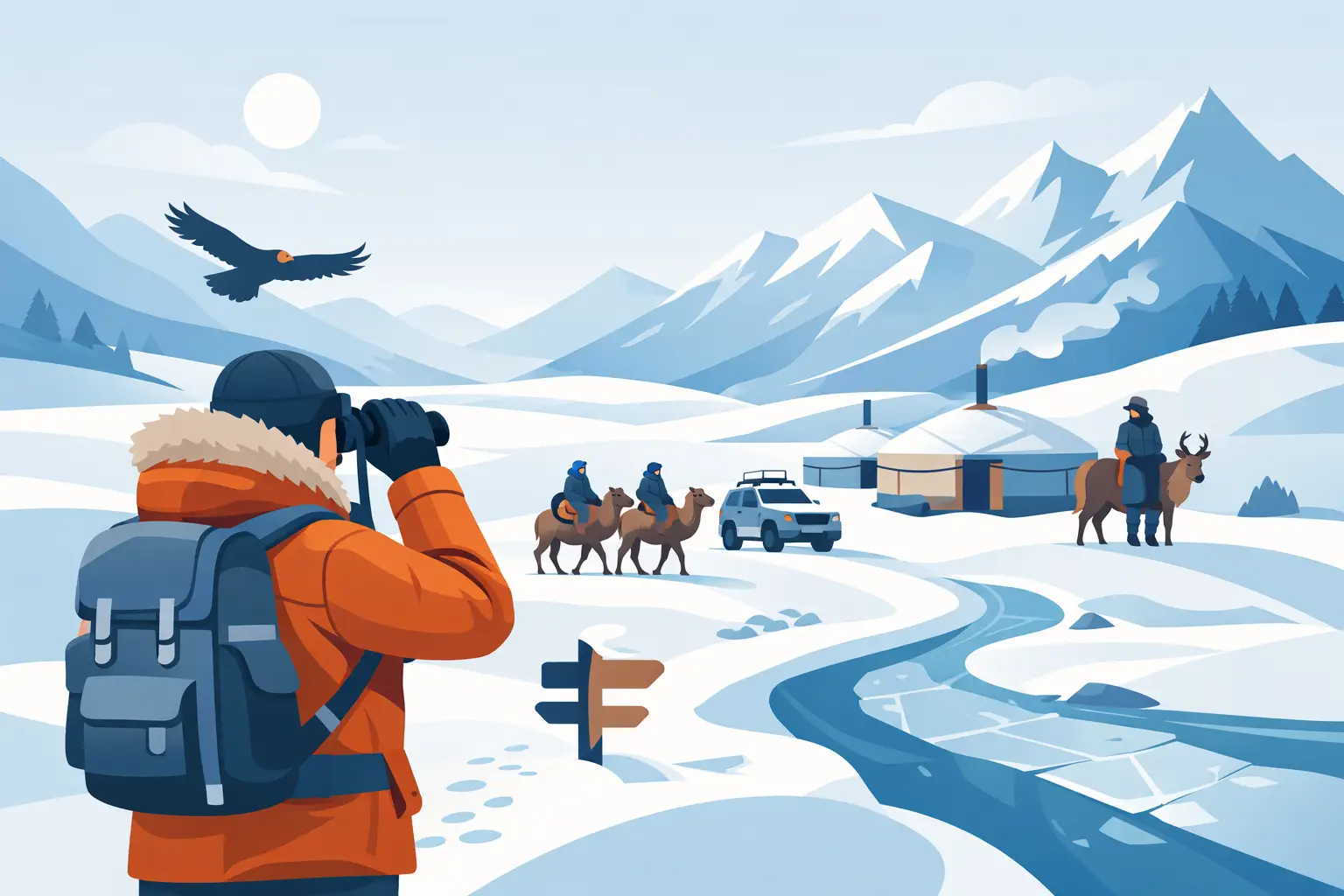
A winter tour of Mongolia begins with a sensation many travelers never forget: breath crystallizing in the air beneath an immense blue sky, the snow-packed steppe stretching beyond the road, and woodsmoke rising from a ger at dusk. This is not Mongolia softened for visitors. Winter reveals the nomadic heartland at its quietest, clearest, and most demanding.
For the right traveler, the cold is part of the experience rather than an obstacle to be overcome. It brings extraordinary light for photography, intimate time with host families, frozen lakes, snow-covered valleys, and a sense of space that summer visitors rarely encounter. It also requires realistic planning. Distances remain vast, weather can change plans, and comfort depends on good equipment, capable drivers, reliable vehicles, and an itinerary designed for the season.
What a Winter Tour Mongolia Experience Is Really Like
Mongolia’s winter generally runs from November through March, with the deepest cold often arriving from December through February. Temperatures in Ulaanbaatar can fall well below 0°F, while open valleys and northern regions may be far colder, especially overnight. Wind changes how that cold feels. A bright, still day can be surprisingly enjoyable with the right layers; an exposed, windy day calls for discipline and preparation.
The reward is a landscape stripped to its essential forms. The grasslands become pale and sculptural under snow. Rivers freeze, mountains sharpen on the horizon, and livestock move across the land in small, purposeful groups. In western Mongolia, the Altai can be dramatic beneath fresh snow. Around Khuvsgul Lake, winter brings a world of ice, forest, and clear northern light. The Gobi Desert is possible in winter too, but it is not a warm desert escape - it can be bitterly cold, and conditions need careful assessment.
A good winter journey is usually slower than a summer itinerary. That is a strength, not a compromise. Shorter driving days leave room for warm meals, conversations in family gers, photography when the light is right, and flexibility if roads become difficult.
Choose Your Route Around Winter Realities
The best route depends on what matters most: culture, photography, wildlife, landscapes, or a particular winter activity. Travelers looking for a broad introduction may combine Ulaanbaatar with accessible countryside areas and a winter festival or cultural experience. Those drawn to deeper wilderness can consider northern Mongolia, Khuvsgul, or western Mongolia and the Altai, but should allow more time and accept more variable logistics.
Flights can reduce long road journeys, though winter weather may affect operations. Overland travel offers more immersion and the freedom to stop in landscapes and communities that do not appear on a standard map. Yet road conditions, snow cover, and daylight hours determine what is sensible on any given day. A local team should build in contingency rather than treating every transfer as fixed.
For a private journey, itinerary design can be shaped around your cold tolerance and preferred level of comfort. Some travelers are happy with several nights in heated guest gers and remote family stays. Others prefer a comfortable hotel base where possible, with carefully planned day excursions. Small-group winter departures work well for travelers who value shared adventure, but the pace and accommodation style should be clear before booking.
Accommodation Is Warm, but Not Always Familiar
In Ulaanbaatar, international-standard hotels provide a reliable, heated base before and after an expedition. Outside the capital, accommodation is more varied. Some ger camps operate only in warmer months, while winter camps and local guest accommodations may have fewer facilities and a more practical standard of comfort.
A traditional ger heated by a stove can feel wonderfully warm in the evening, but temperatures may drop after the fire burns lower. Hosts may add fuel during the night, and guides can explain what to expect at each stop. Bathrooms may be separate from sleeping quarters, and hot showers can be limited or unavailable in remote areas. These are not necessarily hardships, but they are part of choosing an authentic winter journey.
When staying with nomadic families, bring curiosity as well as patience. Daily routines continue regardless of the weather: animals must be fed, water collected, meals prepared, and children sent to school where possible. Guests are visitors to a working household, not spectators at a staged attraction.
Packing for Severe Cold Without Overpacking
The difference between a memorable winter day and an uncomfortable one is usually found in your clothing system. Bulky single layers are less useful than layers you can adjust as you move between a heated vehicle, outdoor stops, and warm gers.
Prioritize four essentials: a windproof insulated outer jacket, thermal base layers, insulated waterproof boots with room for thick socks, and warm gloves or mittens with a spare pair. Add a hat that covers the ears, a neck gaiter or scarf, and insulated pants for extended time outdoors. Gloves suitable for camera controls are useful, but bring heavier mittens for standing still in the cold.
Avoid relying on fashion boots or thin city gloves. Also consider the small details: lip balm, moisturizer, sunglasses, a reusable water bottle that can be protected from freezing, and personal medication kept close to your body if it is sensitive to cold. Batteries drain quickly in low temperatures, so carry spares in an inside pocket.
Your guide and driver should have winter safety equipment, communications appropriate to the route, warm drinks, and a plan for delays. Travelers can help by staying hydrated, speaking up early if they feel chilled, and resisting the temptation to push through discomfort for one more photograph.
Cultural Etiquette Matters More in Winter
Mongolian hospitality is generous, particularly when a guest arrives cold from the road. You may be offered milk tea, dairy foods, bread, or a warming meal soon after entering a ger. Accepting at least a small taste, when appropriate for your dietary needs, is a considerate gesture. If you have allergies or dietary restrictions, communicate them well before travel and remind your guide during the trip.
Enter a ger calmly, avoid standing on the threshold, and follow your host’s lead on where to sit. Do not point your feet toward the household altar or hearth. Ask before photographing people, particularly elders and children, and never assume that a family home is an open set for photography. A respectful guide can help interpret customs without turning an encounter into a performance.
Winter visits can feel especially personal because families are often closer to home and daily work centers around the shelter and livestock. That intimacy is meaningful only when approached with respect for privacy, time, and the realities of rural life.
Photography in the Clear Winter Light
Winter is one of Mongolia’s most rewarding seasons for photographers. Low sun creates long shadows across snow and steppe, while the air can be exceptionally clear after a cold night. Dark horses, camels, and winter clothing stand out against pale landscapes, and smoke from a ger chimney can add depth to an early morning scene.
The challenge is exposure. Snow can cause cameras to underexpose images, leaving it gray rather than bright. Check your histogram, use exposure compensation when needed, and protect equipment from condensation when moving from freezing air into heated interiors. Place cameras in a sealed bag before coming inside, then allow them to warm gradually.
Photography should never interrupt a host family’s work or turn ceremonies and meals into photo opportunities without permission. The strongest images often come after trust has been established and the camera is no longer the center of attention.
Who Should Travel to Mongolia in Winter?
Winter suits travelers who want depth over convenience: photographers, repeat visitors, culturally curious couples, adventurous families with older children, and small groups seeking a more private view of the country. It is also well suited to travelers who appreciate thoughtful planning and do not measure a journey by how many landmarks they can cover in a week.
It may not be the best choice for anyone uncomfortable with extreme cold, long drives, limited rural facilities, or itinerary changes caused by weather. There is no shame in choosing late spring, summer, or early autumn instead. Mongolia rewards travelers in every season, but each season asks for something different.
The most successful winter journeys are built around realistic distances, warm places to sleep, time to adapt, and local guidance that treats weather as a living part of the landscape. Come prepared for the cold, and you may find that the stillness beneath the Eternal Blue Sky becomes the part of Mongolia you carry home longest.
Plan Your Mongolia Journey
Explore locally operated tours or ask our Mongolia team to tailor a private journey.