Mongolia Travel Blog
Mongolia Photography Tour Itinerary Example
Use this Mongolia photography tour itinerary example to plan 12 days in the Gobi and steppe, with room for nomadic life, changing light and weather safely.
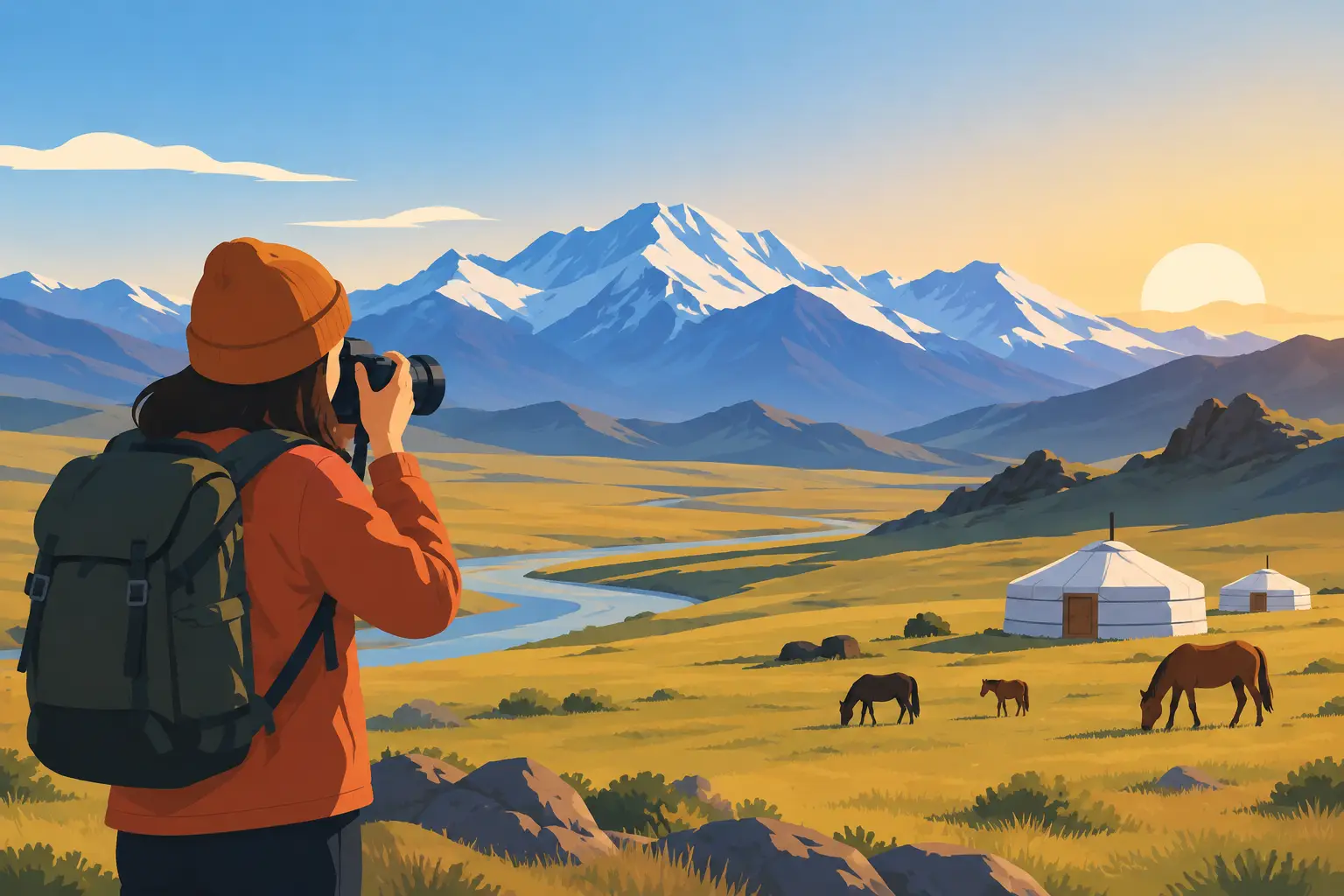
The best photographs in Mongolia rarely appear on a tight schedule. A herder may arrive on horseback just as the late light reaches the valley. A dust storm can turn an ordinary desert drive into an atmospheric frame. This Mongolia photography tour itinerary example is built around that reality: a 12-day overland route with strong landscapes, meaningful cultural encounters, and enough breathing room to work with changing conditions.
This is not a route designed to collect landmarks at speed. It is a practical framework for photographers who want the scale of the Gobi Desert, the intimacy of nomadic life, and the open horizons of central Mongolia without spending every day inside a vehicle.
Why a 12-Day Mongolia Photography Itinerary Works
Mongolia is vast, roads beyond the main highways are often unpaved, and weather is part of the experience. A route that looks short on a map can take a full day once photo stops, rough tracks, livestock crossings, and changing road conditions are considered.
Twelve days is a useful minimum for a photography journey through the central and southern regions. It allows time to move at a sensible pace from Ulaanbaatar into the Gobi Desert and back through the steppe and ancient valleys. Shorter trips can work, especially when domestic flights are included, but they usually require choosing either the Gobi or central Mongolia rather than trying to cover both well.
For photographers, the value is not only in the destinations. It is in having dawn and dusk available, returning to a promising scene when the light improves, and staying long enough for genuine interaction with local families. A well-planned private journey can also shift the order of days when conditions demand it.
A 12-Day Mongolia Photography Tour Itinerary Example
Days 1-2: Ulaanbaatar and the Granite Formations of Baga Gazriin Chuluu
Arrive in Ulaanbaatar, Mongolia's energetic capital, and use the first day to recover from the journey, check camera equipment, and meet your guide. The city offers useful visual contrasts: Buddhist monasteries, apartment districts, traffic, markets, and the hills that rise around the capital. It is also the right place to buy snacks, arrange a local SIM card, and make final adjustments before heading into the countryside.
On day two, travel south toward Baga Gazriin Chuluu, a compact area of weathered granite rising from the open steppe. The drive introduces the visual language of Mongolia: distant ger camps, grazing animals, long skies, and very little development beyond the road.
Baga Gazriin Chuluu is especially rewarding near sunset and sunrise. Its rock formations provide foreground interest against an enormous sky, while the surrounding grassland offers cleaner, more minimal compositions. Overnighting nearby means you can photograph in the best light rather than arriving only in the middle of the day.
Days 3-4: Yolyn Am and the Gobi's Mountain Desert
Continue south to the Gurvan Saikhan Mountains in the Gobi. The landscape changes noticeably here. Instead of flat steppe, the road enters a dry mountain environment of dark ridges, broad gravel plains, and deeply cut valleys.
Yolyn Am, often called the Vulture Valley, is best approached as a landscape and wildlife location rather than a guaranteed wildlife shoot. Depending on the season, the narrow gorge can hold ice well into summer. Birds, marmots, and grazing livestock may be seen, but patience matters more than expectation.
Use the second morning in the area for a slower walk before moving on. The strongest images often come from studying the relationship between the valley walls, small figures on the trail, and the changing bands of shade. A longer lens is useful here, but a wide-angle lens is equally valuable for showing the scale of the mountains.
Days 5-6: Khongoryn Els and Life Along the Sand Dunes
Khongoryn Els is one of the Gobi's defining locations: a long wall of dunes rising above a river-fed valley where camels, goats, and horses graze. The contrast is striking. One side holds moving sand and sharp ridgelines; the other may be green with reeds and animal tracks.
Plan to photograph the dunes in late afternoon, when shadows reveal their shape, and again at first light if conditions allow. Climbing the highest slopes takes effort, particularly with camera equipment, but even the lower dune edges offer powerful angles. Wind can make the dunes difficult to work in, so protect cameras with a rain cover or dry bag and avoid changing lenses in blowing sand.
This is also a good place for carefully arranged portraits and everyday scenes around a nomadic family camp, if the family welcomes photography. Do not treat a ger as a backdrop to enter casually. Your guide should ask permission, explain your interest, and help create a relaxed exchange. Showing images on the back of the camera can be a simple, respectful way to share the moment.
Days 7-8: Bayanzag and the Red Cliffs of the Flaming Cliffs
Travel east or north from the dunes toward Bayanzag, known for its red sandstone escarpments and paleontological significance. The cliffs are often called the Flaming Cliffs because they glow richly near sunset, but the location can be equally compelling under cloud, when its red earth contrasts with a steel-gray sky.
Bayanzag rewards restraint. Rather than photographing every viewpoint, look for compressed layers of cliff faces, a lone traveler on a ridge, or animal tracks crossing the sand below. Early morning can be quieter and more forgiving for detail work, while late afternoon is best for color and wider landscape frames.
An overnight in the area also gives time for close studies: weathered rock textures, hardy plants, insects, and the patterns left by wind. These smaller images help tell a fuller story when paired with Mongolia's grand vistas.
Days 9-10: Ongi Valley and the Central Steppe
The route turns north toward the Ongi Valley, where the remains of an old Buddhist monastery sit beside a wide riverbed and open grassland. This is a transition zone between desert and steppe, and it is an important reminder that Mongolia is not one uniform landscape.
The monastery ruins work well in soft, low light, especially when framed with surrounding hills or prayer flags. Photograph respectfully around religious sites. Avoid interrupting people who are praying, and ask your guide before using a tripod or drone near monasteries, homes, or livestock.
The following day is best kept flexible for the road north. Long drives are part of an overland Mongolia journey, but they can also be productive. Dust trails behind vehicles, horse herds crossing a valley, and the simple geometry of a distant ger against the grassland can become some of the most memorable images of the trip.
Days 11-12: Orkhon Valley, Karakorum, and Return to Ulaanbaatar
In the Orkhon Valley, the scenery becomes greener and more layered, with rivers, rolling hills, horse herds, and seasonal nomadic camps. This is a strong location for visual storytelling. A ger silhouette at dawn, a rider gathering animals, or children helping with everyday work can say as much about Mongolia as any dramatic panorama.
Nearby Karakorum adds a historic dimension to the route. The area was once the center of the Mongol Empire, and the monastery complex at Erdene Zuu offers architectural lines, white stupas, and Buddhist details that contrast with the desert imagery earlier in the journey.
On the final day, return to Ulaanbaatar by road. Build in realistic time for the drive and avoid planning a tight international departure on the same afternoon. Mongolia's distances are part of its beauty, but they deserve respect in the itinerary.
When to Use This Mongolia Photography Tour Itinerary
For green steppe, active nomadic camps, and warm evenings, summer is the most approachable season. It is also Mongolia's busiest travel period, particularly around Naadam. Rain is possible, skies can be dramatic, and camps are often more active with herding and family life.
September brings cooler temperatures, clearer air, and a more golden landscape. It is often a favorite period for photographers who prefer softer autumn color and less summer haze. Nights can become cold, especially in the Gobi and at higher elevations.
If your priority is eagle hunters, western Altai landscapes, or the Golden Eagle Festival, this central and Gobi route should be replaced rather than stretched. Western Mongolia deserves its own itinerary, usually with domestic flights and additional time. Combining the Gobi, Altai, and central steppe into a single short trip creates more travel than photography.
Practical Notes for Better Images and Easier Travel
Bring a camera system you can use confidently in dust, wind, and cold mornings. A wide-angle lens, a mid-range zoom, and a telephoto lens cover most situations, from intimate portraits to distant riders and wildlife. Spare batteries are essential because power at ger camps may be limited or available only at certain times.
A small tripod is useful for low-light landscapes, but it should be sturdy enough for wind. Pack a microfiber cloth, protective camera bag, lens blower, and simple dust protection. In the Gobi, sand is not a minor inconvenience. It can end a day of shooting if equipment is left exposed.
Drone photography requires special care. Rules and permissions can change, and drones should never be flown near airports, monasteries, wildlife, homes, or people without clear approval. In remote communities, respect matters more than getting an aerial image.
Most importantly, leave space in the plan. Mongolia rewards the photographer who can stop when a herd appears on the horizon, wait for clouds to break over the dunes, or put the camera down long enough to share tea in a ger. That balance between preparation and openness is where a photography journey becomes a lasting encounter with the nomadic heartland.
Plan Your Mongolia Journey
Explore locally operated tours or ask our Mongolia team to tailor a private journey.