Mongolia Travel Blog
Mongolia Wildlife Tours Worth Planning Around
Plan Mongolia wildlife tours around snow leopards, wild horses, birds, and desert species, with clear advice on seasons, routes, guides, and ethical travel.
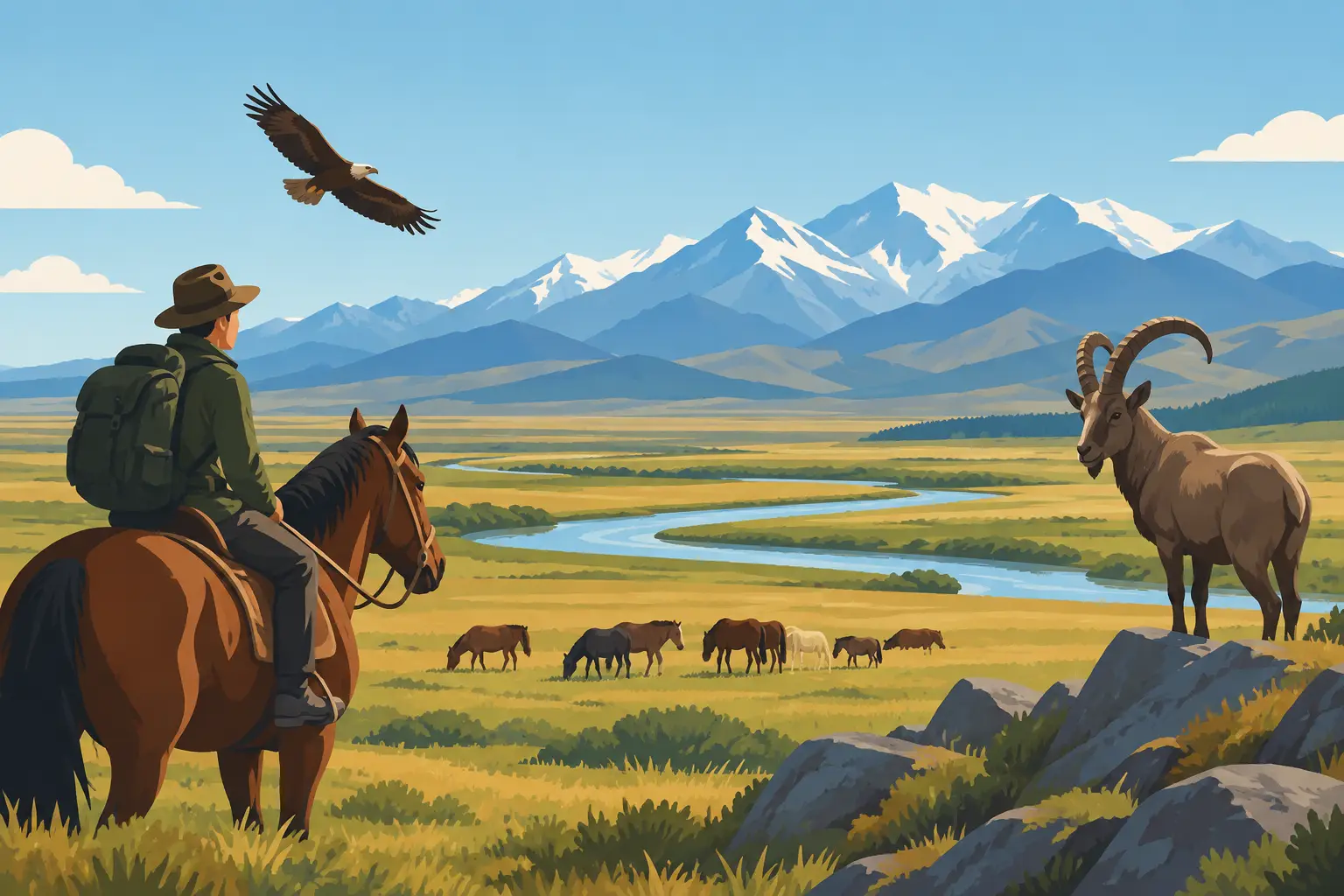
A Mongolian gazelle herd moving across an open steppe can appear as a shimmer on the horizon, then suddenly fill the landscape with motion. That sense of scale is what makes Mongolia wildlife tours different: sightings happen in vast, living habitats rather than along a predictable circuit. They also require patience, sensible routing, and an itinerary designed around the season rather than a wish list alone.
Mongolia is not a destination where every animal can be promised. Roads are few, weather can change quickly, and wildlife follows water, grazing, prey, and migration patterns. For travelers who value wild landscapes, excellent photography, and the privilege of seeing animals on their own terms, those realities are part of the experience.
What makes Mongolia a serious wildlife destination
Mongolia’s low population density and immense range of habitats create room for remarkable wildlife. In a single journey, the scenery may move from desert basins and red cliffs to alpine valleys, grassy steppe, or taiga forest. Each landscape supports different species, and the distances between them are substantial.
The western Altai is the place travelers most often associate with snow leopards, ibex, argali sheep, and golden eagles. The central steppe offers a better chance of seeing wild horses, while eastern grasslands are known for Mongolian gazelles and migratory birds. In the Gobi, the wildlife is often more elusive, but the silence, geology, and adapted desert life make every encounter feel significant.
This is also a destination where cultural context matters. A guide may read tracks near a mountain pass, point out a raptor above a herder’s camp, or explain why a family moves its livestock seasonally. Nomadic life and wildlife conservation do not exist separately here. They share the same land, water, and weather.
The wildlife experiences to plan for
Snow leopards and Altai mountain wildlife
The snow leopard is Mongolia’s most sought-after wildlife subject, yet it should never be treated as a guaranteed sighting. These cats are exceptionally difficult to find, living across remote, high-altitude terrain where observation can require long hours of scanning slopes from a distance. A responsible snow leopard-focused journey needs experienced local tracking knowledge, time in the field, capable vehicles, and a realistic expectation that the landscape itself may be the reward.
Even when a leopard remains unseen, the Altai can be extraordinary for wildlife watching. Siberian ibex often stand out on steep ridges, while argali sheep may be spotted in open mountain country. Golden eagles, ravens, and other raptors use the rising air above valleys. Autumn can combine mountain wildlife with the cultural energy of eagle hunter gatherings, though wildlife viewing and festival travel should be planned as complementary experiences, not assumed to happen in the same place or on the same schedule.
Wild horses on the central steppe
Takhi, commonly known as Przewalski’s horses, are among Mongolia’s most meaningful conservation success stories. These stocky, dun-colored horses are distinct from domestic horses and are best sought in protected steppe habitat, including the area around Hustai National Park within reach of Ulaanbaatar.
For many travelers, this is the most accessible wildlife addition to a broader Mongolia journey. Sightings are still dependent on time of day and weather, but the open terrain often makes viewing more straightforward than in the mountains. Dawn and late afternoon are especially rewarding for photography, when the horses are active and the steppe light is softer.
Gazelles, birds, and the wide eastern grasslands
The eastern steppe feels almost limitless. It is one of the best regions for understanding the scale of Mongolia’s grassland ecosystems and, with the right route and timing, for encountering Mongolian gazelles. Herds can be far away, mobile, and difficult to approach without disturbing them. A guide who understands local conditions is essential.
Birdwatchers have strong reasons to look beyond the headline species. Mongolia’s wetlands, lakes, river valleys, and open country support cranes, swans, waterfowl, raptors, and steppe birds, with the greatest variety generally found during the warmer months and migration periods. Bird-focused travelers should build in time at specific habitats rather than trying to add birding as a brief stop between long driving days.
Desert-adapted wildlife in the Gobi
The Gobi is often visited for its dunes, cliffs, dinosaur history, and nomadic camps, but it also rewards quiet wildlife observation. Goitered gazelles, ibex in suitable rocky terrain, foxes, small mammals, and a variety of birds are possible. Wild Bactrian camels live in extremely remote and protected parts of the Gobi, so they should not be presented as a standard sighting on a conventional desert route.
A Gobi journey is best for travelers who appreciate the full desert experience, not only a species checklist. Long sightlines, evening light, and the chance to notice tracks or distant movement give the region its particular appeal. Wildlife sightings may be occasional, but they take place in some of Mongolia’s most dramatic country.
When to travel for wildlife in Mongolia
The best season depends on the species and region. Late spring through early fall generally offers the most practical conditions for broad wildlife itineraries. Roads are more accessible, ger camps are operating, and longer daylight hours make field time easier. June through August brings greener steppe and active birdlife, although popular areas can be busier and the Gobi can be intensely hot during the day.
September is a compelling month for many photographers and travelers who prefer crisp air, golden grass, and clearer mountain views. It can work particularly well in western Mongolia, but nights become cold quickly at elevation. October brings a more serious feel to travel, with changing weather and fewer services in remote areas.
Winter wildlife travel is possible, but it is specialized. It demands proper cold-weather equipment, flexible timing, and confidence with remote logistics. It can offer clean light, snow-covered landscapes, and a quieter atmosphere, yet it is not the easiest first introduction to Mongolia. For snow leopard-focused travel, conditions and local knowledge matter more than choosing a month based on a general rule.
Build an itinerary around habitat, not distance on a map
Mongolia looks manageable on a map until you begin calculating travel time. Paved roads connect some major routes, but many wildlife areas require long overland drives on tracks that can split, fade, or become difficult after rain. A route that appears close may still take a full day.
For this reason, the strongest itineraries choose one primary wildlife region and give it enough time. Combining Hustai’s wild horses with a central Mongolia journey can be practical. Adding the Gobi requires more days. Reaching the Altai or eastern steppe is a genuine expedition and often benefits from domestic flights combined with overland travel.
Private journeys offer the most flexibility for photographers, birders, families, and travelers with a specific species interest. A small-group expedition can be an excellent fit for those who enjoy shared field time and are comfortable with a set route. In either case, avoid plans that require crossing the country simply to collect sightings. Mongolia is at its best when there is time to stop, scan, wait, and absorb the place.
Accommodation, comfort, and field readiness
Wildlife travel in Mongolia ranges from comfortable hotels in Ulaanbaatar to ger camps and simple local accommodation in remote regions. A ger camp can be warm, welcoming, and well organized, but facilities vary by location and season. In more isolated areas, travelers should expect simpler bathrooms, limited charging, and occasional changes to the planned overnight stop due to weather or road conditions.
Bring layered clothing even in summer. Mountain mornings can be cold, the Gobi can shift from heat to wind, and open vehicles create their own chill. Binoculars are more useful than a long camera lens for many travelers, though serious photographers will want both. A dust cover, spare batteries, and a stable support for long lenses are worthwhile on desert and steppe routes.
Responsible wildlife viewing matters here
The best observation is quiet, distant, and patient. Never ask a driver to pursue animals for a closer image, and do not feed wildlife or leave food scraps around camps. A careful guide will keep vehicles at an appropriate distance, use binoculars before moving closer, and adjust plans if an animal appears stressed.
Cultural respect is equally important. When traveling through grazing land or visiting a nomadic family, follow your guide’s advice about approaching camps, photographing people, and moving around livestock. Supporting locally run camps, hiring Mongolian guides, and traveling in small groups all help keep the benefits of tourism closer to the communities who know these landscapes best.
A well-planned wildlife journey does more than search for rare animals. It gives you time under the Eternal Blue Sky, in country where a distant eagle, fresh track, or herd on the horizon can become the moment you remember most.
Plan Your Mongolia Journey
Explore locally operated tours or ask our Mongolia team to tailor a private journey.