Mongolia Travel Blog
Mongolia Winter Tour Experiences Worth the Cold
Plan a Mongolia winter tour with reindeer herders, frozen lakes, clear night skies, and meaningful nomadic encounters led by experienced local guides.
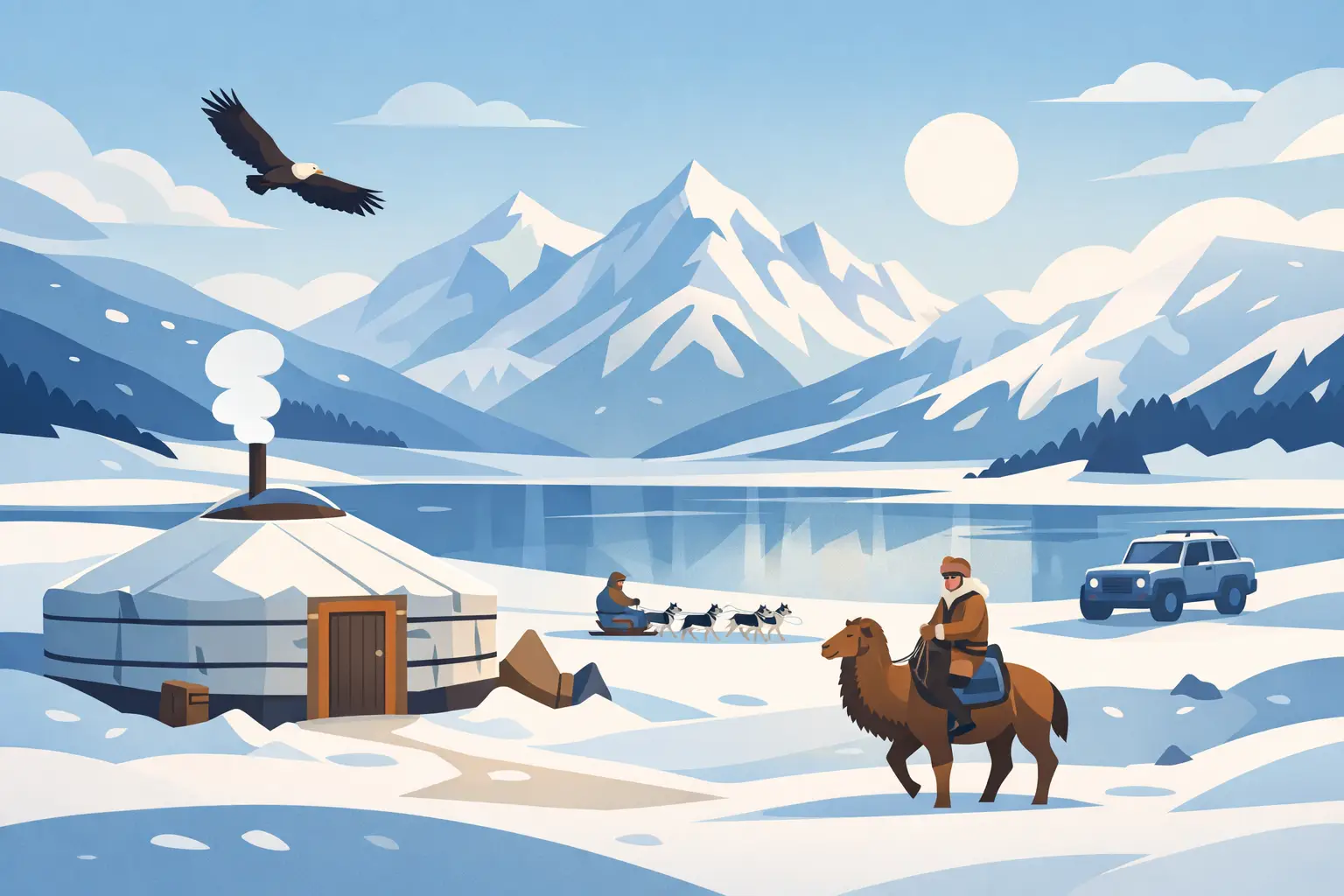
At minus 20 degrees Fahrenheit, the sound of a horse crossing snow is startlingly clear. Smoke rises straight from a ger chimney, the steppe stretches white beneath the Eternal Blue Sky, and daily life continues with the steady rhythm of a nomadic family. A Mongolia winter tour is not simply a trip taken in the off-season. It is a chance to see the country at its most intimate, dramatic, and honest.
Winter asks more from travelers than summer does, but it returns something rare: stillness. Roads are quieter, landscapes are stripped to their essential shapes, and cultural encounters often happen around a warm stove rather than on a busy festival field. With thoughtful planning, experienced local guides, and the right expectations, this can be one of Mongolia's most rewarding seasons.
Why Choose a Mongolia Winter Tour?
Mongolia in winter is a world of sharp light, deep snow, frozen rivers, and immense silence. In Ulaanbaatar, the cold can be severe, while conditions in northern valleys and open steppe may be even more demanding. This is precisely why winter travel feels so different. You are not observing the nomadic heartland from a distance. You are sharing, in a small way, the realities of a season that shapes every decision.
The strongest reason to travel at this time is access to experiences that cannot be recreated in July. In the Darkhad Valley, snow-covered forests and broad white valleys create an extraordinary setting for journeys toward reindeer herding communities. Near Khuvsgul Lake, the ice can transform the shoreline into a vast winter landscape. Across the central steppe, family visits offer a close look at how herders care for livestock through Mongolia's hardest season.
Winter is also exceptional for photography. Low sunlight lingers across the horizon, making long shadows and soft color part of the day. Frost gathers on eyelashes, horses stand out against open snow, and clear evenings reveal stars with remarkable intensity. Photographers should be prepared for fast-draining batteries and cold hands, but the visual rewards are substantial.
The Winter Experiences That Matter Most
Travel to the Darkhad Valley and reindeer herders
A winter expedition to the north is among Mongolia's most memorable journeys. The Darkhad Depression is remote even in favorable weather, and reaching it in winter requires capable vehicles, flexible timing, and guides who understand local conditions. The destination is not a staged cultural display. It is a living region of herding families, forested mountains, frozen waterways, and communities whose knowledge of the land has been built over generations.
Visits with Tsaatan reindeer herders should be approached with respect and patience. Weather, family movements, and reindeer needs determine what is possible on any given day. A meaningful itinerary allows time for conversation, shared meals, photography by agreement, and simple observation rather than rushing from one moment to another. Responsible travel matters here: local hosts should benefit directly, and travelers should understand that they are guests in a working community.
Stay with nomadic families in the winter steppe
A ger in winter is an unforgettable place. Outside, the air may be fiercely cold. Inside, the stove is tended throughout the day, boots dry near the warmth, and bowls of hot milk tea make immediate sense. Staying with or visiting a nomadic family brings travelers close to the small routines that sustain life on the steppe: feeding animals, collecting water or ice, preparing meals, and checking the weather.
Comfort levels vary by location and itinerary. Some journeys use heated ger camps and comfortable lodges where available, while more adventurous routes may involve simpler family accommodations. Neither is automatically better. It depends on whether your priority is a remote cultural expedition, a more comfortable private journey, or a balanced route that combines both.
See frozen Khuvsgul and northern landscapes
Khuvsgul Lake is often called Mongolia's Blue Pearl, but winter gives it another character entirely. The lake's ice, surrounding taiga, and mountain ridges create a clean, elemental scene that feels far removed from ordinary travel. Snowshoe walks, horse encounters, short hikes, and time with local families can all be shaped around conditions.
This region is especially appealing for travelers who want wilderness without treating it as a checklist. A well-paced winter route leaves space for weather changes, a lingering sunset, or an unscheduled stop where the landscape demands attention.
Photograph Mongolia under winter light
Winter photography tours are about more than spectacular scenery. They offer access to human stories: a herder leading animals through snow, felt-lined gers against a blue morning sky, children returning home at dusk, and hands warming around a stove. The best photography itineraries are built with time, not just mileage.
A local guide can help navigate cultural etiquette, identify strong locations, and make sure photography remains respectful. Travelers should always ask before photographing people closely or entering private spaces. Bringing spare batteries, insulated storage for cameras, glove liners, and a simple lens cloth will make a major difference in the cold.
What Winter Conditions Really Feel Like
The question is not whether Mongolia is cold in winter. It is. The more useful question is whether the trip is designed around that reality. A January expedition in the north is different from a late February or March journey in central Mongolia, and conditions can change rapidly with wind, snow, and temperature.
Cold-weather clothing is not an optional extra. Travelers need a warm down parka, insulated snow pants, thermal base layers, fleece or wool midlayers, waterproof insulated boots, thick socks, a hat that covers the ears, a neck gaiter, and warm gloves with liners. Avoid relying on fashionable city coats or ordinary sneakers. The difference between being properly dressed and merely tolerating the cold shapes the entire experience.
Transport also requires realistic expectations. Road travel may take longer than maps suggest, and a winter route should never be planned down to the minute. Reliable four-wheel-drive vehicles, local drivers, backup arrangements, and sensible daily distances matter more than fitting in one additional sight. On remote departures, flexibility is not a compromise. It is good expedition planning.
Who Will Enjoy Winter Most?
A Mongolia winter tour suits travelers who are curious, patient, and comfortable exchanging some predictability for depth. Couples, solo travelers, families with older children, and small private groups can all travel well in winter when their itinerary matches their experience and comfort preferences.
It may not be the best fit for visitors who want long days outdoors without cold exposure, highly fixed schedules, or a trip centered on major public festivals. Mongolia's famous Naadam celebrations belong to summer, while the Golden Eagle Festival and Sagsai Eagle Festival take place in autumn. Winter offers a quieter kind of cultural access, centered on landscapes, households, seasonal traditions, and the resilience of everyday nomadic life.
For travelers who want a private route, winter allows considerable room for customization. You might focus on the Darkhad Valley and reindeer herders, combine Khuvsgul with central Mongolia, or build a photography-led journey with extra time in selected communities. Small-group departures can offer companionship and shared logistics, while private travel gives greater control over pace and interests.
Plan for Meaningful, Responsible Travel
The quality of a winter journey comes down to preparation and relationships. Travel with Mongolian guides who know the roads, speak with local hosts, and understand when a change of plan is necessary. Choose an operator that plans accommodations and transport honestly, rather than promising comfort levels that remote winter conditions cannot support.
Before departure, discuss your priorities clearly. Do you want reindeer herder encounters, wildlife and landscape photography, comfortable heated stays, or the most remote route possible? These choices affect timing, driving distances, equipment, and the kind of experience your guides can create.
At Nomadic of the Blue Sky, our winter journeys are shaped by more than 15 years of local experience and by the people who call these landscapes home. The goal is never to conquer Mongolia's cold. It is to travel through it with care, well prepared and open to what the season reveals.
When you step outside a ger before sunrise and see frost glittering across the silent steppe, winter stops feeling like an obstacle. It becomes the reason you came.
Plan Your Mongolia Journey
Explore locally operated tours or ask our Mongolia team to tailor a private journey.