Naadam Festival 2027 Tour: Gobi & Mongolia
Discover the best of Mongolia with this unforgettable Naadam Festival and Gobi Desert adventure. Experience traditional nomadic culture, the world-famous Naadam Festival, Khongor Sand Dunes, Flaming Cliffs, ancient Karakorum, camel riding, and breathtaking landscapes across the legendary Mongolian Gobi. Perfect for culture, photography, and adventure travelers seeking an authentic Mongolia tour experience.
This 11-day Naadam Festival Mongolia tour combines the 2027 summer celebration with the Gobi Desert, Central Mongolia and historic Karakorum. The fixed July departure and starting price are listed below.
Upon arrival at Chinggis Khaan International Airport, meet your local guide and transfer to your hotel in Ulaanbaatar. After check-in, the rest of the day is free to relax after your international flight or explore the city at your own pace. Several days of this journey involve overland travel, so use today to prepare for changing weather and time outdoors. We recommend comfortable seasonal clothing, sturdy footwear, a small flashlight or headlamp, and a camera with fully charged batteries. If you plan to join optional horse or camel rides, bring suitable clothing for those activities.
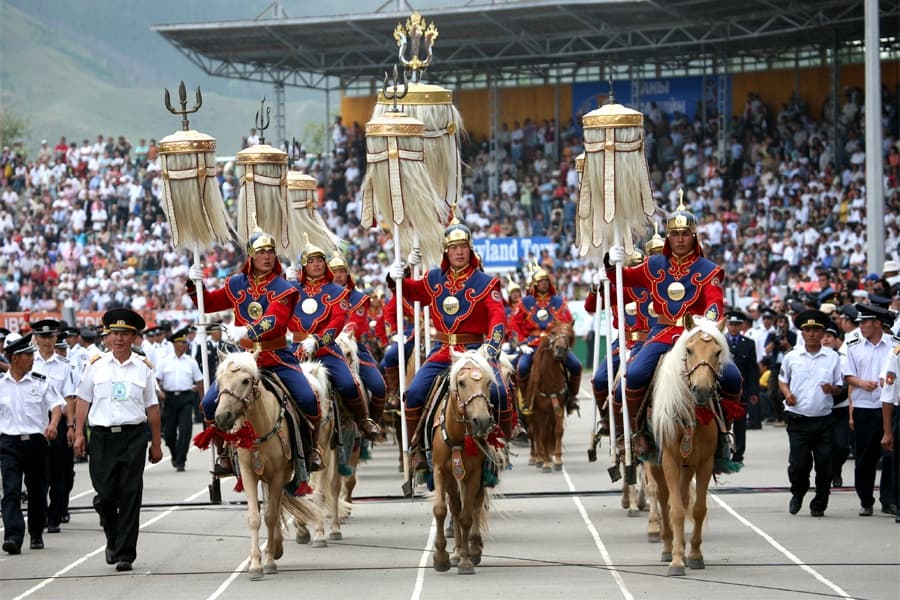
After breakfast you will see naadam's opening ceremony. About Naadam festival Naadam is held in during from July 11–13 annual, in the National Sports Stadium. Naadam begins with an elaborate introduction ceremony, featuring dancers, athletes, horse riders, and musicians. After the ceremony, the competitions begin. The competitions are mainly horseback riding. Naadam is the most widely watched festival among Mongols, and is believed to have existed for centuries in one fashion or another. Naadam has its origin in the activities, such as military parades and sporting competitions such as archery, horse riding and wrestling, that followed the celebration of various occasions, including weddings or spiritual gatherings. It later served as a way to train soldiers for battle. Now it formally commemorates the 1921 Revolution when Mongolia declared itself a free country. Naadam also celebrates the achievement of the new state. Naadam was celebrated as a Buddhist/shaman holiday until secularization in the 1930s. The three sports are called "Eriin 3 naadam" which is called three games of man in English. Genghis Khan's nine horse tails, representing the nine tribes of the Mongols, are still ceremonially transported from Sukhbaatar Square to the Stadium to open the Naadam festivities.
After breakfast, we depart for the Tsagaan Suvarga /white Stupa / which is absolutely one of best sights in Mongolia. Tsagaan Suvarga Tsagaan Suvarga is located in Ulziit Soum, in the Dundgobi province. Tsagaan suvarga is the stunning and legendary cliffs formed by deposits of sediment from millions of years. This cliff indicates different times by its colored layers containing 10 million years history. The stunning scenery makes awesome photos and chance to explore the area through the gorges and canyons. It makes you feel like you are in the time of Giant dinosaur.
After breakfast, we begin another early morning drive, departing from Baga Gazriin Chuluu at around 7:00 AM as we continue our journey toward the South Gobi. Yolyn Am / Yol Valley Located approximately 45 km from Dalanzadgad, Yolyn Am lies within the stunning Gobi Gurvan Saikhan National Park at an altitude of around 2,800 meters above sea level. Known for its dramatic scenery and unique ecosystem, this spectacular valley is one of the best places in the Gobi to experience wildlife and explore towering mountain canyons. Yolyn Am is a deep and narrow gorge carved through the Gurvan Saikhan Mountains, often referred to as the “Three Beauties of the Gobi.” The valley takes its name from the Lammergeier, or bearded vulture — called “Yol” in Mongolian — a rare bird of prey native to the region. Even during the summer months, parts of the canyon remain permanently shaded, allowing thick layers of ice — sometimes reaching 1 to 1.5 meters — to survive deep within the gorge. As you walk through the canyon, the steep rock walls rise dramatically on both sides, leaving only a narrow ribbon of sky visible above.
After breakfast, we continue our journey deeper into the heart of the Gobi Gurvan Saikhan National Park as we drive toward the breathtaking Khongoryn Els, one of Mongolia’s most iconic natural wonders. The drive from Yolyn Am to the dunes takes approximately 3–4 hours, passing through vast open desert landscapes, rocky mountains, and remote nomadic settlements that perfectly capture the spirit of the Gobi. Khongoryn Els / Khongor Sand Dunes Located about 120 km from Yolyn Am, the Khongor Sand Dunes are among the largest and most spectacular sand dunes in Mongolia. Often referred to as the “Singing Dunes,” the sands produce a deep, humming sound when the wind moves across the surface or when the sand shifts beneath your feet. Stretching nearly 180 km from northwest to southeast and reaching widths of up to 27 km in some areas, the dunes create an extraordinary landscape where golden sands meet rugged mountains and the green oasis of the Khongor River. The contrast between the harsh desert and the lush vegetation nearby makes this one of the most photogenic locations in the Gobi. For those who wish, climbing the highest dunes can take between 40 minutes to over an hour depending on the conditions, but the effort is richly rewarded. From the summit, you will be treated to sweeping panoramic views across the endless desert, rolling dunes, distant mountains, and vast silence of the Gobi — a truly unforgettable experience. Khongoryn Els is also an ideal place to experience a traditional camel ride. Riding across the dunes on the back of a Bactrian camel offers a unique glimpse into the ancient trade routes and nomadic lifestyle that have shaped this region for centuries.
Today we journey toward the legendary Bayanzag, one of the most historically significant and visually striking destinations in the Mongolian Gobi. Located approximately 90 km from Dalanzadgad, this remarkable area is internationally famous for its dramatic red sandstone cliffs, vast desert scenery, and groundbreaking paleontological discoveries. The name “Bayanzag” translates as “rich in saxaul shrubs,” referring to the hardy desert trees that thrive in this harsh environment and help stabilize the sands of the Gobi. However, the site became globally known as the “Flaming Cliffs,” a name given by the American explorer and paleontologist Roy Chapman Andrews during his historic expeditions in the 1920s. At sunset, the cliffs glow in brilliant shades of orange and deep red, creating the appearance of burning rock against the desert horizon. Bayanzag holds a special place in the history of science. In 1922, the world’s first scientifically recognized dinosaur eggs were discovered here, along with countless dinosaur fossils and ancient remains dating back over 70 million years. These discoveries transformed our understanding of prehistoric life and brought worldwide attention to the Gobi Desert. Many of the fossils unearthed here are now displayed in major museums across the world. Beyond its scientific importance, Bayanzag offers an unforgettable desert landscape filled with rugged rock formations, red sand dunes, open valleys, and endless silence. The atmosphere here feels both ancient and timeless, making it one of the most photogenic and evocative locations in Mongolia. Guests can enjoy walking through the cliffs, exploring hidden ravines, photographing the surreal desert scenery, and experiencing the profound tranquility of the Gobi. As the sun begins to set, the entire landscape transforms into glowing shades of crimson and gold — one of the true highlights of traveling through southern Mongolia
After breakfast we drive to the next destination which is the Saikhanovoo and Ongi temple in middle Gobi Ongi Monastery This small mountainous area along the river /Ongiin gol/ which is the tenth longest river of Mongolia with an overall length of 435 km. This temple makes a pleasant place to break a trip after long drive from Baynzag. OngiinKhiid is a sight worthy monastery on Ongiriver about 18 km from SaikhanOvoo. Formerly one of the largest monasteries in Mongolia, it was founded in 1660 and consisted of two temples complexes on the North and South of the Ongi Gol River. The older southern complex consisted of various administrative buildings as well as 11 temples. The northern complex, built in the 18th century, consisted of 17 temples - among them one of the largest temples in all of Mongolia. The grounds housed also 4 Buddhist universities. It was completely destroyed in 1939 under Khorloogiin Choibalsan, the then president and leader of the Communist Party of Mongolia. Over 200 monks were killed, and many surviving monks were imprisoned or forced to join the Communist controlled army. A large number of ruins including a tall stupa can be seen on the river and on the surrounding hills. In the 1990s, it was decided to rebuild the monastery. At present (2011), 13 monks live in the monastery.
We've got another early start today. We drive to Kharhorin City . On the way you'll explore the magical place Tovhon khiid/temple/ which was founded in 1653 by Zanabazar. Kharkhorin In the mid-13th century, Karakorum was a happening place. Chinggis Khan established a supply base here and his son Ogedei ordered the construction of a proper capital, a decree that attracted traders, dignitaries and skilled workers from across Asia and even Europe. The good times lasted around 40 years until Kublai moved the capital to Khanbalik (later called Beijing), a decision that still incites resentment among some Mongolians. Following the move to Beijing and the subsequent collapse of the Mongol empire, Karakorum was abandoned and then destroyed by vengeful Manchurian soldiers in 1388.Whatever was left of Karakorum was used to help build, in the 16th century, the enormous monastery, ErdeneZuu monastery, which itself was badly damaged during the Stalinist purges. The rather nondescript Soviet-built town of Kharkhorin was built a couple of kilometers away from ErdeneZuuKhiid, and there is little of interest in the town itself
The Mongolian Government declared Hustai National Park as a Specially Protected Area in 1993, one year after the initiation of the reintroduction project of the Takhi (Przewalski's horse) to the Hustain Nuruu. The HNP extends through the Khentii Mountains and includes the western edge of the Mongolian steppe at the boundaries of Altanbulag, Argalant and Bayankhangai Soums of Töv Province. The park is about 100 km from the capital city of Ulaanbaatar to the west. The HNP covers 50,600 ha land which is home to 459 species of vascular plants, 85 species of lichens, 90 species of moss and 33 species of mushrooms. 44 species of mammals have been recorded, including Altai wapiti, Mongolian gazelle, roe deer, wild boar, wild sheep, ibex, Mongolian marmots, grey wolves, Eurasian lynx, Pallas cat, red fox, corsac fox and Eurasian badger. The 217 species of birds include golden eagle, lammergeier, great bustard, whooper swan, black stork, Daurian partridge and little owl. There are 16 species of fish, 2 species of amphibians, and 385 species of insects (including 21 species of ants, 55 species of butterflies, 10 species of bush crickets and 29 species of grasshoppers). A new species of soil insect has been found in the Hustai and given the scientific name of Epidamaeus khustaiensis. In 2002, the Man and the Biosphere Reserves organization of UNESCO certified the HNP as a member of the world biosphere network of natural reserves. The HNPT was enrolled as a member of IUCN in 2007.
Today we depart from Hustai National Park and drive back to Ulaanbaatar, bringing our unforgettable journey across Mongolia to a comfortable conclusion. After days spent exploring Mongolia’s vast landscapes, nomadic culture, and remote wilderness, this return drive offers time to relax, enjoy the scenery, and reflect on the many experiences shared throughout the adventure. Upon arrival in Ulaanbaatar, there will be free time for last-minute shopping and personal exploration. Guests may visit local cashmere boutiques, souvenir shops, and artisan stores to purchase authentic Mongolian products such as high-quality cashmere, handmade crafts, felt products, traditional artwork, and memorable gifts to take home. This final evening in the capital provides a relaxed ending to your Mongolian journey before preparing for your departure and onward flight home.
Thank you for traveling with us and for being part of this unforgettable journey through Mongolia. We truly hope the memories, landscapes, and experiences shared along the way will stay with you for many years to come. At the appropriate time, we will transfer you to Chinggis Khaan International Airport for your departure flight. Before leaving the hotel, please make sure you have all of your personal belongings and travel documents with you. We wish you a safe journey home and many wonderful adventures ahead. We look forward to welcoming you back to Mongolia again in the future.
Our Mongolia travel team responds within 12 hours.
Planning Your Mongolia Trip
Compare other Mongolia tours, explore private tailor-made travel, or use our local planning guides to choose the right season and travel style.
Related Tour Collections
Frequently Asked Questions
When is the 2027 Naadam tour departure?
the fixed July 2027 departure is Jul 10, 2027 — Jul 20, 2027. Contact us to check remaining places.
What is included in the Naadam and Gobi itinerary?
The route combines the Naadam Festival with the Gobi Desert, Karakorum and other destinations listed in the itinerary.
What is the starting price?
The current listed price is 2,553 per person for 11 days.
You Might Also Like
Private Eagle Festival Photography Tour — 10 Days
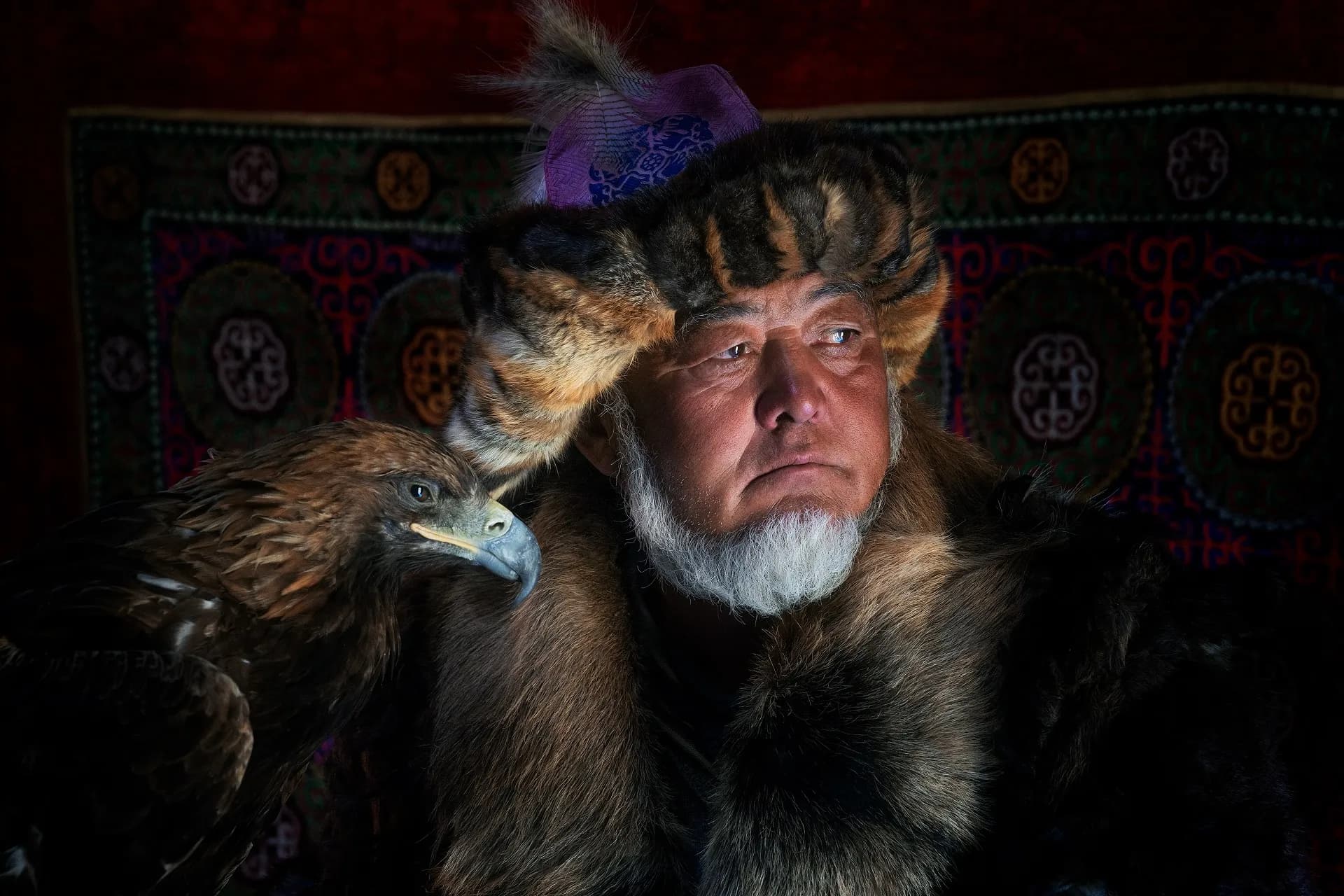
Experience a private gathering of 10–15 Kazakh eagle hunters at our seasonal ger camp beneath Tsambagarav Mountain. This 10-day Mongolia photography tour combines eagle hunter portraits, horseback and golden eagle photography, nomadic culture, camel photography at Elsen Tasarkhai and the historic capital of Kharkhorin.
Thousand Camel Festival & Winter Gobi Expedition
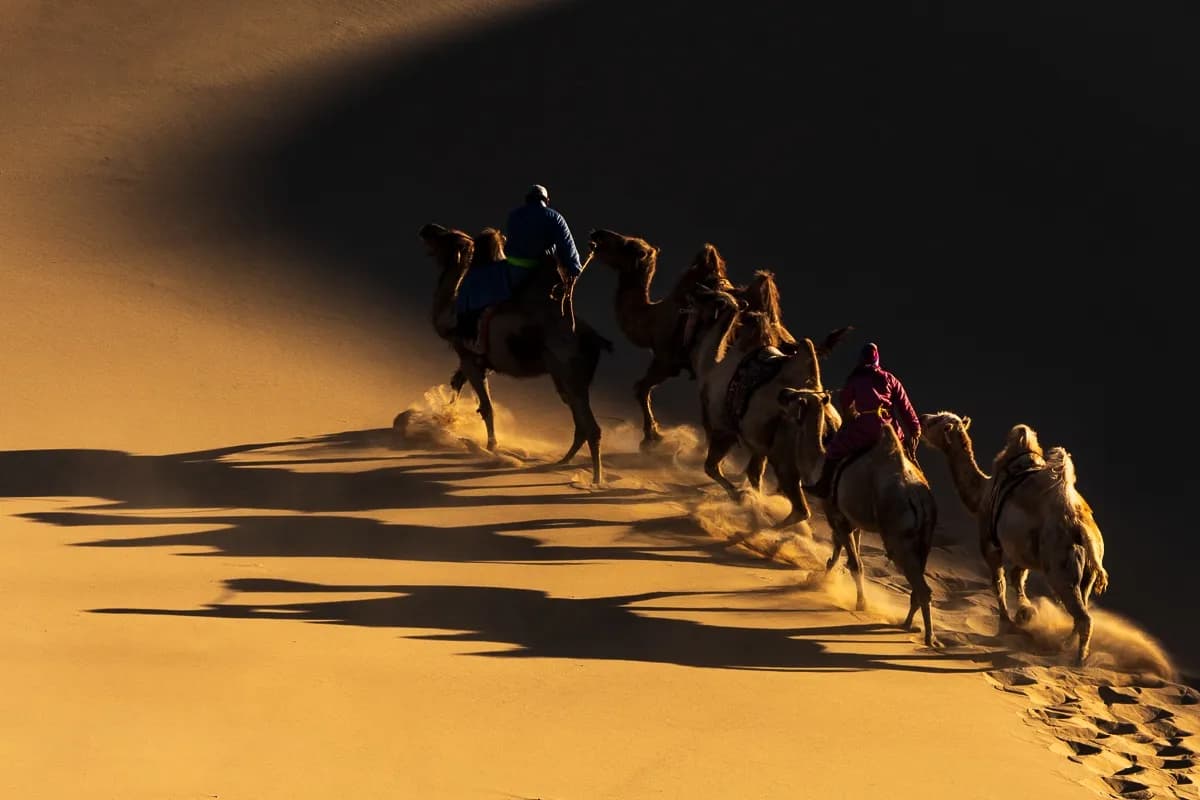
Experience Mongolia’s spectacular Thousand Camel Festival on an 8-day winter Gobi adventure featuring Bactrian camel culture, frozen Yolyn Am, Bayanzag Flaming Cliffs and authentic encounters with Gobi nomadic families.
Khuvsgul Ice Festival & Reindeer Adventure 2027
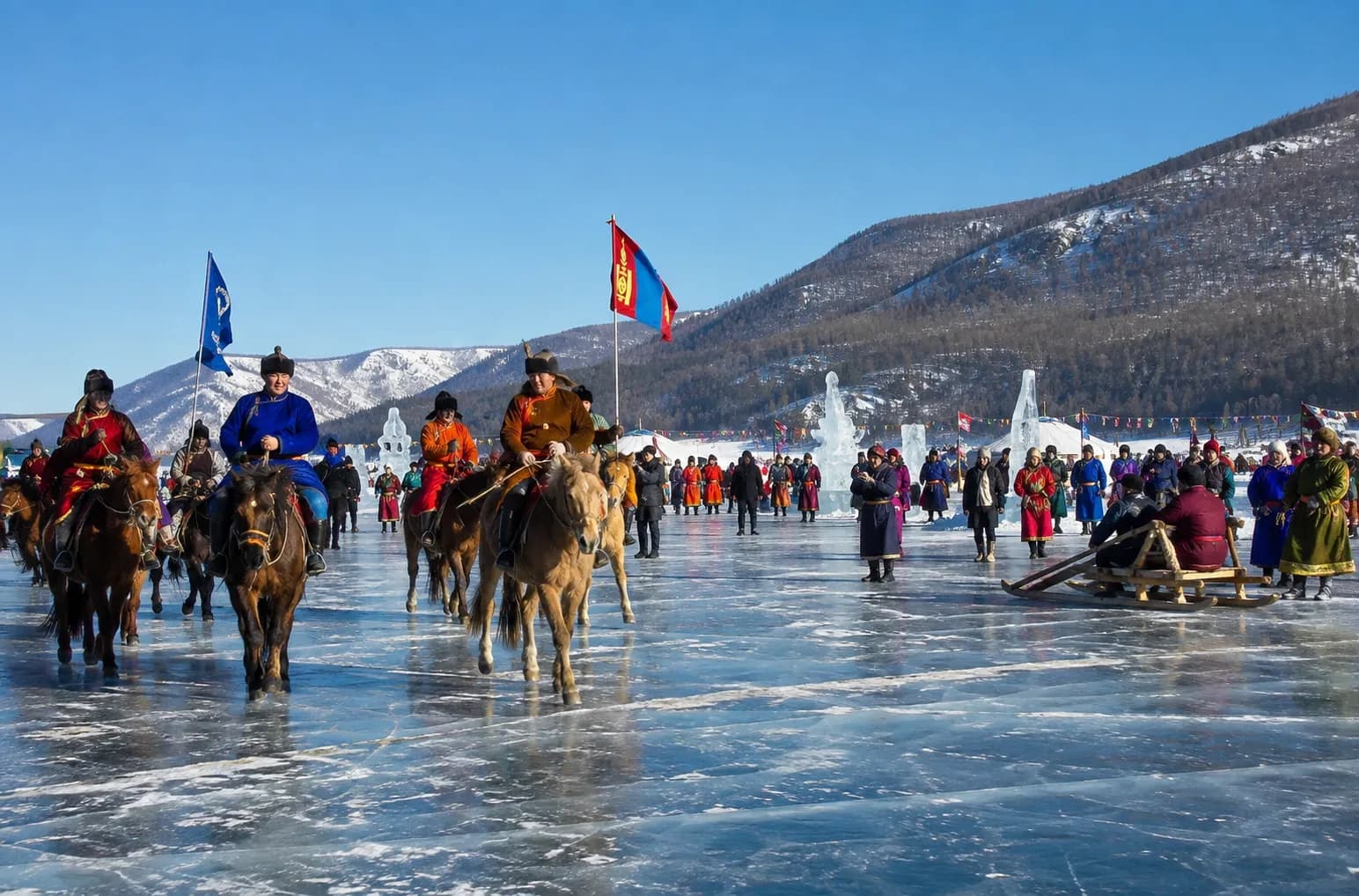
Journey into Mongolia’s remote winter north on an 8-day expedition combining East Taiga reindeer herders, the Khuvsgul Ice Festival, frozen Lake Khuvsgul and the ancient Uushigiin Uvur Deer Stones.