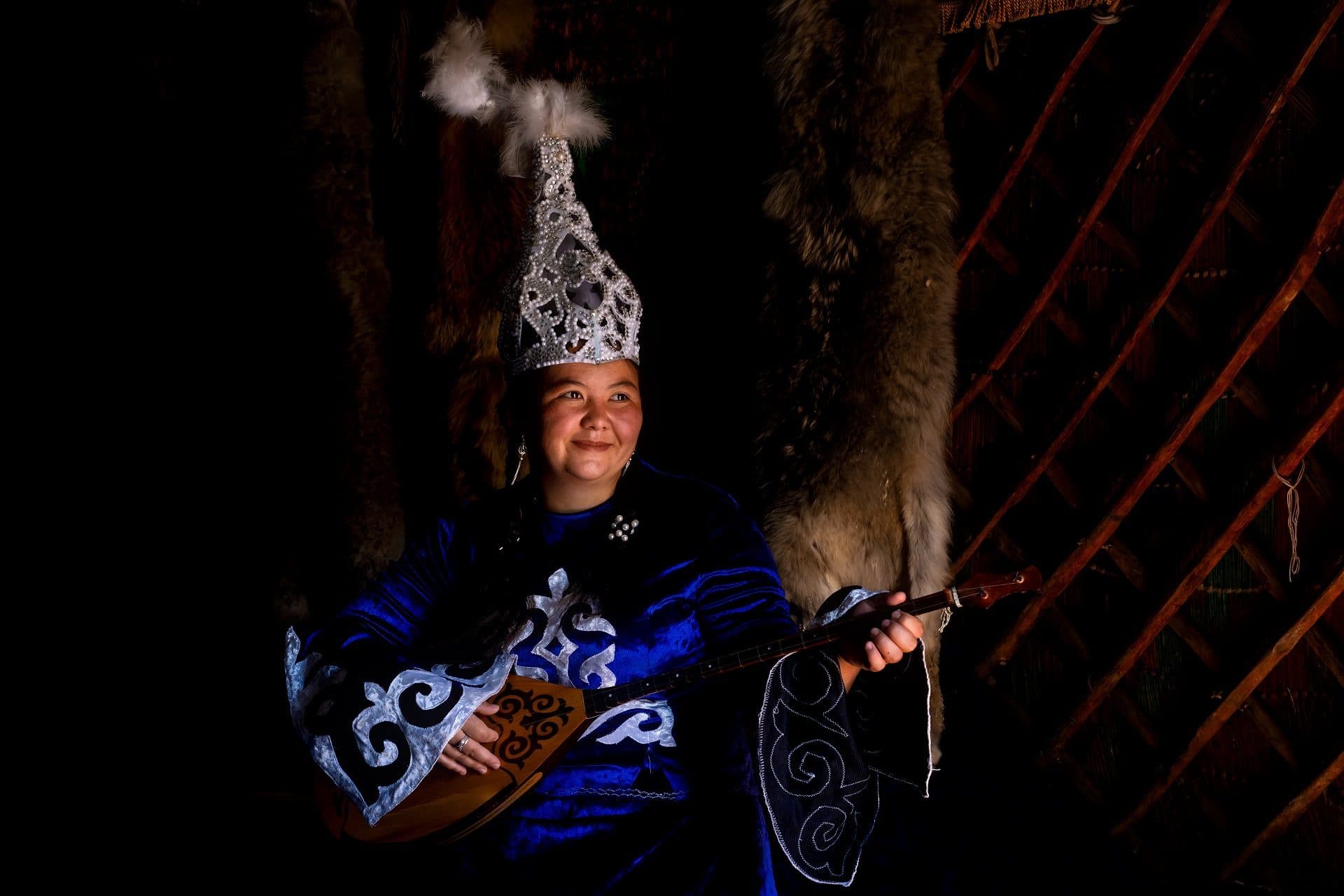
Golden Eagle Festival & Gobi Desert Expedition
Experience Mongolia’s Golden Eagle Festival, meet legendary Kazakh eagle hunters, and journey across the Altai Mountains and Gobi Desert on one epic adventure.
Experience the best of Mongolia on an unforgettable journey combining the world-famous Golden Eagle Festival in Western Mongolia with an extraordinary overland adventure through the Gobi Desert and Central Mongolia.
This unique journey brings together two very different sides of Mongolia: the centuries-old traditions of Kazakh eagle hunters in the remote Altai Mountains and the vast desert landscapes, historic sites, and nomadic culture of the Gobi and Central Mongolia.
For the Golden Eagle Festival portion of the tour, round-trip domestic flights between Ulaanbaatar and Bayan-Ulgii Province are included, providing convenient access to Mongolia’s far western region, home to the legendary Kazakh eagle hunters. During the festival, travelers can witness skilled hunters competing with their magnificent golden eagles, experience traditional Kazakh culture, and capture remarkable photography against the dramatic Altai landscape.
After returning to Ulaanbaatar, the adventure continues overland through the Gobi Desert. Traveling by road allows you to experience much more of Mongolia along the way rather than simply flying between destinations. The route takes you through the granite formations of Baga Gazriin Chuluu, the spectacular White Stupa (Tsagaan Suvarga), the dramatic Yol Valley, the towering Khongor Sand Dunes, the historic ruins of Ongi Monastery, and onward into Central Mongolia to the ancient capital of Kharkhorin and Erdene Zuu Monastery.
The overland journey also offers opportunities to experience Mongolia beyond its famous landmarks—meeting local nomadic families, observing everyday rural life, crossing vast steppe and desert landscapes, and discovering how dramatically the scenery changes from the Gobi to the green valleys of Central Mongolia.
From photographing majestic eagle hunters in traditional clothing to walking among towering sand dunes, exploring dramatic canyons, ancient monasteries, and historic Silk Road landscapes, this journey offers an exceptional combination of culture, photography, history, adventure, and authentic nomadic life across some of Mongolia’s most spectacular regions.
Domestic flights to Bayan-Ulgii are limited and demand is especially high during the Golden Eagle Festival season. Early booking is therefore strongly recommended to secure flight availability and participation in this extraordinary Mongolia adventure.
Welcome to Mongolia! Upon your arrival at Chinggis Khaan International Airport, our local guide and driver will meet you and transfer you to your hotel in Ulaanbaatar, the vibrant capital of Mongolia. After checking in, the remainder of the day is yours to relax and recover from your international journey. Depending on your arrival time, you may explore the nearby area at your own pace or simply rest at the hotel before beginning your 16-day Mongolia adventure. In the evening, take some time to prepare for the journey ahead. This expedition covers some of Mongolia’s most spectacular and remote regions, including Western Mongolia, the Gobi Desert, and Central Mongolia, so several days will involve extended overland travel through changing landscapes. We recommend preparing your camera and spare batteries, a flashlight or headlamp, comfortable walking shoes, layered clothing, and suitable outdoor clothing for activities such as horse and camel riding.
After breakfast, your guide and driver will pick you up from your hotel and begin the journey to Gorkhi-Terelj National Park , one of Mongolia’s most beautiful and popular natural destinations. On the way, visit the impressive **Chinggis Khaan Equestrian Statue**, one of the largest equestrian statues in the world. Rising dramatically above the surrounding steppe, this remarkable monument offers an excellent introduction to the history and heritage of the Mongol Empire. Continue toward Terelj National Park, stopping along the way at a traditional **ovoo**, a sacred stone cairn associated with the spirits of the land, mountains, and Eternal Blue Sky. Your guide will introduce you to this ancient Mongolian tradition and explain the customs connected with ovoo worship. Upon entering **Gorkhi-Terelj National Park**, discover a spectacular landscape of forested mountains, open valleys, granite formations, and alpine scenery. Visit the famous **Turtle Rock**, one of the park’s most recognizable natural landmarks, before continuing to the peaceful **Aryabal Meditation Temple**, set high among the surrounding hills. During the day, you will also visit a **local nomadic family** for an authentic glimpse into Mongolia’s traditional pastoral lifestyle. Depending on the season and the family’s daily activities, you may see livestock herding, traditional dairy production, and learn how nomadic families have adapted their way of life to Mongolia’s changing seasons. In the evening, settle into a comfortable traditional ger camp in Terelj National Park, surrounded by the peaceful landscapes of the Mongolian countryside.
Day 3 – Terelj National Park to Baga Gazriin Chuluu After breakfast, leave the green valleys of Terelj behind and begin your overland journey south toward the Gobi Desert. Today marks the beginning of an exciting transition from Mongolia’s forested landscapes into the vast open steppe and semi-desert regions of Dundgovi Province. Our destination is Baga Gazriin Chuluu, an impressive granite rock formation rising dramatically from the surrounding steppe near Delgertsogt soum. The highest point reaches approximately 1,768 meters above sea level, offering striking views across the seemingly endless Mongolian landscape. Baga Gazriin Chuluu is not only known for its unusual granite formations but is also considered a sacred and spiritual place by local people. Hidden among the rocks are traces of Mongolia’s Buddhist heritage, including the remains of a small monastery and inscriptions associated with monks who once lived and meditated in this remote landscape during the 19th century. Explore the fascinating maze of granite formations, narrow valleys, rocky outcrops, and natural shelters while learning about the history, legends, and cultural significance of the area. Baga Gazriin Chuluu is also home to a variety of native plants and wildlife adapted to Mongolia’s dry steppe environment. As the day comes to an end, enjoy the peaceful atmosphere and dramatic scenery surrounding Baga Gazriin Chuluu—an ideal introduction to the landscapes that await us deeper in the Gobi Desert.
After breakfast at the ger camp, continue your journey south through the vast landscapes of Dundgovi Province toward Tsagaan Suvarga, also known as the White Stupa, one of the most spectacular geological formations in Mongolia. Rising dramatically from the surrounding Gobi steppe, Tsagaan Suvarga is a massive escarpment shaped by millions of years of erosion. Once part of an ancient seabed, its cliffs reveal striking layers of sediment in shades of white, red, orange, and purple, creating an almost otherworldly landscape. From a distance, the eroded cliffs resemble the ruins of an ancient city or a series of Buddhist stupas, which inspired the name Tsagaan Suvarga – “White Stupa.” Walking along the rim offers sweeping panoramic views across the Gobi, while exploring below the cliffs reveals narrow ravines, colorful rock formations, and fascinating geological layers. The dramatic scenery makes Tsagaan Suvarga one of the finest photography locations in the Mongolian Gobi Desert, particularly when the changing sunlight brings out the colors and textures of the cliffs. After exploring this remarkable natural landmark, transfer to your nearby ger camp and enjoy a peaceful evening beneath the vast Gobi sky.
After breakfast, depart Tsagaan Suvarga and continue deeper into the South Gobi, traveling toward Gobi Gurvan Saikhan National Park, home to some of the most dramatic mountain scenery in the Mongolian Gobi. Today’s highlight is Yol Valley (Yoliin Am), a spectacular deep and narrow gorge located in the Gobi Gurvan Saikhan Mountains, approximately 45 km from Dalanzadgad. Surrounded by rugged peaks rising to around 2,800 meters above sea level, the valley creates a striking contrast to the vast open desert landscapes of the Gobi. The name Yoliin Am means “Valley of the Lammergeyer” in Mongolian, referring to the impressive bearded vultures that can often be seen soaring above the surrounding cliffs. The protected area is also home to a variety of wildlife, including ibex, argali sheep, pikas, and other species adapted to this mountainous desert environment. Enjoy a scenic walk or hike into the gorge, where towering rock walls gradually narrow around the valley floor. Because sunlight reaches some sections of the canyon for only a short period each day, thick layers of ice can remain here well into the warmer months, creating one of the Gobi Desert’s most unusual natural sights. Take time to explore the dramatic canyon, watch for wildlife, and enjoy the remarkable transition from open desert steppe to the cool, rugged landscapes of the Gobi Gurvan Saikhan National Park. After exploring Yol Valley, transfer to your ger camp for dinner and an overnight stay surrounded by the peaceful landscapes of the South Gobi.
After breakfast, continue your journey across the spectacular landscapes of the **South Gobi** toward the magnificent **Khongor Sand Dunes**, one of the largest and most impressive dune systems in Mongolia. Known locally as **Khongoryn Els** and often called the **“Singing Dunes,”** these enormous sand dunes stretch for approximately 180 km across the Gobi Desert, with some sections reaching up to 20–27 km in width. Rising dramatically between rugged mountain ranges and open desert plains, Khongor offers one of the most iconic landscapes of any **Mongolia Gobi Desert tour**. In the afternoon, experience one of the classic adventures of the Gobi—a **camel ride near the Khongor Sand Dunes**. Riding a two-humped Bactrian camel through the desert landscape provides a memorable glimpse into a traditional form of transportation that has been used by Gobi nomads for centuries. Those who wish can also climb one of the towering dunes. The ascent can be challenging and may take around 40 minutes to an hour depending on your fitness level and the chosen route, but the reward is an unforgettable panoramic view across endless golden dunes, distant mountains, and the surrounding Gobi landscape. Under the right conditions, shifting sand produces a deep resonating sound that gives Khongor its famous nickname, the **Singing Dunes**. As evening approaches, enjoy the changing colors of the desert and, weather permitting, a beautiful Gobi sunset over the dunes. After exploring Khongor, settle into your ger camp for dinner and a peaceful night beneath the vast Mongolian sky.
After breakfast, leave the spectacular Khongor Sand Dunes behind and continue across the **South Gobi** toward **Bayanzag**, one of Mongolia’s most famous paleontological and natural landmarks. Known internationally as the **Flaming Cliffs**, Bayanzag takes its Mongolian name from the abundance of **saxaul shrubs** growing throughout this arid landscape. These hardy desert plants are uniquely adapted to the extreme conditions of the Gobi and are an important part of its fragile ecosystem. Bayanzag became world-famous following the expeditions of American explorer and paleontologist **Roy Chapman Andrews** and the American Museum of Natural History in the 1920s. The area produced extraordinary fossil discoveries, including dinosaur remains and the first scientifically recognized dinosaur eggs, helping establish the **Mongolian Gobi Desert** as one of the world's most important regions for paleontological research. Explore the dramatic landscape on foot, walking among red sandstone cliffs, desert formations, and vast open plains. Even beyond its fascinating dinosaur history, Bayanzag is an unforgettable destination for its raw Gobi scenery and remarkable sense of space and isolation. The cliffs are particularly beautiful in the late afternoon, when the setting sun intensifies their deep red and orange colors—the phenomenon that inspired the name **“Flaming Cliffs.”** Take time to photograph the changing landscape and enjoy the atmosphere of one of the most iconic destinations on any **Gobi Desert tour in Mongolia**. After exploring Bayanzag, continue to your nearby ger camp for dinner and an overnight stay in the peaceful Gobi Desert.
After breakfast, leave Bayanzag and continue north through the vast landscapes of the Gobi Desert toward Saikhan-Ovoo in Dundgovi Province. Today’s journey takes you to the atmospheric ruins of Ongi Monastery (Ongiin Khiid), once one of the largest and most important Buddhist monastic complexes in Mongolia. Located along the banks of the Ongi River, the monastery provides a fascinating historical stop between the South Gobi and Central Mongolia. Surrounded by rocky hills and open steppe, the peaceful setting offers a striking contrast to the desert landscapes experienced during the previous days. Ongi Monastery was originally established in the 17th century and gradually developed into a major center of Mongolian Buddhism. At its height, the complex consisted of numerous temples, administrative buildings, stupas, and Buddhist schools spread across both sides of the Ongi River. Hundreds of monks once lived, studied, and practiced Buddhism here. Like many monasteries across Mongolia, Ongi was devastated during the political and religious purges of the late 1930s. Its temples were destroyed, monks were persecuted, and the once-thriving religious center was reduced largely to ruins. Following Mongolia’s democratic transition in the 1990s, efforts began to revive Buddhist traditions at Ongi, and a small temple was reconstructed near the historic ruins. Today, explore the remains of the ancient monastery, walk among ruined temple foundations and stupas, and learn about the rise, destruction, and revival of Buddhism in Mongolia. The surrounding hills also provide beautiful views across the Ongi River valley and the expansive Gobi landscape. After exploring the monastery, settle into your nearby ger camp and enjoy a quiet evening beneath the open Mongolian sky.
After breakfast, leave Ongi Monastery and begin the scenic overland journey north toward Kharkhorin (Karakorum), the ancient capital of the Mongol Empire. As you travel from the Gobi toward Central Mongolia, watch the landscape gradually transform from arid desert steppe into wider grasslands, rolling hills, and traditional pastoral countryside. The journey itself offers a fascinating perspective on Mongolia’s immense scale and changing natural environments. Upon arrival in Kharkhorin, explore one of the most historically significant destinations in Mongolia. Known historically as Karakorum, the city was established in the 13th century and became the capital of the vast Mongol Empire under Ögedei Khan, son and successor of Chinggis Khaan. At its height, Karakorum was an important political, commercial, and cultural center connecting people and trade routes across Eurasia. Visit the impressive Erdene Zuu Monastery, founded in 1586 and considered the oldest surviving Buddhist monastery in Mongolia. Built partly using stones from the ruins of ancient Karakorum, the monastery is surrounded by its distinctive white walls and numerous stupas and remains one of the country’s most important Buddhist and historical landmarks. You will also have time to explore the historical surroundings of Kharkhorin and learn more about the ancient Mongol capital, the expansion of the Mongol Empire, and the later development of Buddhism in Mongolia. After sightseeing, transfer to your ger camp and enjoy a relaxing evening in the historic Orkhon Valley region.
After breakfast, spend some additional time exploring **Kharkhorin**, with an opportunity to visit the local museum and discover more about ancient Karakorum, once the capital of the mighty Mongol Empire. We then begin our overland journey back toward **Ulaanbaatar**, traveling through the beautiful landscapes of Central Mongolia. Our first major stop is **Elsen Tasarkhai**, a spectacular ribbon of sand dunes stretching for approximately 70 km through the steppe. Sometimes referred to as the **“Mini Gobi,”** this remarkable area creates a beautiful contrast of golden dunes, green grasslands, rocky mountains, and open countryside. Although you have already experienced the immense Khongor Sand Dunes in the South Gobi, Elsen Tasarkhai offers a completely different setting, where desert and fertile steppe landscapes meet within a relatively small area. Continue through the scenic surroundings of **Khogno Khan Nature Reserve**, an area characterized by impressive rocky mountains, rolling steppe, sand dunes, and traditional nomadic landscapes. We will make stops along the route to enjoy the scenery and experience another side of Mongolia’s remarkably diverse countryside. Lunch will be enjoyed at a local restaurant along the way before continuing east toward Ulaanbaatar. Arrive in **Ulaanbaatar** in the late afternoon or evening and transfer to your hotel. After several memorable days traveling overland through the Gobi Desert and Central Mongolia, enjoy a comfortable evening and prepare for the next stage of your Mongolia adventure.
Early in the morning, transfer from your hotel to the airport for your domestic flight to **Ulgii (Ölgii), Bayan-Ulgii Province**, located in the spectacular far western region of Mongolia. The flight takes approximately three hours and covers nearly **1,700 km from Ulaanbaatar**, offering a convenient journey into one of Mongolia’s most remote and culturally distinctive regions. Upon arrival at Ulgii Airport, meet our local team and transfer into town. **Bayan-Ulgii** is Mongolia’s westernmost province and the cultural heartland of the country’s ethnic Kazakh community. Surrounded by the magnificent **Altai Mountains**, the region is internationally renowned for its centuries-old tradition of hunting with trained golden eagles. Spend the afternoon exploring **Ulgii town**, the provincial capital, and discover its unique blend of Kazakh and Mongolian culture. Depending on arrival time, we may visit local markets, cultural sites, or viewpoints around town while your guide introduces you to the history and traditions of Bayan-Ulgii. This evening, settle into your local hotel and prepare for the highlight of your Western Mongolia adventure—the extraordinary **Golden Eagle Festival** and an unforgettable encounter with Mongolia’s legendary Kazakh eagle hunting culture.
Today is one of the highlights of your Mongolia journey—the spectacular **Golden Eagle Festival in Bayan-Ulgii**, a celebration of the centuries-old traditions of Mongolia’s Kazakh eagle hunters. After breakfast, travel to the festival grounds, where eagle hunters from across the region gather with their magnificent **golden eagles**. Dressed in traditional Kazakh clothing and riding on horseback, the hunters proudly demonstrate a remarkable cultural tradition that has been passed down through generations. The festival begins with a colorful opening ceremony and parade of eagle hunters, providing outstanding opportunities for photography and cultural interaction. Throughout the day, competitors demonstrate the close relationship, skill, and communication they have developed with their trained golden eagles. Competitions typically test how quickly and accurately an eagle responds to its hunter’s call, flying from a high point to land on the hunter’s arm. Participants are judged on various aspects of their performance, while additional competitions and cultural activities showcase traditional horsemanship, clothing, and Kazakh customs. Beyond the competitions, the **Golden Eagle Festival** is an exceptional opportunity to meet local eagle hunters, photograph their traditional clothing and magnificent birds, and experience the distinctive culture of the Kazakh communities of Western Mongolia against the dramatic backdrop of the Altai Mountains. After an exciting first day at the festival, return to Ulgii for dinner and a relaxing evening.
After breakfast, return to the festival grounds for the **second day of the Golden Eagle Festival**, when the celebrations continue with some of the event’s most exciting competitions and traditional Kazakh sporting activities. Against the dramatic backdrop of the rugged **Altai Mountains**, eagle hunters dressed in traditional hunting attire arrive on beautifully decorated horses with their magnificent golden eagles. The atmosphere offers exceptional opportunities to experience and photograph the living traditions of the **Kazakh eagle hunters of Western Mongolia**. Today’s program typically features further eagle hunting competitions designed to demonstrate the remarkable partnership between hunter and bird. Depending on the official festival program, golden eagles may be judged on their ability to locate and respond to their owners from a distance, as well as their speed, accuracy, and hunting instincts. The festival is about much more than eagle hunting. Traditional Kazakh games and equestrian competitions add to the excitement, including horse racing, archery, and **kokpar**, a fast-paced traditional horseback game in which skilled riders compete for possession of a goatskin. Take time to explore displays of **Kazakh handicrafts, traditional clothing, and local culture**, meet eagle hunters and their families, and enjoy the colorful festival atmosphere. For photographers, this is another outstanding opportunity to capture portraits of hunters, golden eagles, horses, and the spectacular mountain landscapes of Bayan-Ulgii. At the conclusion of the festival, awards are presented to the most accomplished eagle hunters and competitors, bringing two unforgettable days of celebration to a close. Return to your accommodation in the evening for dinner and a well-earned rest after experiencing one of Mongolia’s most extraordinary cultural events.
After breakfast, travel into the countryside of Bayan-Ulgii Province for a special visit with a local Kazakh eagle hunter and his family. After experiencing the excitement of the Golden Eagle Festival, today offers a quieter and more personal opportunity to discover the traditions behind this remarkable way of life. For generations, Kazakh families in the Altai Mountains of Western Mongolia have preserved the ancient tradition of hunting with trained golden eagles. Known locally as burkitshi, eagle hunters develop an extraordinary relationship with their birds through patience, experience, and years of careful training. Spend time with the eagle hunter and learn how golden eagles are selected, trained, cared for, and prepared for hunting in the harsh winter landscapes of the Altai Mountains. Female golden eagles are traditionally preferred by hunters because of their larger size, strength, and hunting ability. You will also have an opportunity to see the hunter’s traditional equipment, clothing, horse tack, and other items associated with eagle hunting while learning about the role this tradition continues to play within the local Kazakh community. Beyond eagle hunting, the visit provides a fascinating insight into Kazakh nomadic life in Mongolia. Meet members of the family, experience their hospitality, and learn about everyday life, livestock, seasonal migration, food, and customs in this remote corner of the country. For photographers, this is an exceptional opportunity to capture more intimate portraits of an eagle hunter with his golden eagle and horse against the magnificent landscapes of the Mongolian Altai—away from the crowds and activity of the festival grounds. After spending time with the family, return to your accommodation and enjoy your final evening surrounded by the unique culture and landscapes of Western Mongolia.
After breakfast, transfer to **Ulgii Airport** for your domestic flight back to **Ulaanbaatar**, leaving behind the spectacular Altai Mountains and the unforgettable eagle hunting traditions of Western Mongolia. The flight takes approximately 2.5–3 hours, offering a comfortable return to the capital after your remarkable journey through Bayan-Ulgii and the Golden Eagle Festival. Upon arrival in Ulaanbaatar, meet your driver at the airport and transfer to your hotel. The remainder of the day is available for you to relax after the journey. Depending on the flight schedule and available time, you may enjoy some **last-minute shopping** for Mongolian cashmere, traditional handicrafts, souvenirs, and locally made products. If time permits, an optional **Mongolian cultural performance** featuring traditional music, dance, throat singing, and contortion may also be arranged. In the evening, return to your hotel and enjoy your final night in Ulaanbaatar, reflecting on an extraordinary journey that has taken you from the landscapes of the Gobi Desert and ancient Karakorum to the Golden Eagle Festival and Kazakh culture of Mongolia’s remote western frontier.
After breakfast, enjoy your final moments in **Ulaanbaatar** before your private transfer to **Chinggis Khaan International Airport** for your onward flight. Our guide and driver will meet you at your hotel at the appropriate time and assist with your airport transfer. Before departure, please check your belongings carefully to ensure that nothing has been left behind at the hotel. Your unforgettable **16-day Mongolia journey** comes to an end after exploring the Gobi Desert, ancient Karakorum, the landscapes of Central Mongolia, and the remote Altai Mountains of Western Mongolia, culminating in the extraordinary Golden Eagle Festival and an intimate encounter with Kazakh eagle hunting culture. Thank you for traveling with us. We hope you leave Mongolia with wonderful memories, remarkable photographs, and stories that will stay with you for many years to come. **End of Tour – Safe travels and we hope to welcome you back to Mongolia again!**
Our Mongolia travel team responds within 12 hours.
Planning Your Mongolia Trip
Compare other Mongolia tours, explore private tailor-made travel, or use our local planning guides to choose the right season and travel style.
Related Tour Collections
You Might Also Like
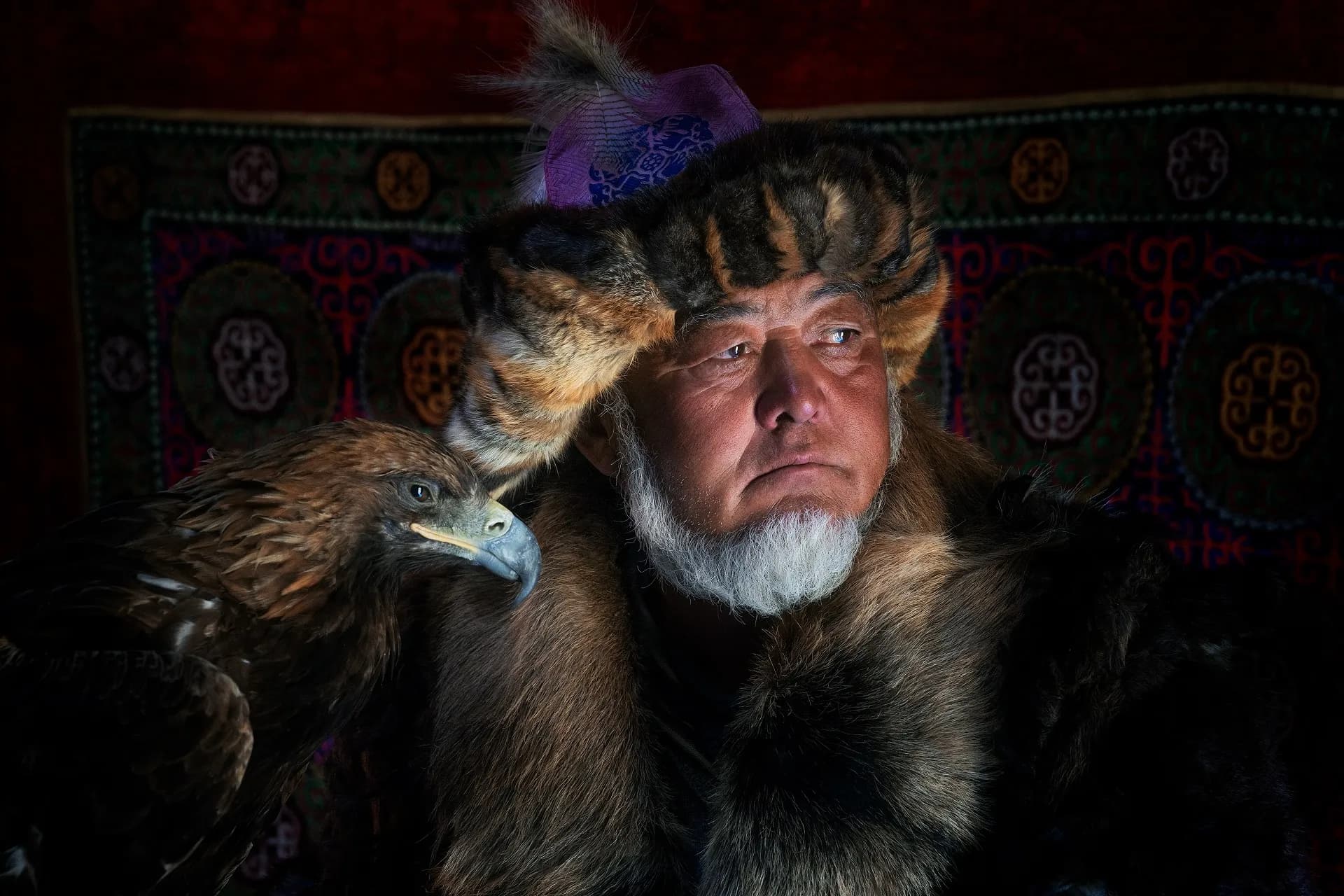
Private Eagle Festival Photography Tour — 10 Days
Experience a private gathering of 10–15 Kazakh eagle hunters at our seasonal ger camp beneath Tsambagarav Mountain. This 10-day Mongolia photography tour combines eagle hunter portraits, horseback and golden eagle photography, nomadic culture, camel photography at Elsen Tasarkhai and the historic capital of Kharkhorin.
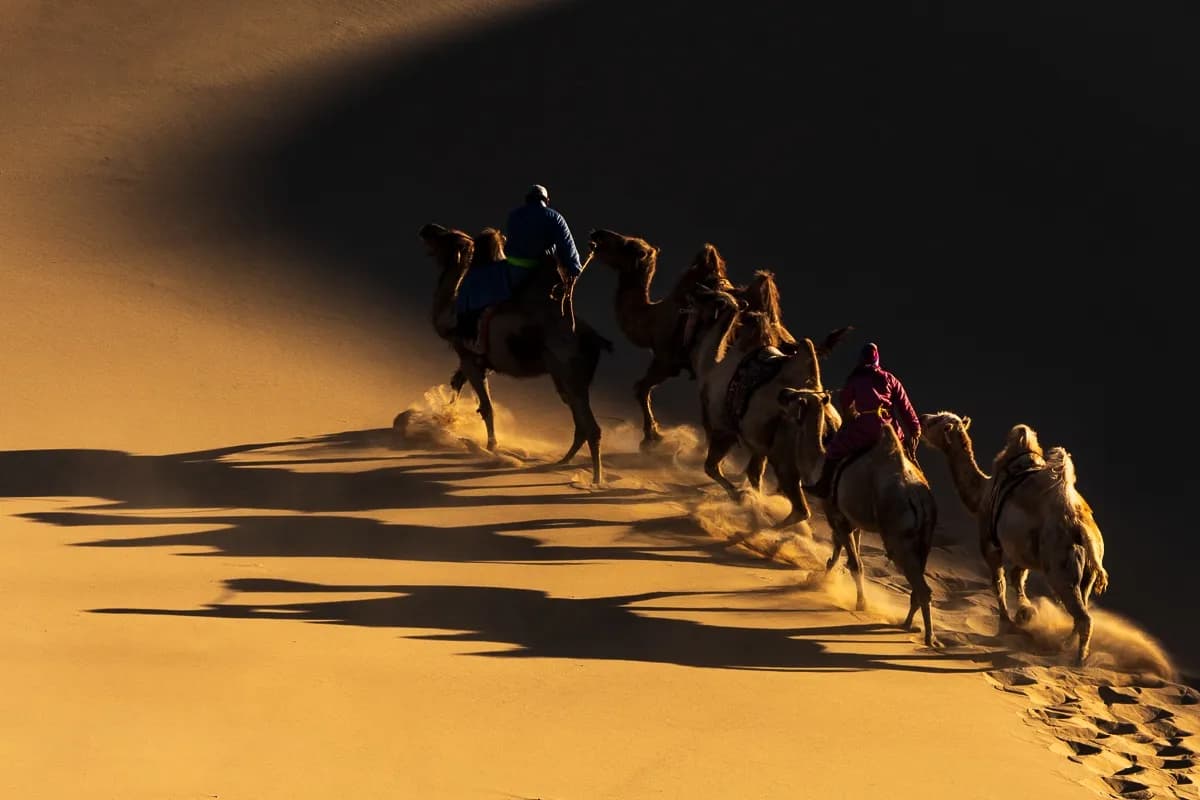
Thousand Camel Festival & Winter Gobi Expedition
Experience Mongolia’s spectacular Thousand Camel Festival on an 8-day winter Gobi adventure featuring Bactrian camel culture, frozen Yolyn Am, Bayanzag Flaming Cliffs and authentic encounters with Gobi nomadic families.
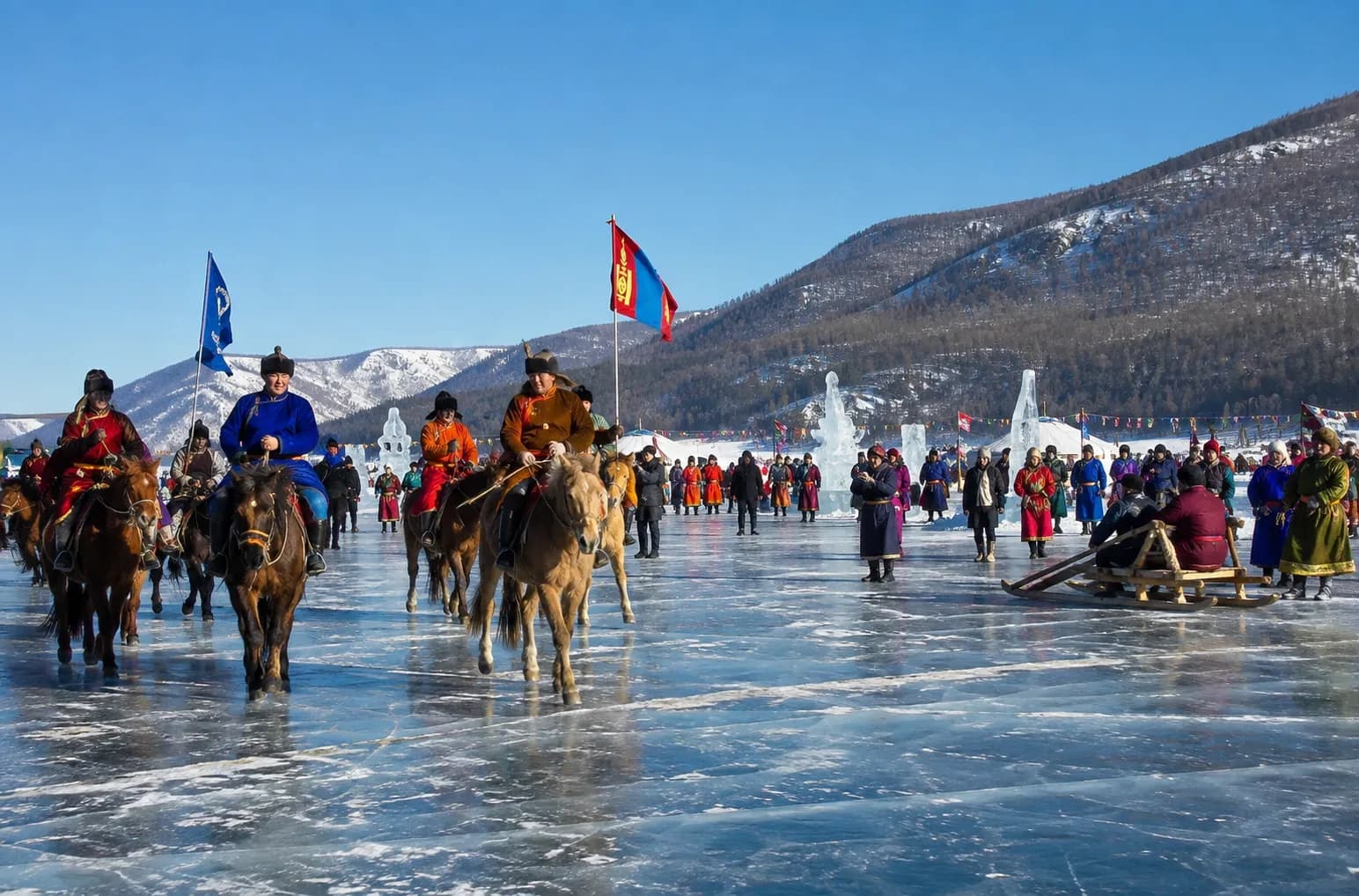
Khuvsgul Ice Festival & Reindeer Adventure 2027
Journey into Mongolia’s remote winter north on an 8-day expedition combining East Taiga reindeer herders, the Khuvsgul Ice Festival, frozen Lake Khuvsgul and the ancient Uushigiin Uvur Deer Stones.