Golden Voyage Tour
Discover the breathtaking beauty of Mongolia on this unforgettable Gobi Desert and Central Mongolia adventure tour. Explore ancient capitals, dramatic desert landscapes, towering sand dunes, nomadic culture, monasteries, and stunning national parks while experiencing the authentic spirit of Mongolia’s legendary nomadic lifestyle.
Upon your arrival at Chinggis Khaan International Airport, our professional local guide will warmly welcome you and transfer you to your hotel in Ulaanbaatar, the capital of Mongolia. After check-in, the rest of the day is yours to relax, recover from your journey, and explore the city at your own pace. Take this time to prepare for your upcoming Mongolia adventure tour, as several days of the journey will involve scenic overland drives through Mongolia’s vast and diverse landscapes. Travel Tip: Before departure, make sure your camera and other electronic devices are fully charged. We also recommend bringing a small flashlight or headlamp, comfortable outdoor clothing, and suitable footwear and clothing for activities such as horse and camel riding.
After breakfast, your experienced local guide and driver will pick you up from your hotel in Ulaanbaatar for a scenic journey to Gorkhi-Terelj National Park, one of Mongolia’s most beautiful and popular nature destinations. On the way, visit the impressive Genghis Khan Equestrian Statue, one of the largest equestrian statues in the world. Continue toward Terelj National Park, stopping at a traditional Ovoo, a sacred stone cairn deeply connected to Mongolian spiritual traditions. Ovoos are traditionally built in honor of the spirits of the land, mountains, and Eternal Blue Sky. Upon arrival in Gorkhi-Terelj National Park, explore its spectacular landscape of forested mountains, open valleys, and dramatic granite rock formations. Visit the famous Turtle Rock, one of the park’s most recognizable natural landmarks, before continuing to the peaceful Aryabal Meditation Temple, set high among the surrounding hills. Later, travel to a local nomadic family, where you will experience authentic Mongolian nomadic life firsthand. Spend time with the family, learn about their traditional lifestyle, livestock herding, and seasonal dairy production, and enjoy the peaceful atmosphere of the Mongolian countryside.
After breakfast you will start your wonderful trip in Mongolia, early in the morning we drive to South Gobi. First stop will be at Baga Gazriin Chuluu-located in Delgertsogt soum, Dundgovi province. Baga Gazriin Chuluu There will be seen a granite stone-mountains whose tallest one is elevated at 1768m above sea level. The landscape and rock formation are sacred to the locals. It's pretty spiritual place. In the n19th-century two important monks lived here and they had left some script and drawing as mark of their passage. There have been a open theatre of national long song of Mongolia. There exists a rich family of plants many wild animals.
After breakfast, we continue our Mongolia Gobi Desert journey toward Tsagaan Suvarga (White Stupa), one of the most spectacular natural landmarks in the Middle Gobi region. Located in Ölziit Soum, Dundgovi Province, this extraordinary landscape is famous for its dramatic cliffs, colorful geological layers, and sweeping desert views. Tsagaan Suvarga – White Stupa Formed over millions of years by natural erosion, Tsagaan Suvarga features towering cliffs shaped from ancient sedimentary deposits. Its striking layers of white, red, orange, and purple reveal different geological periods and create an almost otherworldly landscape. Once part of an ancient seabed, the area has been gradually sculpted by wind and water into steep escarpments, narrow ravines, and unusual formations resembling a ruined city or giant stupa. From the top of the cliffs, enjoy panoramic views across the vast Mongolian steppe and desert. Spend time exploring the surrounding gorges and canyons, walking beneath the impressive formations, and capturing some of the most photogenic scenery in Mongolia. The ancient landscape of Tsagaan Suvarga offers a fascinating glimpse into Mongolia’s geological past and is an unforgettable highlight of any Gobi Desert tour in Mongolia.
After breakfast, we leave Tsagaan Suvarga and continue our Gobi Desert adventure south toward Yol Valley (Yoliin Am), one of the most spectacular natural attractions in Gobi Gurvan Saikhan National Park. Located approximately 45 km from Dalanzadgad, the valley lies among dramatic mountains that rise to around 2,800 meters above sea level. Yoliin Am, meaning “Valley of the Lammergeyer,” is named after the bearded vulture, known as yol in Mongolian. This impressive bird of prey can often be seen soaring above the surrounding mountain peaks. Unlike the open desert landscapes typically associated with the Gobi, Yol Valley features a surprisingly lush environment surrounded by steep rocky cliffs. We will hike through the deep and narrow canyon, where the towering rock walls become so close that only a narrow strip of sky can be seen overhead. The valley is also an excellent place to observe Mongolian wildlife, including ibex, argali sheep, pikas, and various species of birds. Depending on the season and weather conditions, thick layers of ice may remain deep inside the shaded gorge, sometimes well into the warmer months. Enjoy a peaceful walk through this remarkable canyon and experience the dramatic contrast between the rugged mountains of Gobi Gurvan Saikhan National Park and the vast desert landscapes surrounding them.
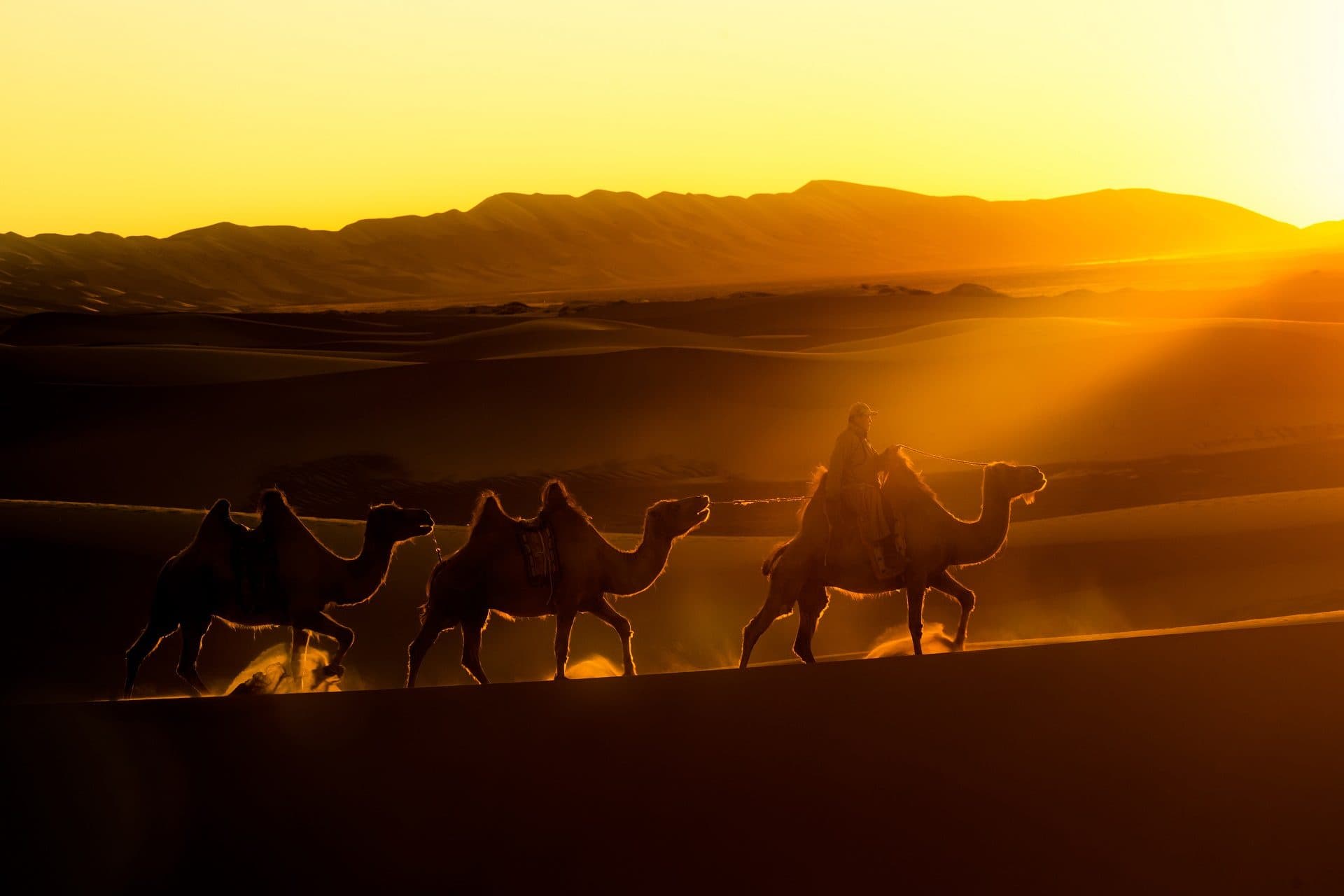
After breakfast, we continue our Gobi Desert adventure toward the magnificent Khongor Sand Dunes, located approximately 120 km from Yol Valley. Known locally as Khongoryn Els and often called the Singing Dunes, they are among the largest and most spectacular sand dunes in Mongolia. Stretching for approximately 180 km from northwest to southeast and reaching up to 27 km in width in some areas, the Khongor Sand Dunes rise dramatically from the surrounding Gobi landscape. The contrast between golden sand dunes, rugged mountains, open desert plains, and the green oasis along the Khongor River creates one of the most unforgettable landscapes in southern Mongolia. In the afternoon, enjoy a traditional Bactrian camel ride through the dunes and surrounding desert. Mongolia’s two-humped Bactrian camels have been an essential part of nomadic life in the Gobi for centuries and offer a memorable way to experience this remarkable environment. Those who wish can climb one of the highest dunes. Reaching the summit usually takes around 40 minutes to one hour, depending on your pace and the conditions. Although the climb can be challenging, the panoramic views from the top across the endless dunes and surrounding mountains are truly breathtaking. Under the right conditions, shifting sand can produce the deep humming sound that gives Khongor its famous name, the Singing Dunes. Overnight: Stay near the Khongor Sand Dunes. Depending on weather conditions and the tour arrangements, an overnight tented experience in the Gobi may also be possible.
After breakfast, we leave the Khongor Sand Dunes and continue our Gobi Desert journey toward Bayanzag, one of Mongolia’s most famous paleontological and natural landmarks. Also known as the Flaming Cliffs, Bayanzag combines remarkable dinosaur history with the dramatic red landscapes of the southern Gobi. Bayanzag – The Flaming Cliffs The Mongolian name Bayanzag means “rich in saxaul,” referring to the hardy saxaul trees and shrubs that grow throughout this arid region. The area became internationally famous after the expeditions of American explorer and paleontologist Roy Chapman Andrews in the 1920s, who gave the cliffs their English name because of the brilliant red and orange colors they display in the sunlight. Bayanzag is particularly significant in the history of paleontology. Expeditions in this region discovered numerous dinosaur fossils and nests containing dinosaur eggs, helping establish the Gobi Desert as one of the world’s most important areas for dinosaur research. We will explore the Flaming Cliffs on foot, walking among the striking red sandstone formations and enjoying panoramic views across the vast Gobi landscape. The combination of red cliffs, desert plains, saxaul forest, and open sky makes Bayanzag especially impressive in the late afternoon when the setting sun intensifies the colors of the cliffs. Beyond its scientific importance, Bayanzag Flaming Cliffs offers a classic Gobi Desert experience—remote, peaceful, and surrounded by extraordinary natural scenery.
After breakfast, we leave Bayanzag and continue our Mongolia Gobi Desert journey north toward Saikhan-Ovoo in Dundgovi Province, home to the historic ruins of Ongi Monastery (Ongiin Khiid). Set beside the peaceful Ongi River and surrounded by rocky hills and open steppe, the monastery provides a fascinating cultural stop between the southern Gobi and Central Mongolia. Ongi Monastery – A Historic Buddhist Site Ongi Monastery is located along the banks of the Ongi River, one of Mongolia’s longest rivers, stretching approximately 435 km through the vast landscapes of the Gobi and Central Mongolia. Founded in the 17th century, Ongi Monastery was once one of the largest and most important Buddhist monastic complexes in Mongolia. The site originally consisted of two major monastery complexes located on opposite sides of the Ongi River. The southern complex was established in the 17th century and included numerous temples and administrative buildings. A larger northern complex was later developed during the 18th century, eventually containing additional temples and Buddhist educational institutions. At its height, Ongi Monastery was an important center of Mongolian Buddhism, religious education, and monastic life. Like many Buddhist monasteries across Mongolia, Ongi Monastery was destroyed during the religious purges of the late 1930s. Many monks were persecuted, imprisoned, or killed, and most of the temples were reduced to ruins. Following Mongolia’s democratic transition in the early 1990s, efforts began to revive Buddhist traditions at Ongi. Today, visitors can explore the atmospheric monastery ruins, reconstructed temple buildings, stupas, and remains scattered across the surrounding hills. Take a peaceful walk through the historic site and along the Ongi River, while your guide shares the story of the monastery and the revival of Buddhism in modern Mongolia. The combination of history, silence, and remote Gobi scenery makes Ongi Monastery a memorable stop on the journey.
After breakfast and a short walk along the Ongi River, we continue our journey into Central Mongolia toward Kharkhorin (Karakorum), the historic capital of the Mongol Empire and one of Mongolia’s most important cultural and historical destinations. Karakorum – Ancient Capital of the Mongol Empire Located in the beautiful Orkhon Valley, Karakorum played a central role in the history of the Mongol Empire. Genghis Khan established an important base here in the early 13th century, and his son and successor, Ögedei Khan, later developed Karakorum into the imperial capital. During its height, Karakorum became an important political and commercial center connecting East and West along the Silk Road. Merchants, diplomats, craftsmen, and religious representatives from across Asia, the Middle East, and Europe traveled to the city, making it one of the most diverse centers of the medieval Mongol Empire. After Kublai Khan transferred the imperial capital to Khanbaliq, present-day Beijing, Karakorum gradually declined. The city was eventually destroyed in the late 14th century, and today archaeological remains provide fascinating insights into the former capital. Erdene Zuu Monastery We will visit Erdene Zuu Monastery, founded in 1586 and widely regarded as the oldest surviving Buddhist monastery in Mongolia. Built close to the ruins of ancient Karakorum, the monastery became one of the country's most important centers of Tibetan Buddhism. Surrounded by its distinctive white walls and 108 stupas, Erdene Zuu once contained numerous temples and housed hundreds of Buddhist monks. Although much of the monastery complex was damaged during the religious purges of the 1930s, several historic temples, religious artworks, statues, and artifacts survived. Explore the monastery grounds with your guide while learning about Mongolian Buddhism, the history of Karakorum, and the legacy of the Mongol Empire. The combination of ancient imperial history, Buddhist heritage, and the landscapes of the Orkhon Valley makes Kharkhorin an essential highlight of a cultural journey through Mongolia.
After breakfast, we begin our journey back to Ulaanbaatar, with several interesting stops along the way. Before leaving Kharkhorin, there may be time for a short visit to a local museum or other historical sites, depending on the schedule. Our journey continues through the beautiful landscapes of Central Mongolia toward Elsen Tasarkhai, a picturesque area where rolling sand dunes meet open grasslands and rocky mountains. Often described as a “Mini Gobi,” the dunes extend for approximately 70 km and create a striking contrast with the surrounding green steppe. We will stop to explore the dunes, enjoy the peaceful scenery, and take photographs of this unique landscape. Elsen Tasarkhai offers a fascinating combination of desert, steppe, and mountain environments within a relatively small area. Along the route, we will also pass through the scenic Khogno Khan Nature Reserve, known for its rugged mountains, dramatic rock formations, open valleys, and diverse natural landscapes. This region provides another beautiful glimpse of Mongolia’s vast countryside before returning to the capital. Lunch will be served at a local restaurant or café along the way. In the late afternoon or evening, we arrive in Ulaanbaatar and transfer to your hotel for a well-deserved rest after your journey through the Gobi Desert and Central Mongolia.
After breakfast, enjoy your final moments in Ulaanbaatar before your departure. At the appropriate time, our guide and driver will meet you at your hotel and provide a comfortable private transfer to Chinggis Khaan International Airport for your onward flight. Before leaving the hotel, we recommend checking your belongings, travel documents, and luggage to ensure that nothing has been left behind. Your Mongolia tour comes to an end today after an unforgettable journey through the Gobi Desert, Central Mongolia, ancient Karakorum, and Mongolia’s nomadic landscapes. Thank you for traveling with us. We hope you leave Mongolia with wonderful memories of its people, culture, history, and extraordinary landscapes, and we wish you a safe journey home.
Our Mongolia travel team responds within 12 hours.
Planning Your Mongolia Trip
Compare other Mongolia tours, explore private tailor-made travel, or use our local planning guides to choose the right season and travel style.
Related Tour Collections
You Might Also Like
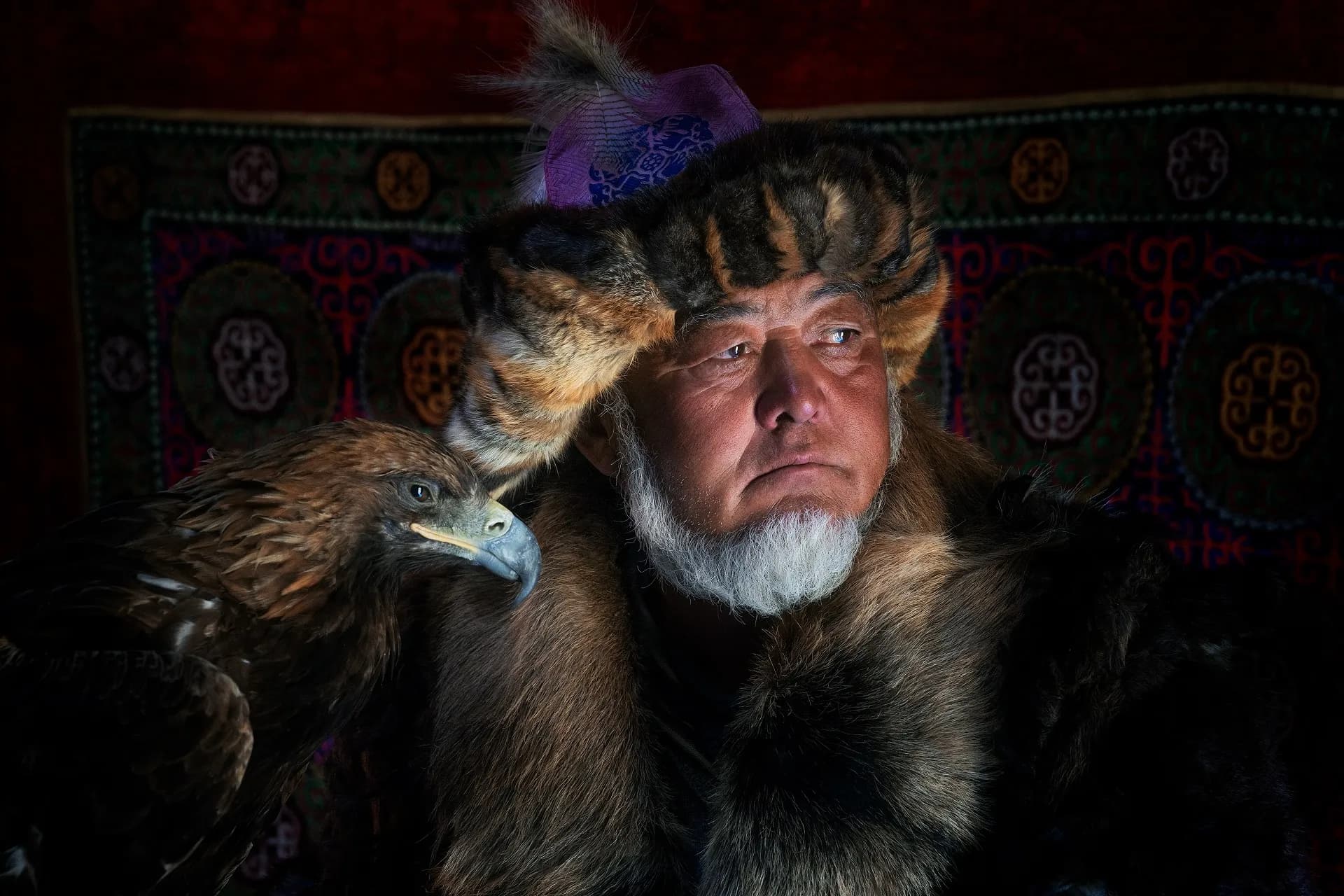
Private Eagle Festival Photography Tour — 10 Days
Experience a private gathering of 10–15 Kazakh eagle hunters at our seasonal ger camp beneath Tsambagarav Mountain. This 10-day Mongolia photography tour combines eagle hunter portraits, horseback and golden eagle photography, nomadic culture, camel photography at Elsen Tasarkhai and the historic capital of Kharkhorin.
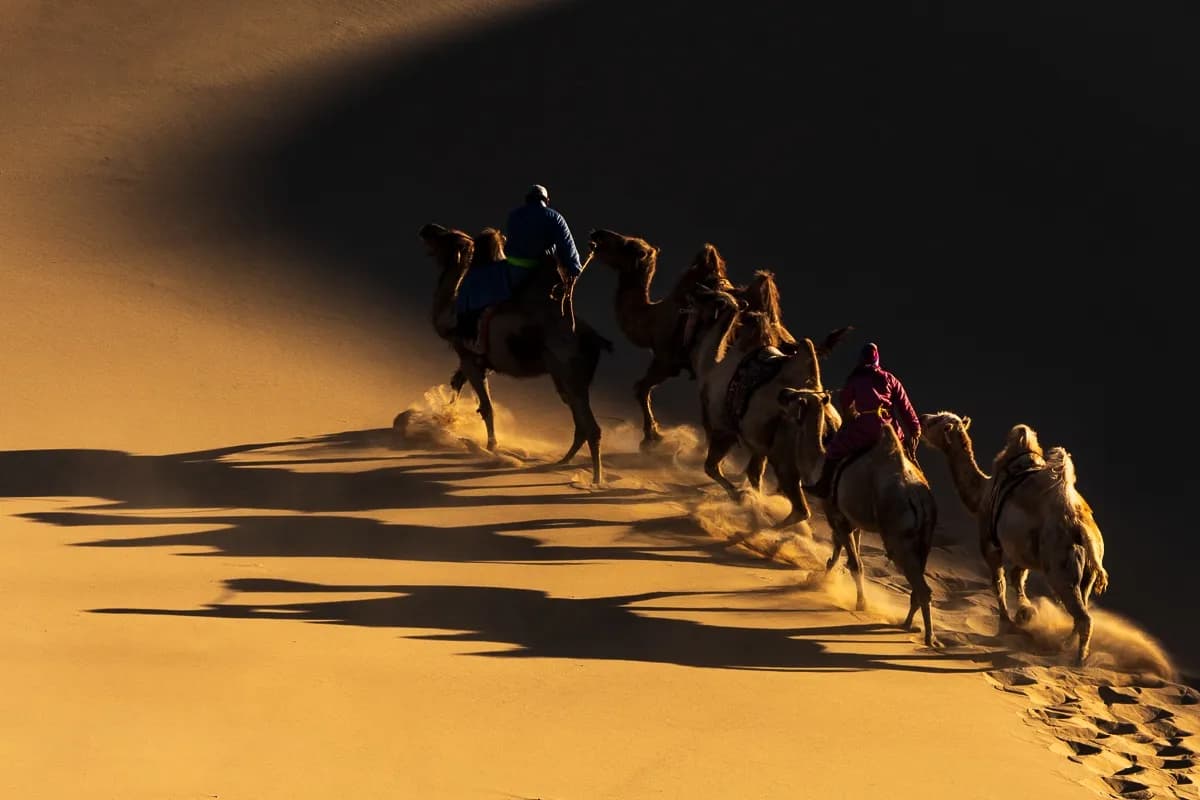
Thousand Camel Festival & Winter Gobi Expedition
Experience Mongolia’s spectacular Thousand Camel Festival on an 8-day winter Gobi adventure featuring Bactrian camel culture, frozen Yolyn Am, Bayanzag Flaming Cliffs and authentic encounters with Gobi nomadic families.
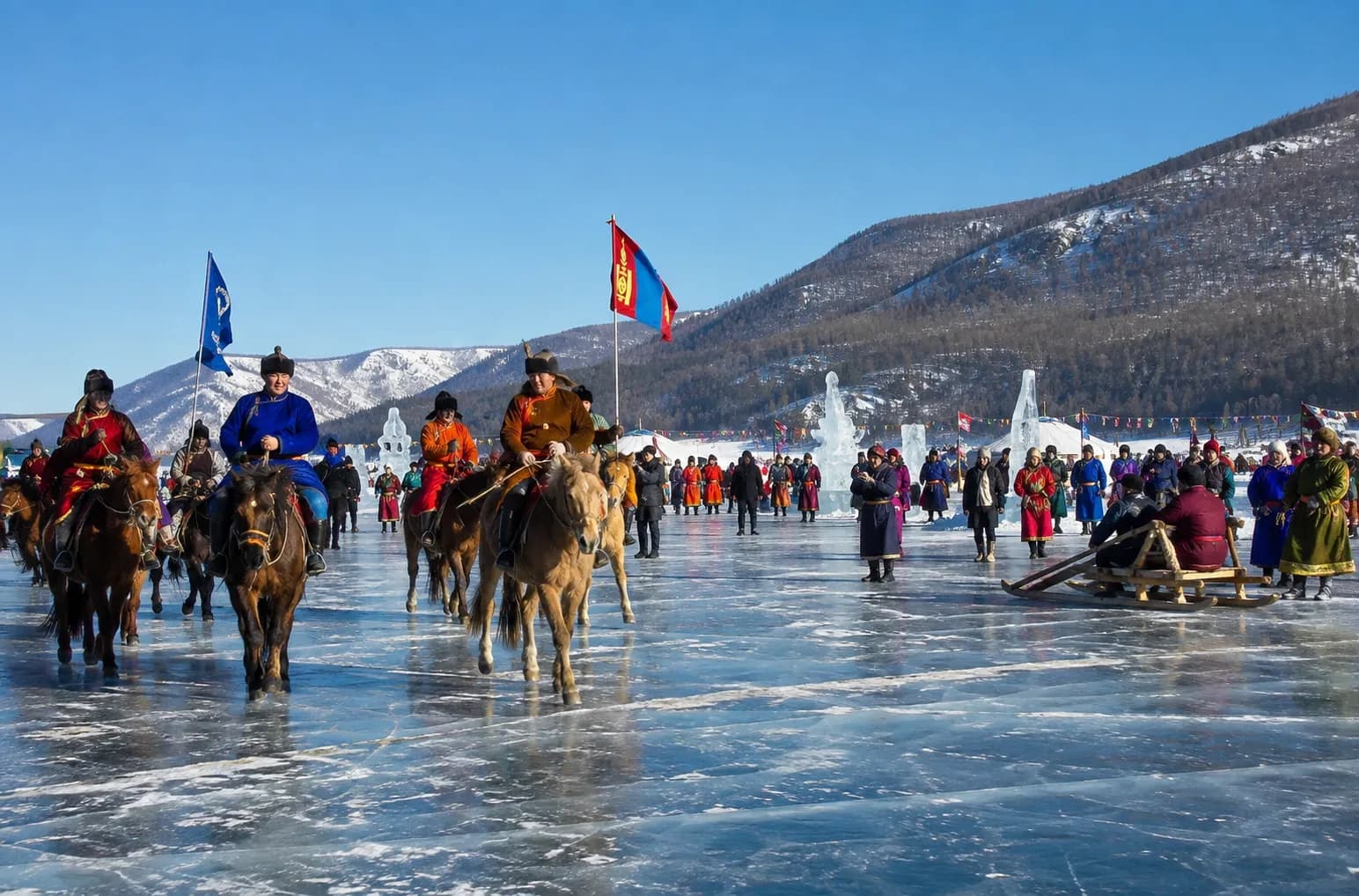
Khuvsgul Ice Festival & Reindeer Adventure 2027
Journey into Mongolia’s remote winter north on an 8-day expedition combining East Taiga reindeer herders, the Khuvsgul Ice Festival, frozen Lake Khuvsgul and the ancient Uushigiin Uvur Deer Stones.