
Mongolia Autumn Tour – Gobi Desert & Orkhon Valley
Experience Mongolia at one of its most beautiful times of year on this 9-day autumn journey through the Gobi Desert and Central Mongolia. Travel from the dramatic cliffs and open landscapes of the Gobi to the historic Orkhon Valley and ancient Karakorum, while enjoying cooler temperatures, golden autumn scenery and fewer visitors than during the peak summer season. Designed especially for travelers visiting Mongolia in September and early October, this journey balances iconic landscapes, nomadic culture, history and wildlife with realistic driving distances.
September is one of Mongolia’s most rewarding travel months. Summer crowds begin to disappear, daytime temperatures become cooler, and the steppe gradually turns shades of gold and brown.
This 9-day Mongolia autumn tour combines two of the country’s most distinctive regions: the Gobi Desert and the historic heartland of Central Mongolia.
Begin your journey among the granite formations of Baga Gazriin Chuluu before continuing south to the striking White Stupa cliffs. Explore the dramatic Yol Valley, walk among the famous Flaming Cliffs of Bayanzag and cross the open Gobi steppe toward the ruins of Ongi Monastery.
From the Gobi, travel north into the Orkhon Valley, a UNESCO World Heritage landscape closely connected with Mongolia’s nomadic heritage and imperial history. Visit Karakorum, the ancient capital of the Mongol Empire, and Erdene Zuu Monastery before returning to Ulaanbaatar.
This itinerary is particularly suitable for photographers, couples and travelers who prefer fewer visitors, cooler weather and a slower, more atmospheric experience of Mongolia.
Tour Highlights
Travel Mongolia during the beautiful autumn season
Explore Baga Gazriin Chuluu
See the dramatic formations of Tsagaan Suvarga – White Stupa
Walk through Yol Valley
Visit the legendary Flaming Cliffs of Bayanzag
Explore the ruins of Ongi Monastery
Experience the UNESCO-listed Orkhon Valley
Visit Karakorum, ancient capital of the Mongol Empire
Explore Erdene Zuu Monastery
Meet local nomadic families
Experience authentic ger accommodation
Enjoy cooler Gobi temperatures and fewer peak-season travelers
Excellent opportunities for landscape and cultural photography
Welcome to Mongolia and the beginning of your 9-day autumn journey through the Gobi Desert and Central Mongolia. Upon arrival at Chinggis Khaan International Airport, you will be met by our local representative and transferred to your hotel in central Ulaanbaatar. After check-in, take time to recover from your international journey and adjust to the local time. Depending on your arrival time, you may enjoy a relaxed walk around Sukhbaatar Square, the heart of Mongolia’s capital, where the Government Palace, National Museum area, restaurants, cafés and major city landmarks are all within easy reach. This first day is intentionally kept light so that you can begin your Mongolia autumn tour well rested before heading into the countryside.
After breakfast, leave the capital behind and begin your overland journey south toward the vast open landscapes of Dundgovi Province. As Ulaanbaatar gradually disappears behind you, the scenery changes into endless grassland, low hills and wide horizons typical of Mongolia’s central steppe. Traveling in September offers a particularly attractive atmosphere, with golden grasslands, crisp air and far fewer visitors than during the busy summer months. Your destination is Baga Gazriin Chuluu, a dramatic granite rock formation rising unexpectedly from the surrounding steppe. The area is known for its unusual rock shapes, narrow valleys, small caves and historical sites hidden among the granite hills. In the afternoon, explore the surrounding formations on foot and enjoy your first real taste of Mongolia’s remote countryside. The warm tones of the autumn steppe combined with the grey granite create excellent conditions for landscape photography. In the evening, settle into your ger camp and enjoy dinner beneath the wide Mongolian sky.
After breakfast, continue south through the open landscapes of Dundgovi toward one of the most striking geological formations in Mongolia: Tsagaan Suvarga, or the White Stupa. The drive takes you across remote steppe and semi-desert scenery where herds of horses, sheep, goats and camels may be seen grazing near traditional nomadic settlements. Tsagaan Suvarga is an impressive escarpment formed over millions of years by wind and water erosion. Its layered cliffs display shades of white, red, orange and pink, giving the formation an almost otherworldly appearance. Spend the afternoon exploring the upper viewpoints and lower sections of the cliffs. From above, the landscape stretches far across the surrounding desert plains, while walking below the formations reveals the extraordinary colors and textures of the rock layers. If conditions allow, remain near the cliffs toward sunset, when the evening light can transform the White Stupa into one of the most photogenic landscapes of your Mongolia Gobi Desert journey.
Today the journey continues farther south toward Gobi Gurvan Saikhan National Park, one of Mongolia’s most famous protected areas. As you approach the Gurvan Saikhan Mountains, the scenery changes dramatically from open desert plains to rugged mountain terrain. Your main destination is Yol Valley, also known as the Valley of the Eagles. This narrow gorge cuts deep into the mountains and offers a completely different environment from the surrounding Gobi Desert. High rock walls, small streams and mountain vegetation create a surprisingly cool microclimate. Enjoy a walk through the valley, taking time to observe the landscape and search for local wildlife. Depending on the season and luck, you may see ibex, argali sheep, pikas, vultures and other birds of prey. September is an excellent time to explore Yol Valley because the summer crowds have largely disappeared and the cooler temperatures make walking much more comfortable. After exploring the valley, continue to your nearby ger camp and enjoy a peaceful evening surrounded by the mountains of the southern Gobi.
After breakfast, leave the mountains of Yol Valley and continue across the open landscapes of the South Gobi toward Moltsog Els Sand Dunes, a compact but beautiful dune system located along the route to Bayanzag. Moltsog Els offers travelers the opportunity to experience one of the Gobi Desert’s classic landscapes without making the long detour to the much more distant Khongor Sand Dunes. Surrounded by semi-desert steppe and low mountains, the golden dunes provide a striking contrast to the rocky scenery of Yol Valley. Spend time walking among the dunes and enjoying panoramic views across the surrounding Gobi landscape. Depending on local arrangements, you will also have the opportunity to enjoy a short Bactrian camel ride, one of the traditional experiences most closely associated with Mongolia’s Gobi region. After exploring the sand dunes, continue toward Bayanzag, internationally known as the Flaming Cliffs. Bayanzag became famous through the Central Asiatic Expeditions of the 1920s, when American explorer Roy Chapman Andrews and his team made important paleontological discoveries in the area, including dinosaur fossils and eggs. In the late afternoon, walk along the dramatic red sandstone cliffs and learn about the region’s geological and scientific history. As the sun begins to set, the cliffs often glow in deep shades of orange and red, creating the spectacular appearance that inspired the name Flaming Cliffs. This day combines three classic elements of a Gobi Desert journey: open desert landscapes, sand dunes and the historic red cliffs of Bayanzag.
Today you leave the heart of the Gobi and begin traveling north toward Central Mongolia. The drive crosses one of the quieter and more remote sections of the journey, offering a true sense of Mongolia’s immense scale and open space. The landscape gradually changes from desert terrain to broader steppe as you approach the Ongi River valley. Your destination is Ongi Monastery, once one of the most important Buddhist monastic complexes in Mongolia. At its height, the monastery consisted of numerous temples and was home to hundreds of monks. Much of the complex was destroyed during the political repression of the 1930s, but the ruins remain deeply atmospheric and provide an important insight into Mongolia’s religious and cultural history. Walk among the old temple foundations, reconstructed buildings and surrounding hills while your guide explains the story of the monastery and the revival of Buddhism in modern Mongolia. The peaceful river valley and historic ruins make Ongi a memorable overnight stop between the Gobi Desert and the Orkhon Valley.
After breakfast, leave Ongi Monastery and continue north toward Kharkhorin, located within the historic Orkhon Valley Cultural Landscape, one of Mongolia’s most important cultural and historical regions. The drive takes you from the semi-desert landscapes of the Gobi into the broader grasslands of Central Mongolia. Along the way, you will see the scenery gradually change as you approach the fertile valleys that have supported nomadic civilizations for centuries. Kharkhorin stands near the site of Karakorum, the 13th-century capital of the Mongol Empire established during the reign of Chinggis Khaan and developed by his successors. During its height, Karakorum became an important political and commercial center connecting East and West. Upon arrival, visit Erdene Zuu Monastery, founded in the 16th century and regarded as the oldest surviving Buddhist monastery in Mongolia. The monastery was partly constructed using stones from the ruins of ancient Karakorum and remains one of the country’s most significant religious and historical sites. Walk through the monastery complex, explore its temples and stupas, and learn about the development of Buddhism in Mongolia as well as the turbulent history the monastery survived during the 20th century. You will also have time to visit the Kharakhorum Museum, where archaeological discoveries help illustrate the history of the ancient capital and the civilizations that once flourished throughout the Orkhon Valley. Spend the evening in Kharkhorin, surrounded by the landscapes that once formed the heart of the Mongol Empire.
After breakfast, begin your return journey to Ulaanbaatar. The paved road from Kharkhorin crosses the wide-open steppe of Central Mongolia, providing one final opportunity to enjoy the vast landscapes, grazing livestock and traditional nomadic life that characterize the Mongolian countryside. There will be stops along the way for lunch, refreshments and photography. Arrive in Ulaanbaatar in the afternoon and transfer to your centrally located hotel. The remainder of the day is free for you to relax, explore the city independently, shop for souvenirs or enjoy one of Ulaanbaatar’s restaurants and cafés. After more than a week traveling through the Gobi Desert and Central Mongolia, this final evening offers a comfortable transition back to city life before your international departure.
After breakfast, enjoy your final morning in Ulaanbaatar depending on your international flight schedule. At the appropriate time, our team will meet you at your hotel and provide a private transfer to Chinggis Khaan International Airport for your onward flight. Your 9-day Mongolia Autumn Tour through the Gobi Desert and Central Mongolia comes to an end, leaving you with memories of dramatic desert landscapes, sand dunes, ancient monasteries, nomadic culture and the historic heartland of the Mongol Empire. We hope your journey through Mongolia has been an unforgettable experience and look forward to welcoming you again.
Our Mongolia travel team responds within 12 hours.
Planning Your Mongolia Trip
Compare other Mongolia tours, explore private tailor-made travel, or use our local planning guides to choose the right season and travel style.
Related Tour Collections
You Might Also Like
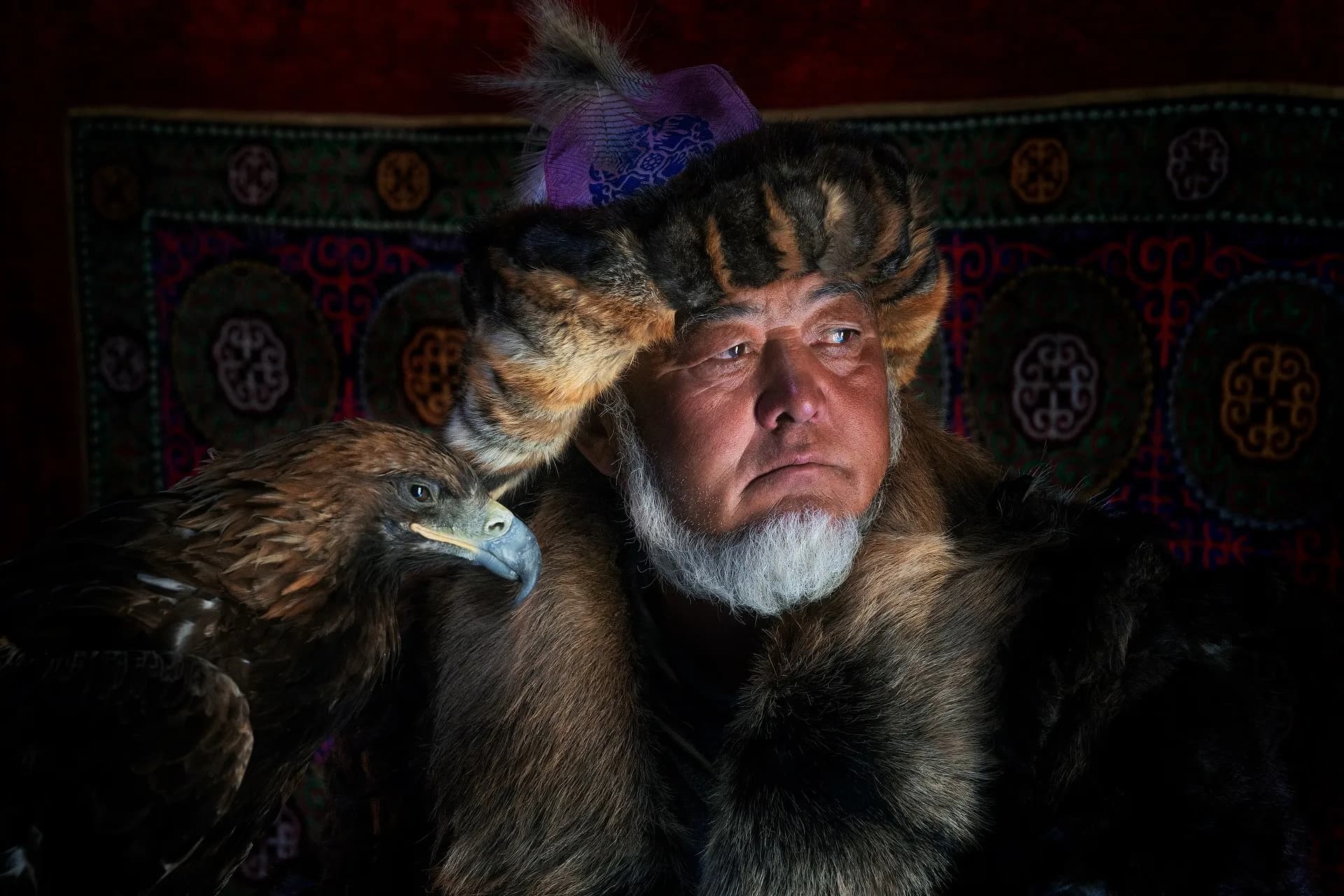
Private Eagle Festival Photography Tour — 10 Days
Experience a private gathering of 10–15 Kazakh eagle hunters at our seasonal ger camp beneath Tsambagarav Mountain. This 10-day Mongolia photography tour combines eagle hunter portraits, horseback and golden eagle photography, nomadic culture, camel photography at Elsen Tasarkhai and the historic capital of Kharkhorin.
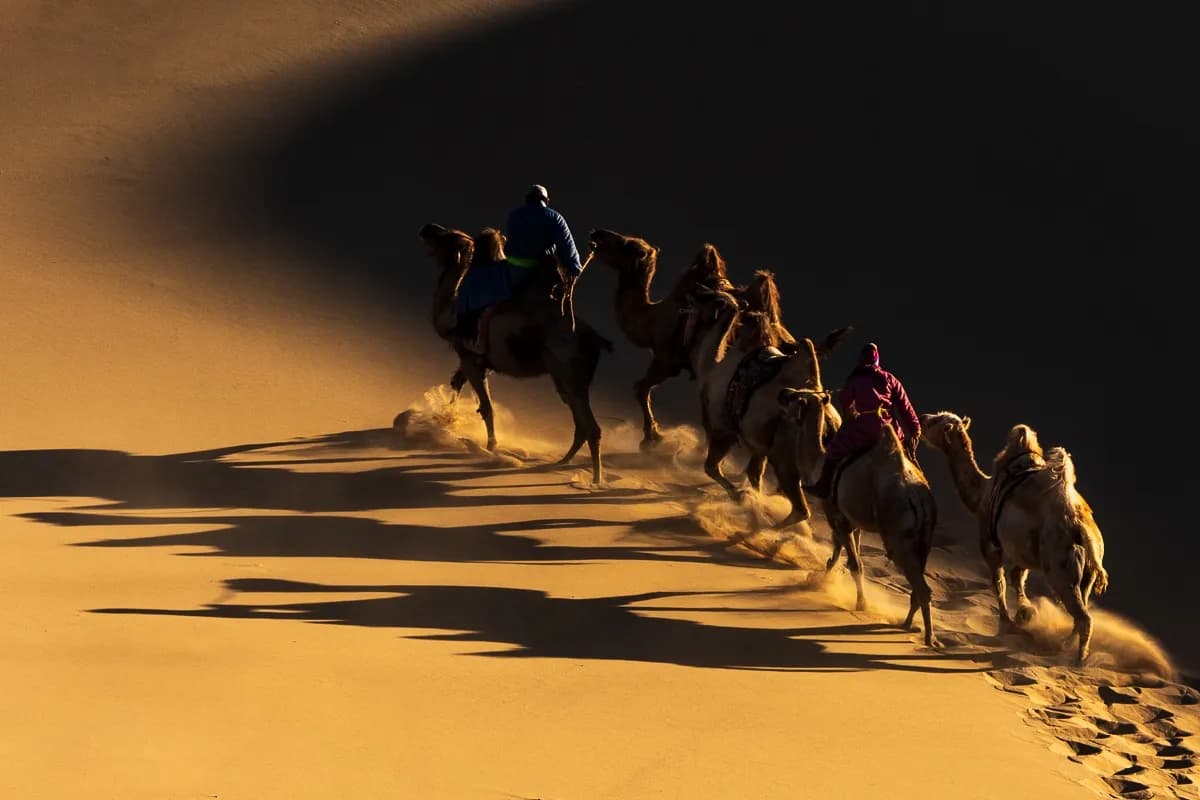
Thousand Camel Festival & Winter Gobi Expedition
Experience Mongolia’s spectacular Thousand Camel Festival on an 8-day winter Gobi adventure featuring Bactrian camel culture, frozen Yolyn Am, Bayanzag Flaming Cliffs and authentic encounters with Gobi nomadic families.
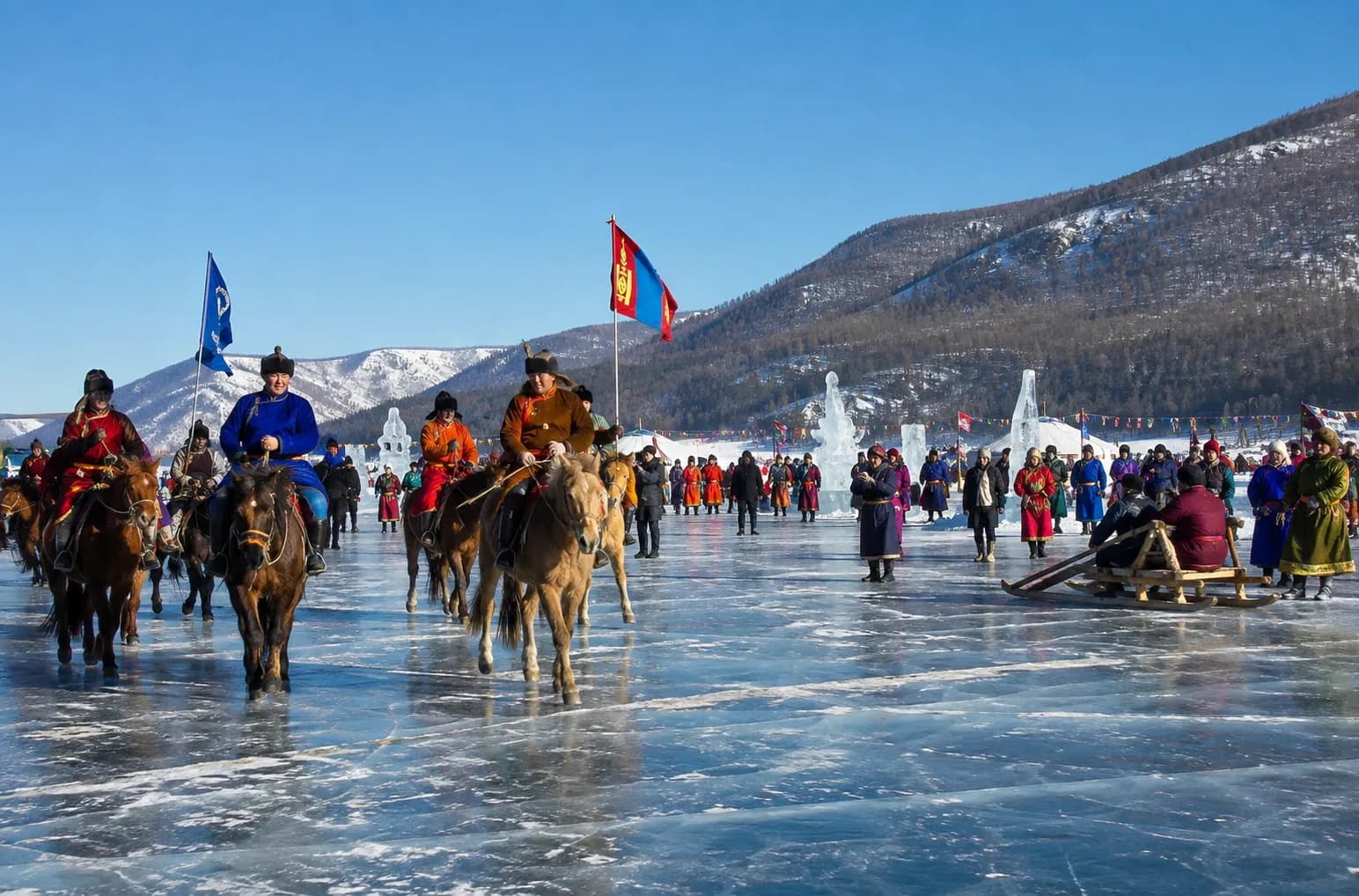
Khuvsgul Ice Festival & Reindeer Adventure 2027
Journey into Mongolia’s remote winter north on an 8-day expedition combining East Taiga reindeer herders, the Khuvsgul Ice Festival, frozen Lake Khuvsgul and the ancient Uushigiin Uvur Deer Stones.