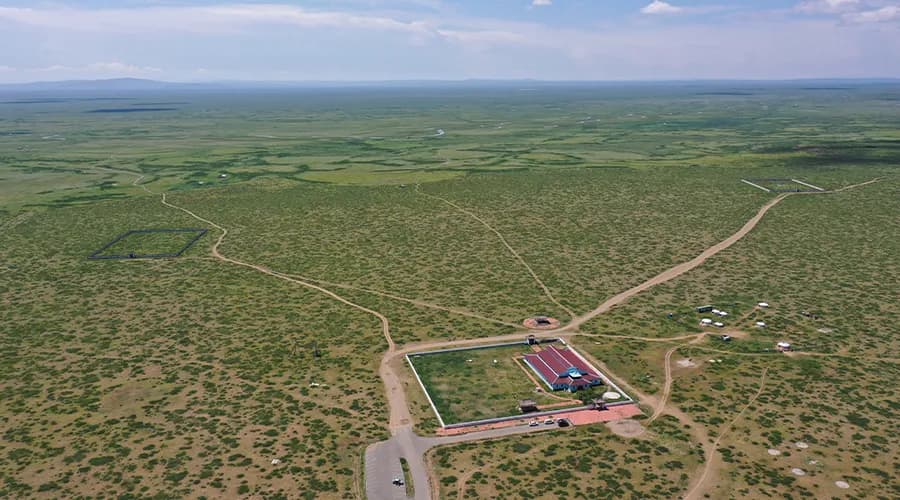
Long before Karakorum became the capital of the Mongol Empire, rulers of another steppe empire left their words carved in stone in central Mongolia.
At Khoshoo Tsaidam, also written as Khöshöö Tsaidam or Kosho Tsaidam, memorials to Kul Tigin and Bilge Khagan preserve an extraordinary connection with the eighth-century Turkic world.
These monuments offer something different from a palace ruin or a monastery. They preserve a political voice: accounts of leadership, military struggle, loss and the desire to hold a people together.
For travelers interested in the deeper history behind Mongolia’s landscapes, Khoshoo Tsaidam adds an important chapter to a Central Mongolia journey.
What Is Khoshoo Tsaidam?
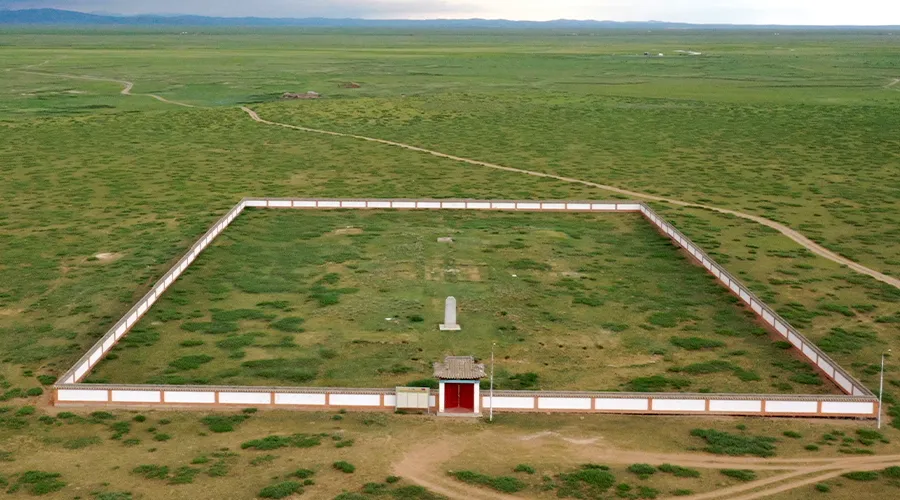
Khoshoo Tsaidam is a historic memorial site in central Mongolia associated with two leading figures of the Second Turkic Khaganate: the ruler Bilge Khagan and his younger brother, the military leader Kul Tigin.
Its most famous monuments were erected in 732 and 735 CE, centuries before the rise of the Mongol Empire.
Here, the word “Turkic” refers to the early medieval peoples and political traditions of Inner Asia. Understanding that setting helps visitors appreciate the monuments within the history of the Mongolian steppe.
The site belongs to the wider historical landscape explored in our Orkhon Valley travel guide. Across this region, successive powers established centers of government, ceremony and trade.
Two Brothers Remembered in Stone
The two principal memorials commemorate related but distinct figures.
Kul Tigin was a military leader and the younger brother of Bilge Khagan. He died in 731 CE, and his inscribed monument was erected in 732 CE.
Bilge Khagan was the ruler. He died in 734 CE, and his monument followed in 735 CE.
Keeping those dates separate matters: the year a person died is not necessarily the year their memorial was completed.
The monuments formed parts of larger commemorative complexes. When visiting, look beyond the standing stones and ask your guide to explain how the surviving remains relate to the original memorial layout.
Why the Orkhon Inscriptions Matter
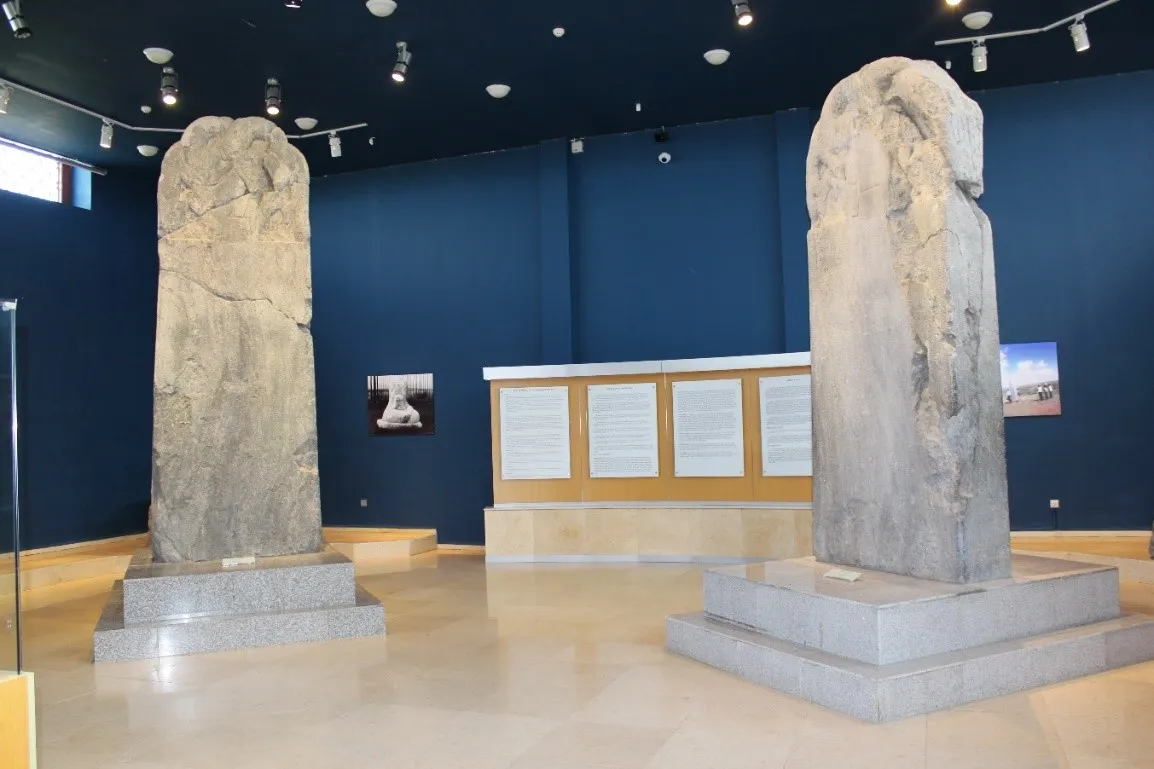
The inscriptions are among the most important surviving texts in Old Turkic.
They recount campaigns, political unity, hardship and the responsibilities of rulers. Their angular script is often described as runiform because of its appearance.
A rewarding way to approach the site is to ask for a translated passage. Then consider who is speaking, whom they are addressing and what they want future readers to remember.
These are commemorative political texts. They communicate how the ruling elite wished its achievements and struggles to be understood.
A Chinese Inscription and a Wider World
One particularly revealing feature of the Kul Tigin monument is its Chinese inscription, associated with the Tang emperor Xuanzong.
It introduces another perspective into the memorial: the diplomatic relationship between the Turkic court and Tang China.
The presence of both Old Turkic and Chinese writing makes this much more than a local monument. It connects the grasslands of central Mongolia with the political world of East Asia.
For a visitor, this is an excellent detail to pause over. Ask your guide to identify the different inscribed faces and explain their context. A stone that initially appears to be covered in unfamiliar symbols begins to reveal relationships between rulers, courts and neighboring powers.
Visiting the Museum and Memorial Site
The on-site museum adds essential context to the outdoor remains. Established in 2008, it is associated with the preservation and presentation of the Bilge Khagan and Kul Tigin heritage at Khoshoo Tsaidam.
Plan your visit around both the museum and the surrounding memorial landscape. Seeing objects indoors and then stepping outside helps connect individual exhibits with the place they came from.
Useful questions to ask your guide include:
Which objects are originals, and which are replicas?
Which memorial does each displayed object belong to?
What do archaeologists know about the original arrangement?
Which features remain uncertain or have been reconstructed?
Can we read a short translation of an inscription?
Clear answers make the visit more meaningful, especially for travelers unfamiliar with early Turkic history.
How to Include Khoshoo Tsaidam in Your Journey
Consider visiting Khoshoo Tsaidam as part of a stay in the Kharkhorin area, with transport and museum access arranged in advance.
For an unhurried visit, we suggest allowing around one to two hours at the site and museum, plus travel time. This is a planning suggestion; visitors with a strong interest in archaeology or inscriptions may prefer longer.
Confirm opening arrangements and admission details before setting out. Bring drinking water, comfortable walking shoes and a layer for exposed outdoor stops.
For a richer historical itinerary, pair this visit with Karakorum, the ancient Mongol capital.
The value of combining them lies in the contrast between periods. Khoshoo Tsaidam introduces the eighth-century Turkic world; Karakorum takes the story forward to the Mongol Empire several centuries later.
Is Tonyukuk’s Monument Here Too?
No. Although Tonyukuk’s inscriptions are frequently discussed alongside those of Kul Tigin and Bilge Khagan, Tonyukuk’s memorial is a separate site.
Do not assume that an itinerary mentioning the “Orkhon inscriptions” includes all three monuments. Ask which locations are actually part of the route.
Visit with Curiosity and Care
At an archaeological site, small details deserve time. Look at the relationship between the monuments, the museum and the open landscape, rather than treating the visit as a single photograph.
Follow marked routes and staff guidance. Avoid climbing on stones, touching inscribed surfaces or moving loose material.
If you share photographs afterward, identify replicas and originals accurately. A careful caption helps preserve the meaning of what you have seen.
Plan a Historical Journey Through Central Mongolia
Khoshoo Tsaidam offers a different perspective on Mongolia: a chance to encounter the written legacy of a steppe empire that flourished long before Chinggis Khaan.
Explore our Central Mongolia tours, or plan your own historical journey with our local team.
Tell us whether your interests lie in archaeology, ancient writing, imperial history or photography, and we can help build a route with time to explore the places that matter most to you.